Xi–Trump Meeting: Two Misunderstandings by Lai Administration
Want Times Editorial, September 29, 2026
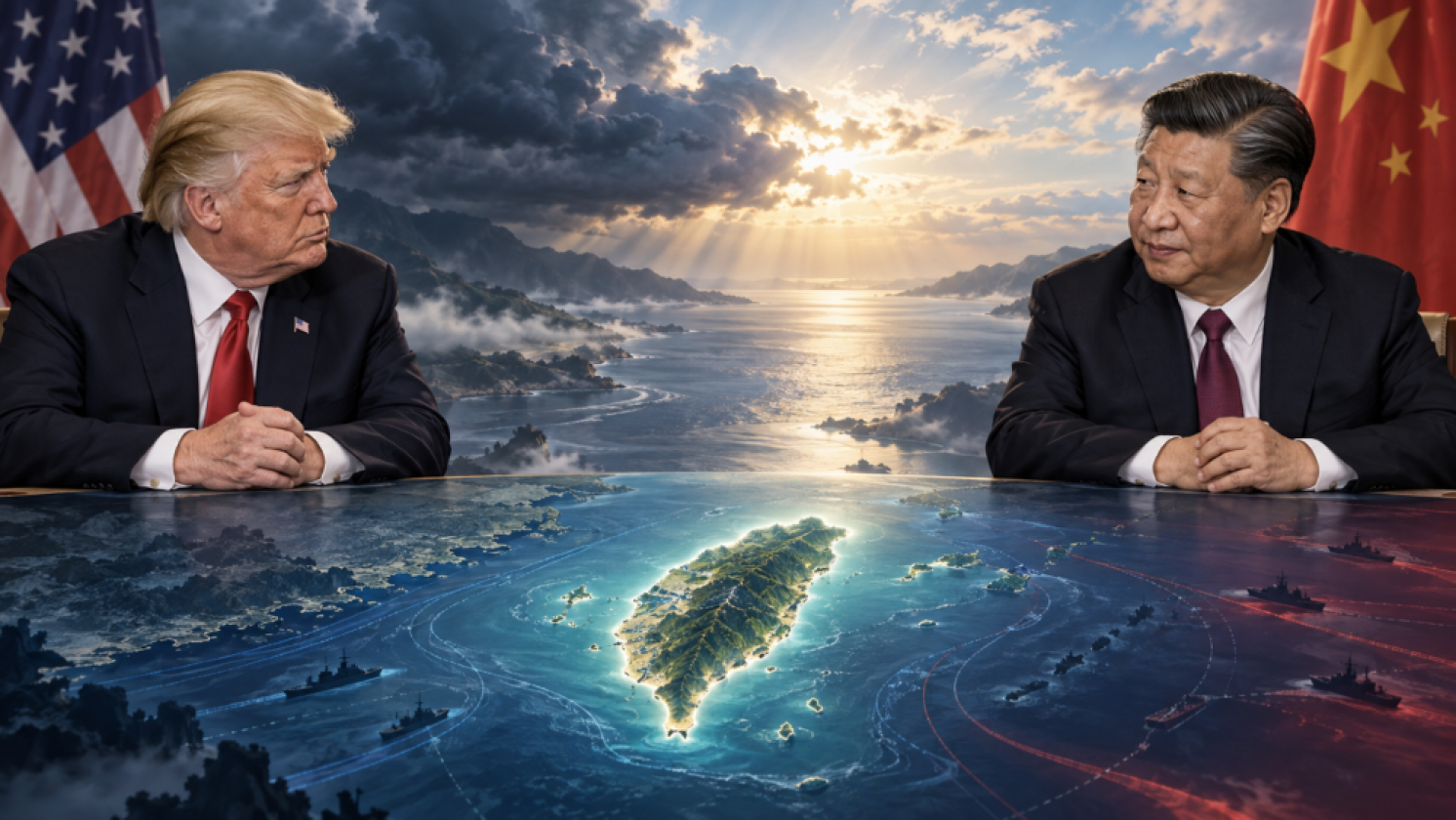
The second summit between President Donald Trump of the United States and Chinese President Xi Jinping of the year has concluded. Based on publicly available information, Taiwan does not appear to have been significantly affected. Mr. Xi expressed the hope that the United States would oppose Taiwan independence, while the United States reiterated that its position on Taiwan remains unchanged. No “grand bargain” appears to have emerged. Yet, looking back at developments over the past six months, one can clearly discern a trajectory in which Mr. Trump and Mr. Xi have jointly promoted “strategic de-escalation across the Taiwan Strait.” What are the implications of this?
It is described as “strategic de-escalation” because, for some time, the Taiwan Strait had borne the pressure of strategic confrontation between China and the United States, to the point that it was once described as “the most dangerous place on Earth.” Rising tensions in the Taiwan Strait can be traced back to a phone call between President Tsai Ing-wen and Mr. Trump shortly after he won the 2016 presidential election. Mainland China subsequently dispatched the aircraft carrier Liaoning to the Taiwan Strait, beginning a process of military pressure against Taiwan.
Although the United States did not change its “One China” policy, it strongly supported Taiwan through legislation, executive actions, military measures, and public messaging.
All of this began to change during Mr. Trump’s second term, with the shift becoming even more pronounced this year. Since 2025, China has suspended large-scale military exercises against Taiwan, while both the frequency and intensity of military aircraft and naval vessel operations around Taiwan have declined significantly. Although the United States has maintained its policy rhetoric toward Taiwan, it has temporarily slowed arms sales to Taiwan, suspended the customary practice of allowing Taiwan’s president to transit the continental United States, and reduced the number of U.S. warship transits through the Taiwan Strait.
When both sides maintain their established positions, easing tensions and rebuilding mutual trust through synchronized, reciprocal, and equidistant compromises is a common approach. This round of “strategic de-escalation” in the Taiwan Strait, jointly promoted by Mr. Trump and Mr. Xi, is a typical example.
The United States and China remain engaged in intense competition. For example, although Beijing has reduced military pressure, it has replaced it with measures involving maritime law enforcement and the exercise of administrative jurisdiction. Similarly, the United States has urged Taiwan’s ruling and opposition parties to approve military budgets, expand investment in the defense industry, and has participated extensively in Taiwan’s major military exercises, with the aim of demonstrating that its commitment to Taiwan remains unchanged.
Mr. Trump and Mr. Xi are promoting “strategic de-escalation” in the Taiwan Strait, first, to reduce tensions between their two countries in the hope of establishing mechanisms for communication, dialogue, and crisis management; and second, to stabilize their respective domestic pressures. Mr. Trump needs Beijing’s purchases and diplomatic coordination to help him win the midterm elections, while Mr. Xi has his sights set on next year’s 21st National Congress of the Chinese Communist Party. There may also be a hidden script: Mr. Trump and Mr. Xi may have reached an understanding to lay the groundwork for an “endgame solution for the Taiwan Strait,” with easing tensions across the Strait as the necessary first step.
From Beijing in May to Washington in September, the Democratic Progressive Party (DPP) administration and DPP-aligned scholars have fallen into two misconceptions in their assessments of the Trump-Xi summits. First, they believe that because U.S. policy toward Taiwan remains unchanged and China’s Taiwan-related demands have all been “rejected,” Taiwan has no need to be overly anxious. Second, they believe that Mr. Trump’s approach toward China is to “offer courtesy before resorting to force”—a toast first and punishment later—and that Taiwan therefore only needs to wait for circumstances to change. Influenced by this thinking, the DPP administration has persisted with a cross-strait policy centered on confrontation, while hoping that U.S.-China confrontation will resume and Taiwan will once again benefit.
Taiwan’s greatest crisis is that the ruling party has voluntarily relinquished the initiative. Taiwan cannot control the deals made behind the scenes between the United States and China, but it can put forward an “endgame solution” that is most favorable to Taiwan. As the United States and China decide to reduce confrontation and expand cooperation, Taiwan should likewise restart cross-strait exchanges to avoid once again falling into the “troublemaker dilemma.”
From: https://www.chinatimes.com/opinion/20260929003687-262102?chdtv