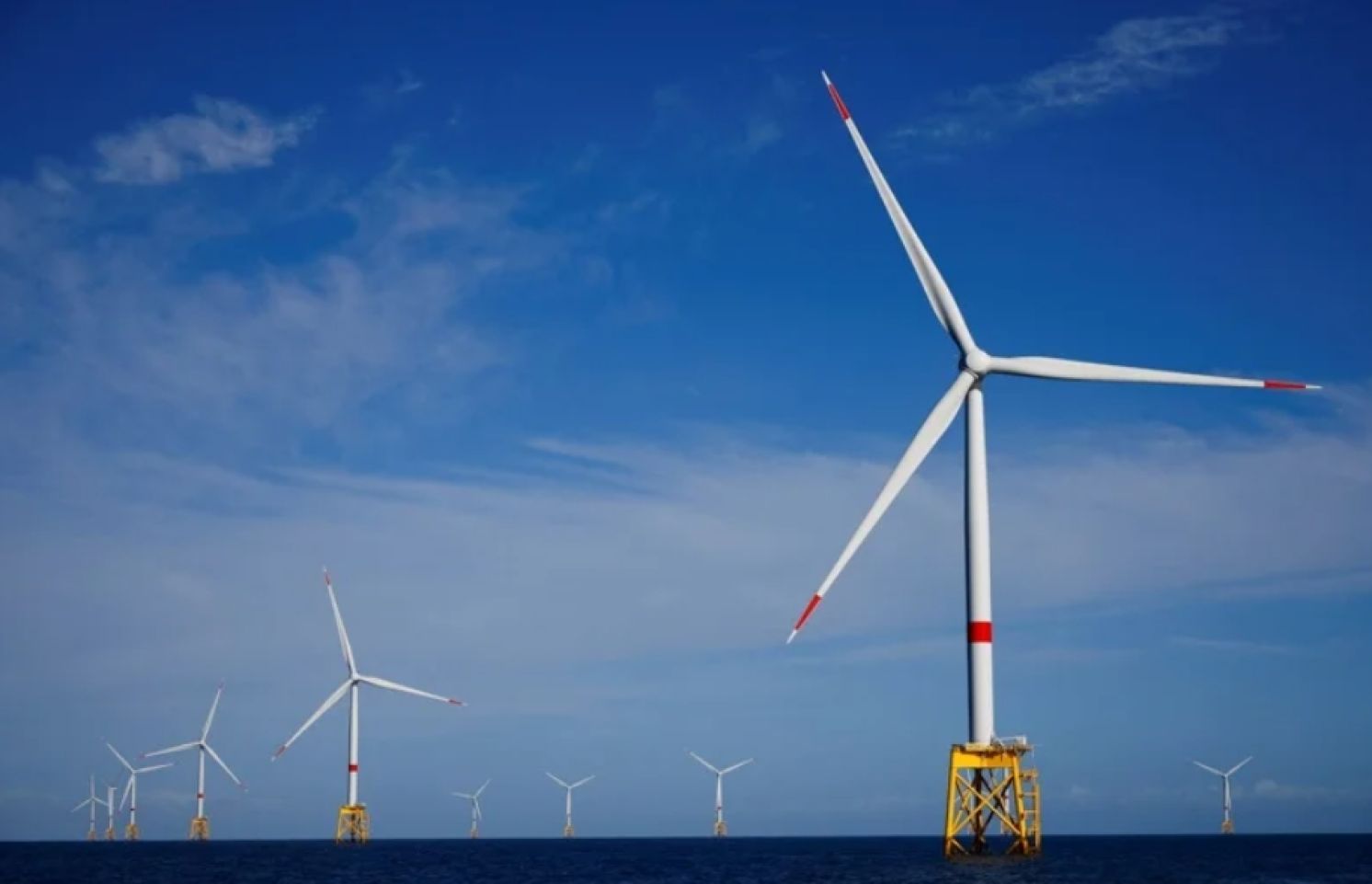
Wind and Solar Power Dropped to Zero, Thermal Surged to 94% on Typhoon Day
By Tsai Huei-ping, United Daily News Commentary, November 2, 2024
Amid controversies, the environmental impact assessment meeting of the Ministry of Environment passed the assessment for the four additional gas-fired power generating units of the second phase of the Taichung Power Plant. Keeping the six existing coal-fired generating units as backup, this expansion raised huge questionings outside. On the next day after the environmental impact assessment was passed, Typhoon Kong-rey battered Taiwan. The electricity generation system of the Taiwan Power Company (Taipower) shows that thermal power accounted for 94 percent of power generation on that day. This figure explains why the administration of President Lai Ching-te recklessly passed the environmental impact assessment of the Taichung Power Plant and exposes the hidden secret why the six coal-fired units are kept.
The Taichung Power Plant planned to reduce air pollution by exchanging coal-fired units with gas-fired units; but without tearing down the former, the total capacity reaches 11.4 million kW, and the Taichung Power Plant will become the world’s largest thermal power plant. Taiwan likes to boast itself as the “world’s number one,” but this title is the chest pain of people living in central parts of Taiwan. The facility has 10 coal-fired power generating units, generating 28.9 billion KWh electricity last year, which was 12 percent of Taipower’s total electricity generating capacity, and plays an important role in the stability of Taiwan’s electricity supply. However, this result is at the expense of the lungs and health of the people living in central parts of Taiwan. This is the reason that Mayor Lu Hsiow-yen of Taichung won the election in 2018 with the campaign plank of anti-air pollution.
Residents of central Taiwan are not opposed to the transformation from coal-fired power to gas-fired power, but the problem is the transformation should be based on substitution and not addition. In the environmental impact assessment of the first phase of the Taichung Power Plant, Taipower originally promised to turn four power generating units into backup; after Taichung City Government fined the facility, then-Minister of Economic Affairs Wang Mei-hua agreed to tear down two coal-fired power generating units the next year after the first gas-fired unit began operation.
The previous administration under President Tsai Ing-wen promised to add two gas-fired units in exchange of the demolition of two coal-fired units, but the Lai administration is adding four units and tearing down two units. Why can’t the Lai administration match the Tsai administration?
On October 30, the day after the passage of the environmental impact assessment, Typhoon Kong-rey hit Taiwan. This should be the best time for wind power to generate electricity, but netizens found out that at noon time, electricity generated from wind power occupied 1.56 percent, and with the increasing wind speed, the wind power only generated 1.18 percent electricity that evening. The reason is that while wind power generation depends on wind, there are many limitations: If the wind is weak, it cannot generate power, but if the wind is too strong, it may damage the wind turbine blades, so the turbines have to be locked.
In addition, when typhoon comes, there is no sun, and the solar power plants cannot function, so with the lack of wind power and solar power, the thermal power occupied 94 percent of the power generation. A mere typhoon shows the true image of green energy and its lack of defense.
Even including the traditional hydroelectric power, Taiwan’s green energy is 10 percent at the most. When Premier Cho Jung-tai presented the report on the percentage of energy sources to the Legislative Yuan on October 29, he boasted that the green energy will reach 30 percent in 2030. This number is just a pie in the sky, but he felt no shame in saying so. No wonder Kuo Cheng-liang, former Democratic Progressive Party (DPP) legislator, criticized that how could the government become so shameless to treat people as idiots, and he asked the government to review its own actions.
The DPP not only refuses to face the fact that Taiwan is short of electricity, but also manipulates numbers to deceive itself and the people. On October 22, when the only remaining second generating unit of the Third Nuclear Power Plant was under major repair, DPP supporters were glad to announce that it was a “zero nuclear power day” and celebrated a milestone in Taiwan’s energy sources. Premier Cho reported to the Legislative Yuan on October 29 that the green energy was 16.3 percent. On the next day, Taiwan People’s Party (TPP) Legislator Chang Chi-kai questioned the number and said the green energy was 10.5 percent in the first eight months of this year, and Premier Cho muddied the waters too much.
Taipower Chairman Tseng Wen-sheng offered an awkward explanation that the data was just for the single day of October 22 when the number two power generating unit underwent major repair. Making the abnormal numbers into normal ones, this kind of number manipulation cannot cover the fact that Taiwan is short of electricity.
All in all, the Achilles heel of renewable energy is its instability. In the past, the off-peak electricity usage is from evening to night, but now the nighttime has become the peak period. The key reason is that when the sun sets, the solar power generation becomes zero and the demand for electricity at night becomes urgent. Wind power faces the predicament that during the summer, there is limited wind to generate electricity. Typical electric supply by wind power during the summer is between 300,000 kW to 500,000 kW.
President Lai knows that green energy is not reliable, so its administration cannot dismantle the coal-fired units in the Taichung Power Plant. When renewable energy is in shortage, those units can come to the rescue.
While beneficial, renewable energy cannot serve as the stable source for generating electricity. In Taiwan, only nuclear power and thermal power can be the proper base for generating electricity; sadly, the DPP and the anti-nuclear power people choose the latter. For the Lai administration, the most important thing is the stable supply of electricity, and it is also the keystone to prop up the regime. In comparison, carbon reduction, net-zero emissions, or climate change becomes unimportant.
Photo from: United Daily News
Article from: https://vip.udn.com/vip/story/122365/8332594