Wide Discrepancies in Margin Financing Data Raise Questions Over Real Taiwan Stock Market Risks
The Storm Media Commentary, November 09, 2026
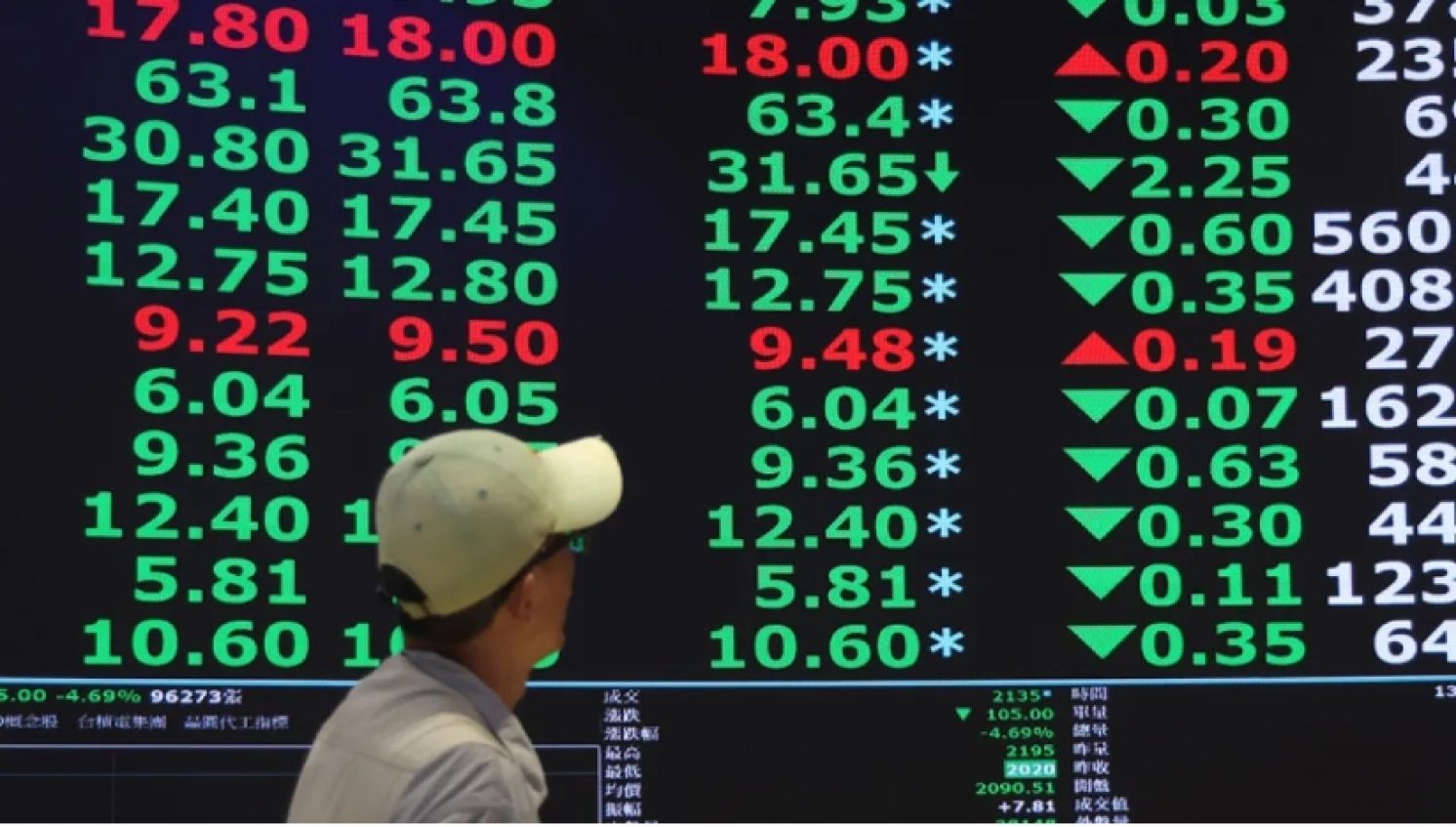
Taiwan's stock market has plunged more than 10,000 points in just one month. Beyond the collapse in share prices, what is even more unsettling about this market crash is that margin financing leverage is beginning to unravel.
Judging by the scale of the reduction in margin financing, the combined outstanding margin financing balance for listed and over-the-counter stocks plummeted by NT$56.4 billion (about US$1.7 billion) in a single day on November 6. From October 6 to November 6, the combined balance fell by nearly NT$159.8 billion (about US$5 billion), a decline of 18.5 percent. Leveraged funds that once fueled the bull market are now retreating at an alarming pace.
Yet even as margin calls began to emerge, the officially reported market-wide account-level collateral maintenance ratio remained as high as 159.77 percent. With Taiwan's stock market having fallen by 20 percent and some individual stocks having lost half their value, why has the official maintenance ratio remained around 160 percent? How much risk does this figure actually reveal, and how much danger does it conceal?
The seeds of the most troubling questions surrounding this market crash were planted as early as late July this year. At the time, Taiwan's stock market fell sharply, and private financial information platform CMoney estimated that the margin maintenance ratio had dropped to around 143 percent, raising concerns that a wave of margin calls was imminent. However, the Financial Supervisory Commission (FSC) and Taiwan Stock Exchange (TWSE) clarified that the officially reported market-wide account-level collateral maintenance ratio for margin trading remained around 175 percent.
In the same market, the two figures differed by a staggering 32 percentage points. On July 29, CMoney, which had tracked changes in margin financing for more than two decades, unexpectedly announced that it would stop providing data on margin financing maintenance ratios, short-selling maintenance ratios, and overall maintenance ratios. The relevant historical data were also gradually removed. CMoney explained that because the TWSE did not provide complete raw data on margin trading, private platforms could only make estimates using publicly available information. To avoid raising market concerns over discrepancies with official figures, it therefore discontinued the service.
At precisely the moment when the stock market most needed risk warnings, a sensitive indicator that investors had relied on for years was suddenly switched off without warning.
Three months later, a similar discrepancy emerged once again. According to margin financing data covering 2,360 individual securities, the maintenance ratio on November 4 was approximately 145.26 percent when estimated using outstanding margin financing balances as weights. On the same day, securities firms' account-level maintenance ratios were also around 145 percent. However, the official account-level maintenance ratio for November 4 was still estimated at 167.42 percent, a difference of 22 percentage points.
Why was the discrepancy so large? First, the official calculation combines margin financing, short selling, and other collateral, potentially reducing the visibility of margin financing risks associated with individual stocks.
Second, positions with high maintenance ratios may conceal the dangers facing accounts with low maintenance ratios. However, if regulators publish only the overall average without disclosing the distribution of high-risk accounts, investors will find it difficult to identify where leverage-related pressures are actually accumulating.
In particular, when privately estimated data are no longer available and the authorities fail to simultaneously disclose more detailed risk indicators, investors lose an important warning signal that could otherwise be used for cross-checking.
When the market most urgently needs timely warnings, does the existing information disclosure system actually allow investors to see the real dangers? The questions that the FSC and TWSE should answer are, in fact, quite simple.
Why can the authorities not regularly disclose the number of margin financing accounts and their outstanding financing amounts across different maintenance ratio ranges, such as below 140 percent and between 140 and 150 percent, while protecting personal information?
Why can they not separately disclose how margin financing alone, combined margin financing and short selling, exchange-traded funds (ETFs), and other collateral affect maintenance ratio statistics?
Why can they not publish daily figures on the number of accounts receiving margin calls, the amounts demanded, the proportion of margin calls successfully met, and the actual value of forced liquidations, so that the market can determine in advance whether leverage-related pressures are accumulating or subsiding?
The most dangerous moments in financial markets often occur when risks have already crept dangerously close, yet investors still believe they are far from the edge of the cliff.