Using Japan–Philippines EEZ negotiations as Pretext, China Circumnavigates Taiwan
United Daily News Commentary, June 11, 2026
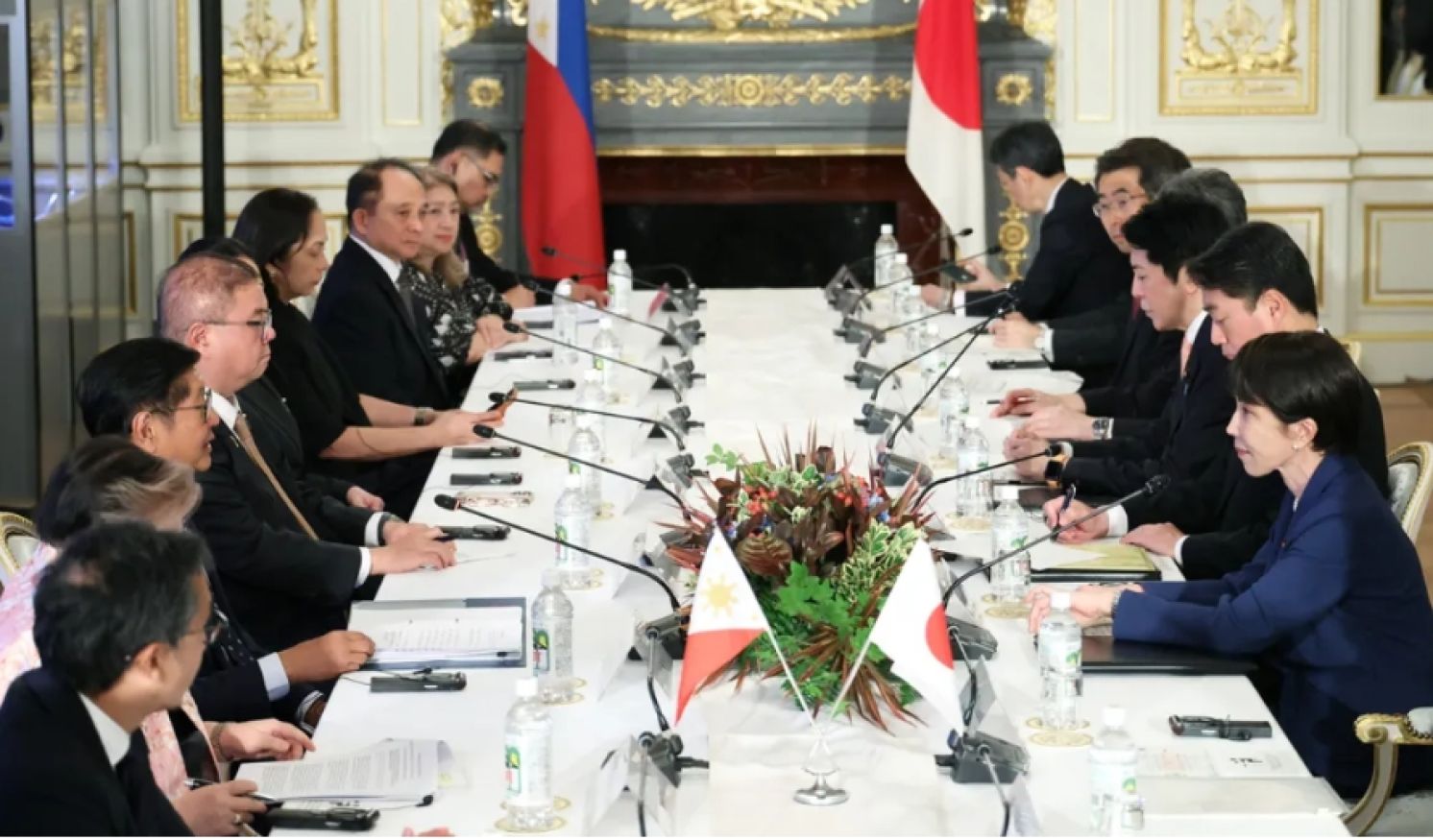
Prime Minister Sanae Takaichi of Japan and President Ferdinand Marcos Jr. of the Philippines announced on May 28 that the countries would conduct an Exclusive Economic Zone (EEZ) delimitation in waters east of Taiwan. The two leaders even happily celebrated by singing karaoke together (a Beatles classic). Little did they realize that this move would instead hand mainland China an opportunity. From now on, law enforcement operations by mainland Chinese Coast Guard and maritime authorities in waters east of Taiwan may become normalized, leaving Taiwan as the only party to suffer the consequences.
As cross-strait relations have become increasingly tense, mainland China has steadily expanded its presence in waters surrounding Taiwan in recent years. The median line of the Taiwan Strait has effectively been nullified, restricted and prohibited waters around Taiwan’s offshore islands have been breached, and mainland Coast Guard and maritime authorities have established what they describe as “normalized jurisdiction” in multiple maritime areas. Only the waters east of Taiwan have yet to be incorporated into a “circumnavigation patrol” around the island.
Some mainland Chinese military observers have stated that the mainland Coast Guard has already planned regular patrol routes encircling Taiwan. In the past, only limited and low-profile patrols were possible and were not suitable for public promotion. Now that Japan and the Philippines have announced EEZ delimitation talks, it is as if they have mapped out patrol routes for the mainland, allowing its Coast Guard and maritime authorities to openly and prominently fill the patrol gap in waters east of Taiwan.
Mainland Chinese military experts argue that there are precedents for what they regard as provocations by Japan and the Philippines against China. Before 2012, Japan maintained more than 40 years of unilateral de facto control over the Diaoyutai Islands and their adjacent waters. The mainland exercised restraint in consideration of Sino-Japanese relations. However, in September 2012, Japan announced the nationalization of the Diaoyutai Islands, triggering widespread anti-Japanese sentiment across the mainland and prompting concrete maritime actions. By 2025, the mainland’s normalized patrols around the Diaoyutai Islands reportedly totaled 357 days, effectively amounting to year-round control.
The Philippines provides another example. By challenging mainland China’s control over Ren’ai Reef, Xianbin Reef, and Huangyan Island in the South China Sea, the Philippines has seen its fishermen increasingly unable to enter those waters freely for fishing. Mainland naval and air forces frequently conduct combat-readiness patrols in surrounding waters. Huangyan Island has come under further de facto control and has even been designated a national-level nature reserve. More recently, the mainland has called on the Philippines to return Thitu Island, the second-largest island in the South China Sea, which was occupied in 1971 while it was under Taiwan’s control.
In response to what mainland China views as a coordinated maritime law enforcement patrol initiative by Japan and the Philippines, Beijing has successively dispatched its Coast Guard vessel Daishan and accompanying ships, as well as agencies under the Ministry of Transport, including the Fujian Maritime Safety Administration, Guangdong Maritime Safety Administration, East China Sea Navigation Support Center, and East China Sea Rescue Bureau. These actions also highlight that the mainland has effectively bypassed Taiwan and is unilaterally exercising maritime law enforcement and administrative jurisdiction.
Some mainland Chinese scholars have openly stated that, in the future, beyond the Coast Guard and maritime authorities, China’s fisheries administration and natural resources agencies will also become involved in establishing comprehensive control over waters east of Taiwan. This will consist of the Coast Guard, maritime administration agencies, fisheries administration agencies, and natural resources authorities.
These plans do not mention participation by the People’s Liberation Army (PLA), but PLA naval and air forces would serve as a latent and largely unused strategic backstop.
Among all parties involved, Taiwan is likely the most frustrated and helpless. Behind the actions of Japan and the Philippines lies the recent effort by the United States to encourage its allies to strengthen their defense capabilities and contain China within the First Island Chain. Faced with this sudden development, Taiwan initially failed to grasp the implications and immediately offered its approval. Only later did it realize that its own sovereignty and maritime economic interests could be affected, prompting a change in position, but by then it was already too late.
On June 10, mainland China reported that its five-day “special maritime traffic law enforcement operation” had inspected a total of 198 passing vessels. This may only be the beginning. If the mainland Coast Guard and maritime authorities eventually establish comprehensive control over waters east of Taiwan, and cross-strait relations deteriorate further, mainland maritime authorities may conduct onboard inspections at any time. Whether exports of Taiwanese semiconductors and other high-tech products, imports of oil and gas, or even imports of American-made weapons could encounter difficulties may ultimately become the issue of greatest concern for Taiwan.