Unexpected Black Box: What Other Concessions Has Lai Administration Concealed?
United Daily News Editorial, April 9, 2026
The Office of the United States Trade Representative (USTR) has released this year’s National Trade Estimate (NTE) Report, revealing multiple commitments under the U.S.-Taiwan Agreement on Reciprocal Trade (ART), including opening markets to U.S. beef and pork, bovine by-products such as blood and tallow, abandoning the Special Safeguard Mechanism (SSG) for agricultural products, and accepting American automotive import technical standards. These measures effectively amount to opening Taiwan’s market wide to the United States. None of these “black box” commitments have ever been clearly disclosed in the government’s public statements, indicating that the administration of President Lai Ching-te has relied on domestic propaganda to exaggerate its achievements. Notably, even after paying such a high price, Taiwan was still subjected to Section 301 investigations by the United States and a 100-percent tariff on patented pharmaceuticals. Yet such negotiation outcomes are still touted as a “home run,” which is astonishing.
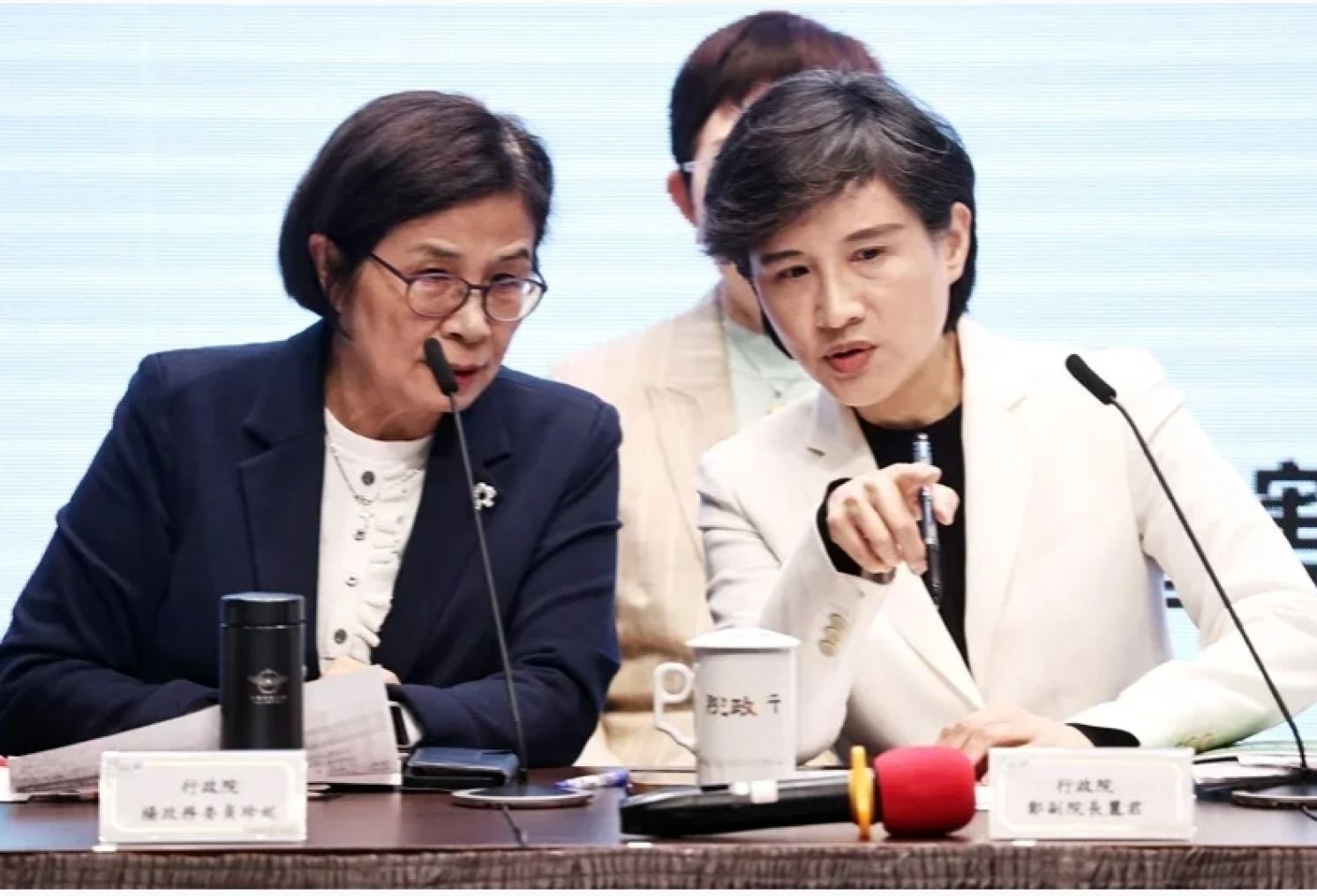
The U.S.-Taiwan tariff negotiations lasted eight to nine months, during which the government kept silent on the potential impacts on domestic industries. In contrast to Japan and South Korea, whose governments gradually disclosed necessary information, the process was entirely opaque. It was not until January of this year, when a memorandum of understanding (MOU) was signed, followed by the formal agreement in mid-February, that the government held a high-profile press conference to praise its achievements. Among the highlights were claims of a 15-percent tariff without stacking, most-favored treatment under Section 232 tariffs, and the presentation of bubble tea to symbolize that 2,072 products—including tapioca starch and tea—would be exempt from U.S. tariffs. This was packaged as a “successful negotiation,” boasting a “home run” and praising negotiators Vice Premier Cheng Li-chun and Chief Trade Representative Yang Jen-ni for safeguarding national interests. As for what Taiwan conceded, what it agreed to open, and what compromises were made, these were glossed over.
Despite the Lai administration’s efforts to present a favorable picture, controversies were evident even from the initially disclosed content. In addition to committing to $500 billion in corporate investment backed by government credit guarantees, the agreement explicitly stipulated that defense spending must account for at least 3 percent of GDP, violating Taiwan’s budgetary autonomy and infringing upon legislative oversight. Furthermore, many of the U.S. tariff exemptions granted to Taiwan apply to products not even produced domestically in the United States. Moreover, Taiwan’s semiconductor supply chain investment—previously treated as a “sacrificial offering”—far exceeds the commitments required of other countries, whose U.S.-bound investments do not involve their core industries, such as South Korea’s cooperation in shipbuilding. In other words, the “value content” of Taiwan’s semiconductor investments in the United States far surpasses that of other countries, making the concession extraordinarily disproportionate.
Unexpectedly, the concealed contents of the ART, long obscured by the Lai administration, have now been exposed through the newly released NTE report. Among the undisclosed commitments are Taiwan’s agreement to open imports of bovine by-products such as blood and tallow, and to apply the same inspection standards to American pork as to domestic or other imported pork. For American beef, cumbersome import quarantine procedures will be eliminated, and ractopamine standards will align with those of the Codex Alimentarius Commission. Previously, under the World Trade Organization (WTO) Agreement on Agriculture, Taiwan could impose additional tariffs as a safeguard mechanism if agricultural imports surged and prices dropped excessively; yet Taiwan has agreed to abandon this final line of defense for the United States. From food safety to agriculture, this amounts to a comprehensive concession.
However, these commitments and details were never clearly disclosed to the public in official briefings or press releases. In response to accusations of withholding information, the Executive Yuan has claimed that the full agreement was published on its website on the day of signing, yet press conferences only highlighted figures and items favorable to the government. The U.S.-Taiwan tariff negotiations were not only opaque during the process, but also in post-agreement disclosures, leaving the public in the dark—an approach that contradicts the administration’s claim of “transparent governance.”
Even after making such extensive concessions, Taiwan has only secured tariff rates equivalent to those of Japan and South Korea. Following a U.S. federal court ruling that reciprocal tariffs were unlawful, President Donald Trump announced the initiation of Section 301 investigations against multiple countries, with Taiwan still among those affected. More recently, Mr. Trump declared a 100-percent tariff on imported patented pharmaceuticals, with Taiwan again bearing the full brunt, while Japan and South Korea enjoy preferential rates of 15 percent. The Lai administration has described both the abandonment of safeguard mechanisms and the heavy tariffs on pharmaceuticals as having “manageable impact,” yet in reality, this underscores that despite offering substantial concessions, Taiwan has failed to secure any preferential treatment from the United States. Can such negotiations truly be called successful?
In light of the “black box” revealed by the USTR and juxtaposed with the Executive Yuan’s narrative built on selective disclosures, the public is left with one pressing question: How much national interest has the Lai administration already traded away? And is this fair to past and future generations?