U.S.-Skeptic Anxiety Widespread: President Lai Ramps Up Pro-Japan Rhetoric to Compensate
China Times Editorial, March 17, 2026
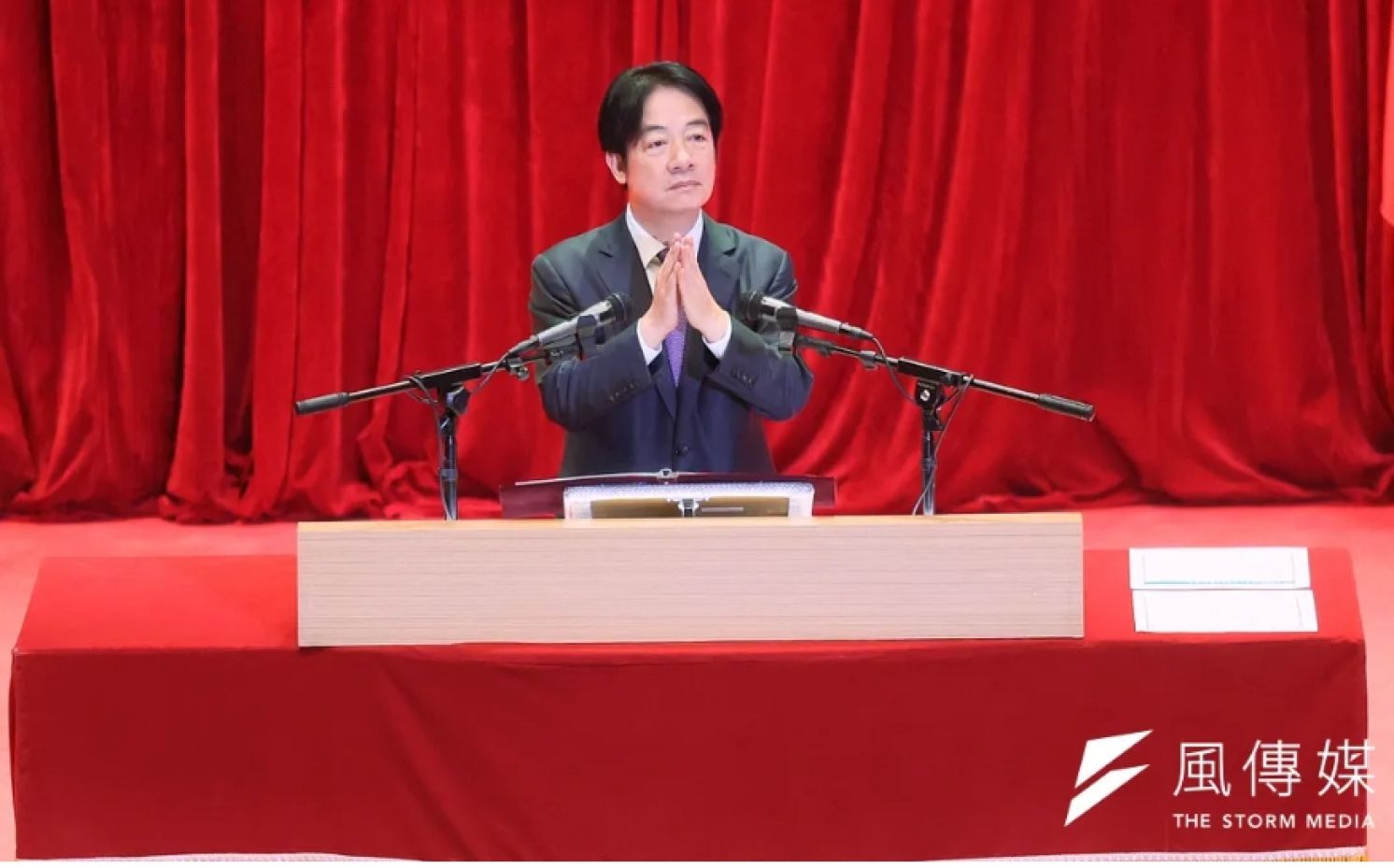
President Lai Ching-te’s remarks at the symposium commemorating the 30th anniversary of direct presidential elections has sparked widespread public reaction—eliciting both ridicule and anger. The ridicule stems from his claim that “there is no need to declare independence,” which effectively exposes the façade of the pro-independence party platform, as well as his mistaken reference to Ryotaro Shiba as the Governor of Tokyo. The anger arises from his assertion that Japan’s promotion of the so-called “Greater East Asia Co-Prosperity Sphere” led to its colonization of Taiwan, and that the Kuomintang (KMT) treated the Taiwanese people worse than Japanese colonial rule.
President Lai’s praising Japanese colonial history, belittling Republic of China governance on Taiwan, and undermining Taiwan-centric identity are nothing new. As some commentators have mocked, such narratives distort historical facts to the point of resembling “underground radio propaganda.” What warrants deeper reflection, however, is why President Lai continues to reiterate these arguments at this particular moment. The underlying reason may be his attempt to use “pro-Japan sentiment” to offset the anxiety within his support base caused by growing “skepticism towards the United States.”
So-called “skepticism towards the United States,” when traced to its origins, was initially a concept created by Democratic Progressive Party (DPP) supporter circles to label and portray the KMT as an American-skeptic political party. However, like the story of “The Boy Who Cried Wolf,” repeated claims over time have turned into a widely accepted perception. Especially in the era of Trump 2.0, American-skeptic sentiment has become global in scope. From sweeping reciprocal tariffs last year and power politics to target foreign leaders now, North Atlantic Treaty Organization (NATO) allies have been increasingly alienated. Recently, President Donald Trump of the United States even called on Western and Asian countries to escort vessels in the Strait of Hormuz, yet most responded perfunctorily—demonstrating that American-skeptic sentiment is not limited to Taiwan. The Lai administration’s full alignment with the United States, including signing unequal trade agreements under a “give more than asked” approach, now faces the predicament of tariff policies being overturned.
Moreover, Mr. Trump’s decision to delay arms sales to Taiwan in order to facilitate a visit to Beijing and meeting with Chinese President Xi Jinping, along with the continued refusal to approve President Lai’s transit through American territory during overseas visits, has compounded uncertainties. With the postponement of the “Trump–Xi meeting,” arms sales are likely to be further delayed, and coupled with the uncertain outlook on tariffs, “skepticism towards the United States” may already have become an inescapable concern for President Lai. If this skepticism were likened to a comedic performance, then both presidents Trump and Lai would play the roles of the comic and the straight man.
Under such circumstances, the pro-Taiwan cabinet in Japan, led by Prime Minister Sanae Takaichi, has become a political lifeline for the DPP administration. As one imbalance is countered by another, the Lai administration has intensified efforts to strengthen Taiwan–Japan relations and secure Japan’s support. The more widespread skepticism towards the United States becomes, the stronger the pro-Japan posture grows. For President Lai and the DPP, narratives that praise Japan’s colonial history have long been a form of political correctness. President Lai appears to have forgotten that Taiwan only recently marked the 80th anniversary of its retrocession following the Second World War. His overt promotion of pro-colonial sentiment reinforces the perception that he cannot represent the majority of public opinion in Taiwan.
The principle that “the people of Taiwan are the masters of their own house” is a genuine political achievement rooted in the founding, state-building, and R.O.C. Constitutional development. It has nothing to do with colonial rule, nor with Taiwan independence. During the Japanese colonial period, while modernization efforts were carried out, Taiwanese people were treated as “second-class citizens.” Even peaceful resistance by Taiwanese intellectual elites resulted only in “pseudo-democratic” local elections, not to mention the violent suppression of dissent.
After the KMT assumed governing Taiwan, although the expansion of anti-communist measures led to the White Terror, there was nonetheless a clear intent to implement the principle of civil rights. The process from limited democracy to comprehensive direct elections of the president was driven both by opposition movements and by the KMT’s constitutional reform trajectory. Otherwise, how could the DPP administration today exist and President Lai take on his current post?
Achievement of self-rule by Taiwan’s people and return to R.O.C. constitutional democracy are two sides of the same coin. KMT achievements in building Taiwan fundamentally represent a path of Chinese political modernization and the development of civil society. President Lai, however, in pursuit of short-term political gain, distorts the positive significance of direct presidential elections, diminishes the legacy of KMT governance, and promotes a narrative of Taiwan independence intertwined with pro-colonial sentiment. Using pro-Japan rhetoric to compensate for insecurity towards the United States neither contributes to domestic political reconciliation nor avoids revealing a narrow and flawed historical perspective on Taiwan independen
From: https://www.chinatimes.com/opinion/20260317003405-262101?chdtv