U.S. Demands "Non-China": Who Pays the Price?
The Storm Media Editorial, August 31, 2026
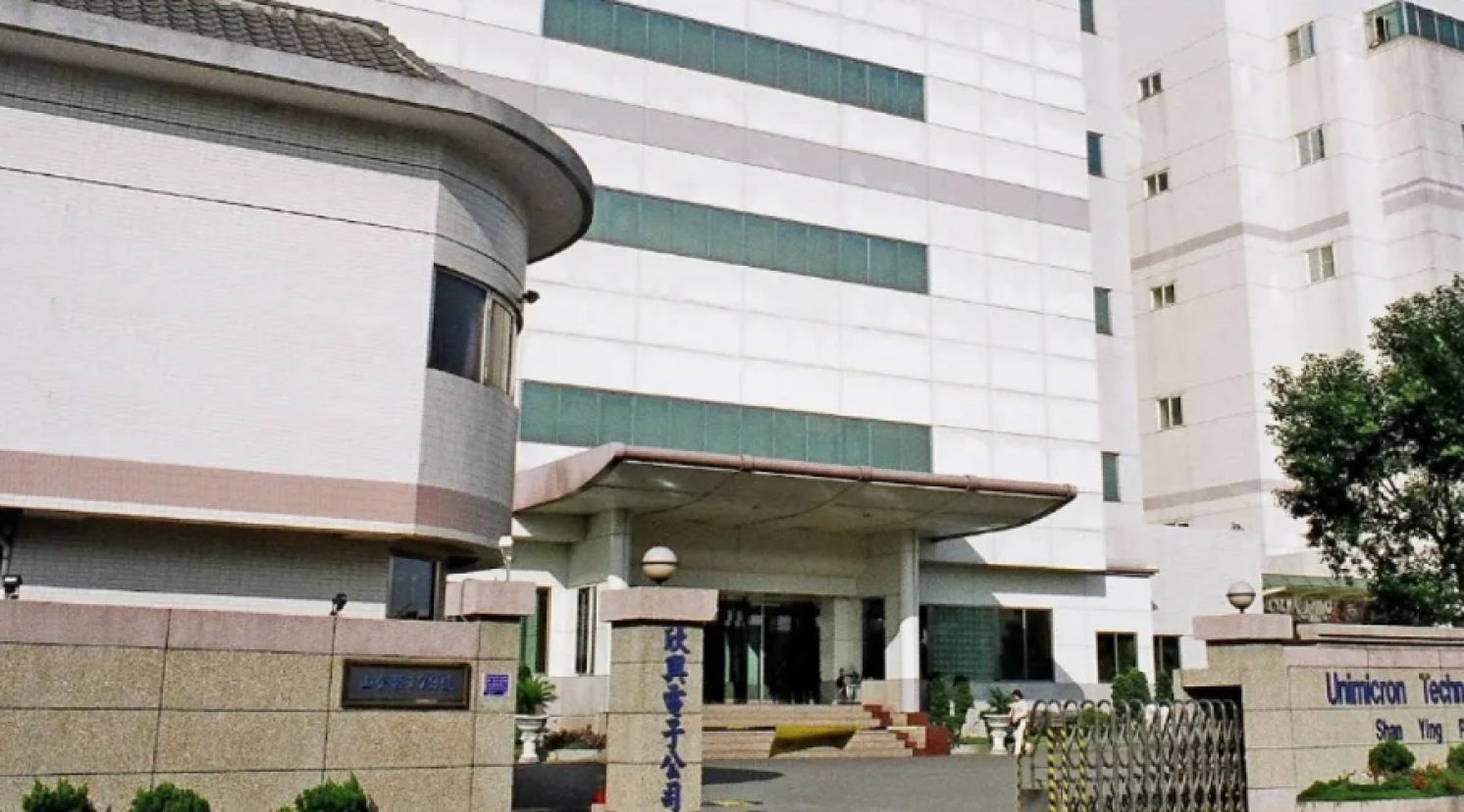
Unimicron Technology, a major Ajinomoto build-up film (ABF) substrate and printed circuit board (PCB) manufacturer, was recently searched by prosecutors and investigators on suspicion of bringing PCBs produced in China back to Taiwan and replacing their labels with “Made in Taiwan,” allegedly involving document forgery and false labeling of goods.
“China-made products turned into Made in Taiwan” and “place of manufacture washing” quickly became news headlines. However, the real question that needs to be asked is: Were the products brought back from mainland China finished goods, semi-finished products, or boards that still required multiple critical manufacturing processes? If mainland raw materials and semi-finished products entering Taiwan for processing are directly regarded as country-of-origin washing, then the impact would likely extend beyond Unimicron to a large portion of Taiwan’s electronics industry.
The reason the Unimicron case is sensitive is that it touches upon a fact that Taiwan’s electronics industry has long been reluctant to confront: over the past two to three decades, the competitive advantage of Taiwan’s electronics industry has been built on a cross-strait production system.
Taiwan’s company headquarters have been responsible for customer orders, R&D technology, procurement, capital and management, while Taiwanese companies’ factories in mainland China have provided mass production, rapid delivery and a complete manufacturing cluster. Taiwanese companies have leveraged the land, labor and supplier networks in the mainland to amplify their own order-taking and management capabilities, becoming important manufacturing partners behind international brands such as Apple, Dell, HP and Nvidia.
The PCB industry is particularly representative of this model. According to statistics from the Taiwan Printed Circuit Association, approximately 62 percent of the PCB output value of Taiwanese companies in the second quarter of 2024 came from production bases in China, while Taiwan accounted for approximately 35.2 percent.
If the government treats Chinese raw materials and semi-finished products entering Taiwan for processing as suspicious activity across the board, then the impact will not be limited to a few PCB manufacturers, but will extend across the entire electronics supply chain.
Citing national security, export controls, tariffs and government procurement, the United States has required critical electronic products to establish China-free supply chains. As a result, Taiwanese companies have had to establish new factories in Vietnam, Thailand, Malaysia, India, Mexico and the United States.
Taiwanese companies are therefore facing double investment: one supply chain serves China and general markets, while another China-free supply chain serves the United States and security-sensitive customers. Equipment, inventory, logistics, engineers and compliance costs all increase, while scale is dispersed across more countries.
While Taiwanese companies are busy relocating factories, undergoing recertification and improving yields at new plants, mainland Chinese companies can continue to expand capacity, lower prices and shorten delivery times by leveraging existing industrial clusters. Price-sensitive orders for PCBs, consumer electronics, batteries, motors and general-purpose drones may therefore shift to mainland suppliers.
American defense, telecommunications, energy and critical infrastructure markets may exclude mainland Chinese companies due to China-free supply chain requirements. However, markets in the mainland itself, as well as India, Europe, Southeast Asia, the Middle East, Russia, Africa and Latin America, continue to place importance on price and delivery capabilities. If Taiwanese companies raise costs because of China-free supply chains, Mainland companies will have an opportunity to expand their presence in non-U.S. markets.
China-free supply chains serve U.S. national security interests and can also reduce Taiwan’s dependence on production capacity in the mainland, but security has never been free.
If the United States requires Taiwanese companies to exclude mainland Chinese materials, components and manufacturing processes, then it should provide long-term purchase guarantees, factory subsidies, low-interest financing, government procurement eligibility and reasonable price premiums for China-free products. American brands cannot, on the one hand, require their supply chains to leave the mainland while, on the other hand, continuing to demand that Taiwanese manufacturers accept the prices, delivery times and volumes offered by the mainland Chinese supply chain.
The Unimicron case remains under investigation, but it has already exposed the pressing dilemma faced by Taiwan’s electronics industry. This transformation cannot be paid for solely by Taiwanese companies. If the United States demands supply chain security, then it must also share the cost of rebuilding the supply chain.