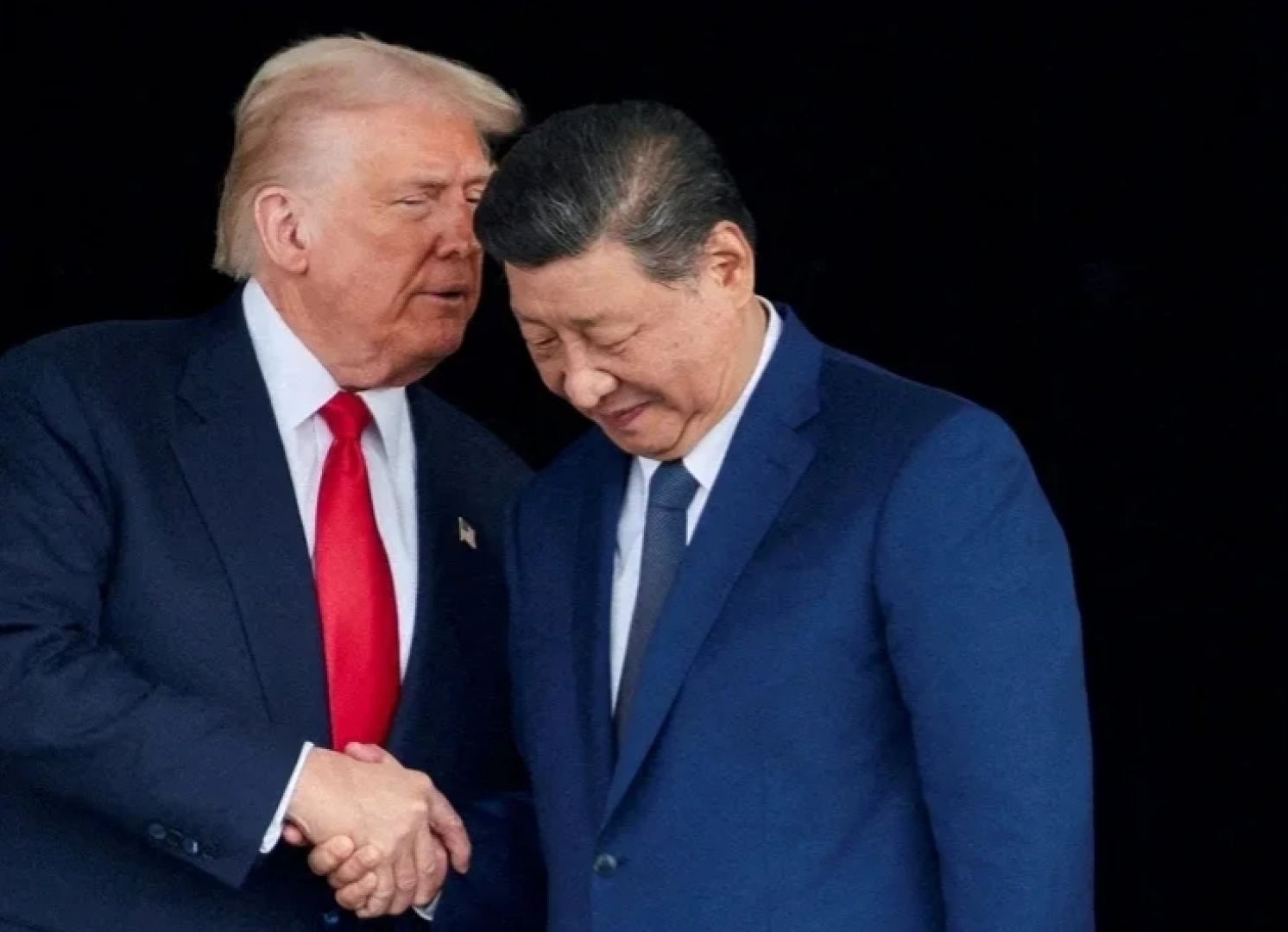
Trump-Xi Phone Call: Is U.S. Beginning to Deviate from "Six Assurances" to Taiwan?
By Chieh Chung, The Storm Media Opinion, February 27, 2026
Two international developments in succession introduce significant variables affecting future U.S.–Taiwan relations. First, on the evening of February 16, President Donald Trump of the United States stated aboard Air Force One that he was discussing future arms sales to Taiwan with Chinese President Xi Jinping and revealed that a decision would be made soon. Shortly thereafter, on February 20, the U.S. Supreme Court ruled that the “reciprocal” tariffs imposed by President Trump on nearly all countries under the International Emergency Economic Powers Act were invalid.
These two events convey the following messages. First, in order to advance Mr. Trump’s state visit to mainland China, Washington decided to respond to Mr. Xi’s request during the February 4 “Trump-Xi call” and engage in discussions with Beijing regarding possible future arms sales to Taiwan, raising concerns about whether the content of the United States’ “Six Assurances” to Taiwan has been loosened. Second, while Washington and Beijing were engaged in intensive negotiations over Mr. Trump’s visit to China, the U.S. Supreme Court’s ruling undoubtedly weakened Mr. Trump’s leverage to pressure Beijing at this critical moment.
Regardless of whether the discussions between the two leaders will affect arms sales to Taiwan, Mr. Trump’s public confirmation that he is discussing future arms sales to Taiwan with Mr. Xi has already impacted U.S.–Taiwan relations. This is because it represents a public reversal by the sitting U.S. president of the second of the “Six Assurances,” namely that “the United States has not agreed to consult with the People’s Republic of China in advance regarding arms sales to Taiwan.”
From this point forward, Beijing can cite Mr. Trump’s February 16 remarks as a precedent, repeatedly demanding that Washington “discuss” arms sales to Taiwan with Beijing, and even regard this as an achievement in Mr. Xi’s “legal warfare” against the United States over the Taiwan issue during his tenure.
Mr. Trump’s February 16 remarks are unlikely to have much impact on the approximately US$11.1 billion arms sale to Taiwan that was already announced by the United States on December 17 last year. However, the U.S. Supreme Court’s February 20 ruling could affect arms sale packages currently under discussion in Washington, including additional purchases of the Patriot Advanced Capability-3 missile defense system, the National Advanced Surface-to-Air Missile System (NASAMS), Link-22, and the Integrated Battle Command System (IBCS), all of which form the core components of Taiwan’s “T-Dome” defense concept.
After the U.S. Supreme Court declared Mr. Trump’s reciprocal tariffs invalid, the pressure on mainland China was significantly reduced. Trump’s negotiating position in the upcoming state visit to Beijing has been weakened and is unlikely to recover before his planned departure at the end of March. This inevitably raises concerns about whether the arms sales to Taiwan still under discussion in Washington might be delayed or even altered because of this sudden development.
If Washington, in order to avoid having the state visit significantly postponed or canceled by Beijing, decides to temporarily suspend arms sales to Taiwan, then after Mr. Trump’s Beijing trip concludes, and in order to ensure that Beijing fulfills the “large orders” it has promised—thereby boosting the Mr. Trump’s and Republican momentum in the November 3 midterm elections—Washington may continue to delay submitting a new round of arms sales packages to Congress. Even more concerning is that this pending arms sale will inevitably become Beijing’s primary bargaining chip in subsequent negotiations, or serve as a condition in exchange for Beijing’s willingness to offer large orders to Mr. Trump.
It is worthy to note that after an anonymous White House official confirmed to the media on February 20 that Mr. Trump would visit China from March 31 to April 2, spokeswoman Mao Ning of the mainland’s Ministry of Foreign Affairs responded at a regular press conference on February 24 that “China and the United States are maintaining communication regarding Mr. Trump’s visit to China.”
The development suggests that after a shift in negotiating positions between Beijing and Washington in which one side’s gains come at the other’s expense, Beijing has begun to believe that during Mr. Trump’s state visit it has a significantly increased chance of achieving favorable outcomes in U.S.–Taiwan relations. These could include publicly expressing “opposition” to Taiwan independence, committing during Mr. Trump’s term to place limits on U.S.–Taiwan political and military exchanges, committing to restrict both the “quality” and “quantity” of arms sales to Taiwan during his tenure, formalizing Mr. Trump’s February 16 remarks in some written form, or even consolidating the aforementioned elements into a fourth U.S.–China communiqué. Such outcomes would allow Mr. Xi to claim major achievements in the struggle with the United States over Taiwan, thereby prompting a more proactive stance from Beijing.