Taiwan-Japan Relations Face Trust Crisis
By Wang Chih-Hsiung, the Storm Media Opinion, April 22, 2026
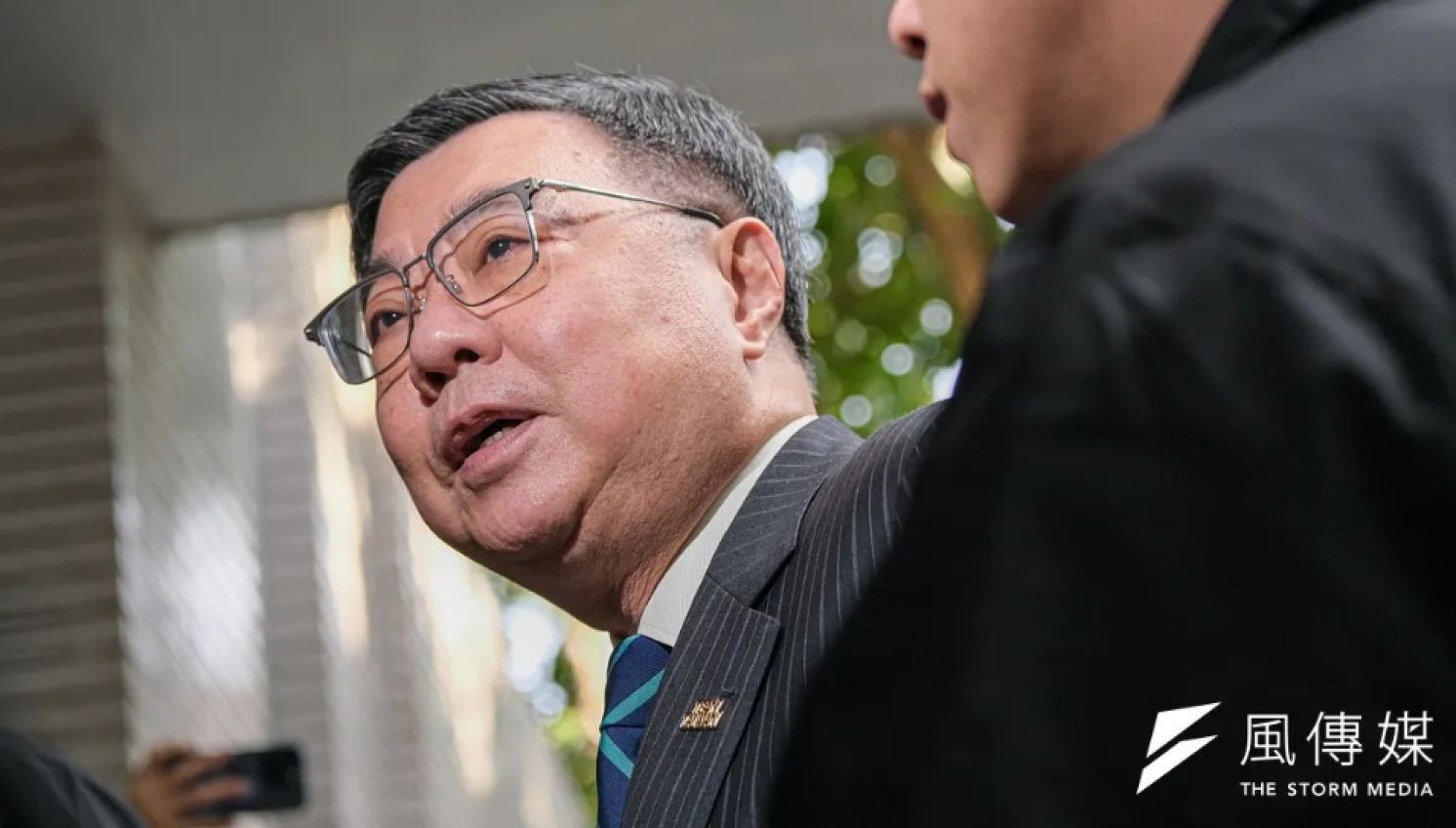
According to a March 17 report by Nikkei Asia, Premier Cho Jung-tai traveled to Japan in March this year to watch a World Baseball Classic (WBC) game. Given the sensitivity of bilateral interactions, Japan had explicitly requested that the visit be handled “with a low profile,” even suggesting the removal of accompanying spokespersons and photographers to avoid unnecessary political associations. However, the development of events completely deviated from this original intent. Taiwanese media quickly disclosed the trip, and the Central News Agency released a report almost immediately, turning what was meant to be an “invisible, low-profile” visit into a “public spotlight.” More intriguingly, Japanese officials privately stated that they “felt betrayed” and expressed concern that this incident could affect future Taiwan-Japan cooperation on sensitive issues.
The core of this incident is not whether Premier Cho “went to watch the game,” but rather “how he did so.” Premier Cho emphasized externally that the trip was a “private itinerary, funded personally with a chartered flight,” attempting to downplay its political implications. However, the actual execution is difficult to find convincing. The departure from Songshan Air Base, the presence of a sizable team including security personnel, spokespersons, and professional photographers—all these elements clearly diverge from the general public’s understanding of a “private trip.” When there is a clear contradiction between form and narrative, it is natural for Japan to question whether this was truly low-profile, or rather a deliberately constructed “illusion of low profile” for domestic political consumption.
More importantly, this incident reflects an emerging “trust crisis” in Taiwan-Japan interactions. The relationship long been regarded as one of the most stable and friendly axes in Taiwan’s external relations. Precisely because of this, the expectations for mutual understanding and discretion are even higher. When Japan had clearly expressed a preference for low-profile handling, yet Taiwan failed to effectively control information leakage—indeed allowing near-instant media dissemination—this is not merely an issue of administrative discipline, but a lapse in diplomatic sensitivity.
Diplomacy has never been a simple matter of public performance; it is an art that places great emphasis on detail and trust. Especially in cases involving informal interactions, gray areas, or cooperation that has not yet fully matured, the ability to maintain confidentiality often determines whether cooperation is possible at all. The reason this incident triggered dissatisfaction from Japan is precisely because it crossed this red line. It is not that “watching a game” is inherently problematic, but that the gap between “agreed low profile” and “actual high profile” undermined the basic trust between the two sides.
Returning to the domestic political dimension, the contradiction between Premier Cho’s statements and actual practices reflects a familiar operational pattern in Taiwan’s political culture: externally framing actions as “privately funded,” while internally mobilizing public authority and resources. This “blurring of public and private boundaries” may alleviate political pressure in the short term, but in the long run, it erodes governmental credibility. Once the public perceives a discrepancy between words and actions, no amount of explanation can easily restore trust.
Ironically, Japan’s initial request for a “low profile” was intended to avoid unnecessary political interpretations and preserve flexibility for both sides. Yet, due to deliberate information exposure, the political effect was amplified instead, potentially making similar interactions more difficult in the future.
A baseball game could have remained a simple extension of sports exchange; a trip could have served as an opportunity to deepen bilateral engagement. But when “low profile” turns into “high profile,” and when a “private itinerary” is repackaged domestically as an “official breakthrough,” any perceived gap between commitments and outcomes inevitably harms not just perceptions, but the relationship itself. For the administration of President Lai Ching-te, the real issue may not be whether the trip was exposed, but why the appropriate sense of proportion could not be maintained. On the international stage, maintaining a low profile is sometimes more difficult than being high profile—but it is also far more important.
The author is a research associate professor at the College of Applied Health Sciences, University of Illinois Chicago.