President Lai’s Military Pay Raise Motivated by Political Ends
United Daily News Commentary, August 19, 2026
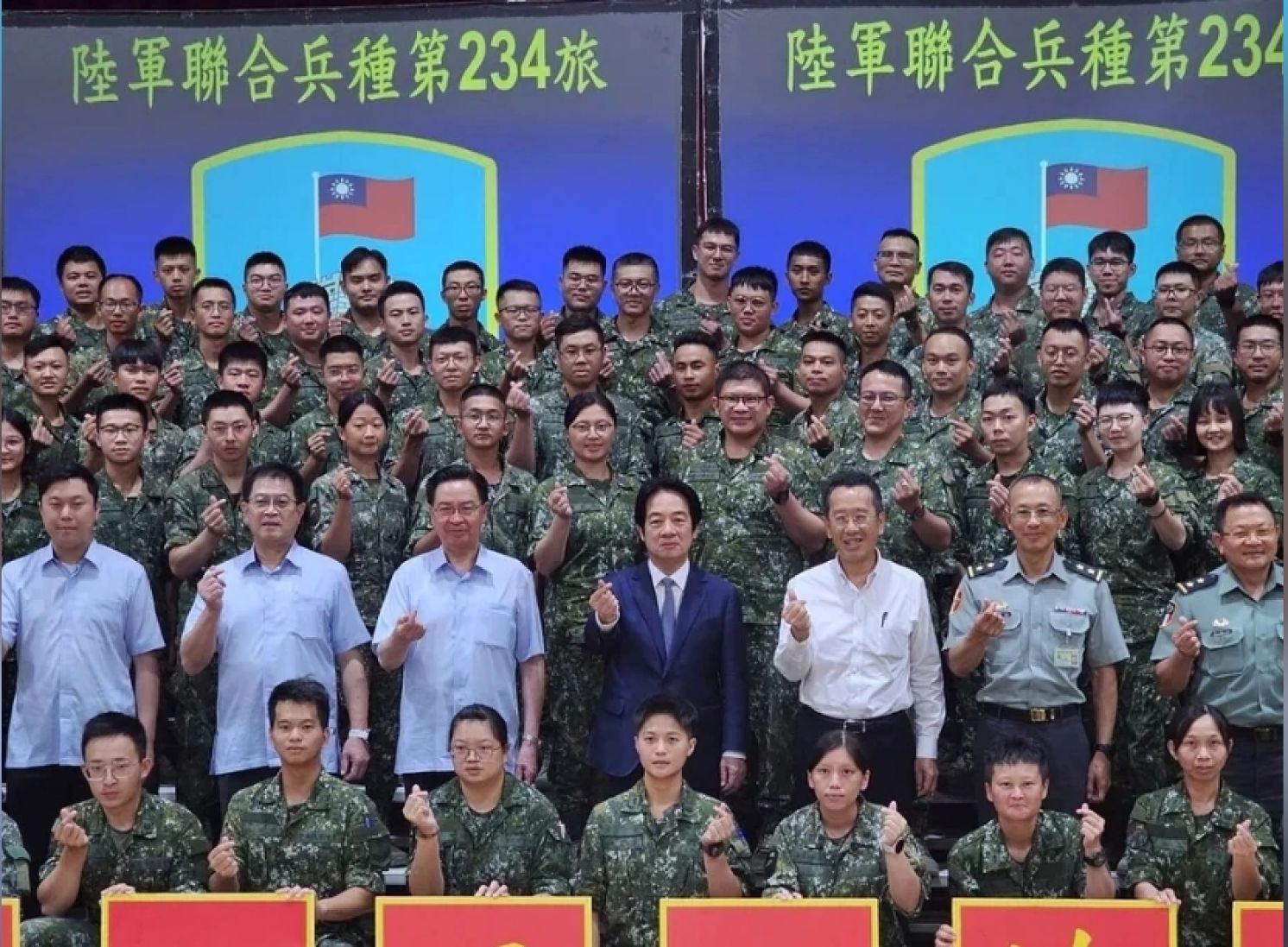
Today, an editorial in the United Daily News once again called attention to the crisis caused by the low manning rate of Taiwan’s armed forces, stressing that improving military compensation is a basic prerequisite for addressing the problem. Coincidentally, this afternoon President Lai Ching-te once again followed the same approach as last year, using a troop inspection as an opportunity to announce new benefits, retroactive by one month. Effective July 1, a new “Category III Combat Unit Allowance” will provide an additional NT$4,000 (about US$124) per month to personnel serving in units at the brigade level and below that sustain combat operations. More importantly, conscripts serving in combat units will receive the same combat allowance as volunteer service members.
Improving military compensation is certainly commendable. However, twice deliberately arranging for the president to personally announce new benefits while inspecting troops clearly suggests an eagerness to ensure that the commander-in-chief receives the credit. The question is whether this latest pay increase, while solving some problems, may also create new ones. Indeed, these measures suggest that strengthening the Armed Forces is still not the administration’s highest priority.
President Lai’s two personal announcements of military pay increases were, in fact, both intended to “counter” amendments to the military remuneration law passed by the Legislative Yuan last year, which set the monthly volunteer service allowance at NT$30,000 (about US$931). While the president has continued to announce increases in military compensation, the Executive Yuan has steadfastly refused to implement the provisions passed by the Legislative. This is clearly not a question of whether the government can afford the additional spending. Rather, the administration appears determined to insist, in effect, that “if I do not give it to you, you cannot take it yourself.” The political credit for improving military compensation must not be allowed to fall into the hands of the opposition.
When the administration of President Tsai Ing-wen announced the restoration of one-year compulsory military service, it pledged that conscripts would primarily serve in territorial defense units, while frontline combat units would continue to be staffed as much as possible by volunteer personnel. However, as personnel shortages in frontline combat units have worsened to the point that they can no longer be ignored, that promise is clearly destined to be broken. Conscripts must now be used to fill vacancies in combat units. In this respect, those conscripts who “volunteer” to serve in combat units do indeed deserve better compensation than their counterparts serving in second-line units.
A reasonable approach, therefore, would be to provide conscripts serving in combat units with additional compensation to distinguish them from other conscripts. By the same token, however, there should also be a meaningful pay differential between volunteer service members and conscripts serving in the same combat units.
Yet this time, the government has gone too far in its generosity, giving conscripts the same combat-unit allowance as volunteer personnel. Since substantial proportion of today’s volunteer soldiers are recruited from among conscripts, including those who previously underwent four months of military training, if the pay gap between conscripts and volunteers narrows considerably, then the incentive for conscripts to sign on for volunteer service will inevitably diminish. The foreseeable result is that the proportion of conscripts in frontline combat units will continue to rise. The original goal of retaining personnel for longer periods in order to build a more experienced and professional fighting force will become increasingly difficult to achieve.
Men born in 2005 will begin graduating from university next summer, meaning that Taiwan is about to enter a peak period for one-year conscription. On the one hand, the government appears to be trying to soften the political impact of abandoning its earlier commitment to keep frontline combat forces primarily volunteer-based. On the other, it may be using the opportunity to win favor with young people and their parents ahead of two difficult elections—one at the end of this year and another in early 2028. Whether the shortage of volunteer personnel can actually be resolved, or whether these measures might make the problem even worse, clearly does not appear to be the decision-makers’ highest priority.
This is precisely the biggest problem with the administration’s repeated declarations in recent years that it “supports national defense.” It would be unfair to say that a DPP administration does not support national defense. But in the political calculations of the national security establishment, the welfare and concerns of military personnel invariably take a back seat to the potential impact on the next election.