Politics Influences Intelligence: President Lai Commits National Security Taboo
China Times Editorial, August 17, 2026
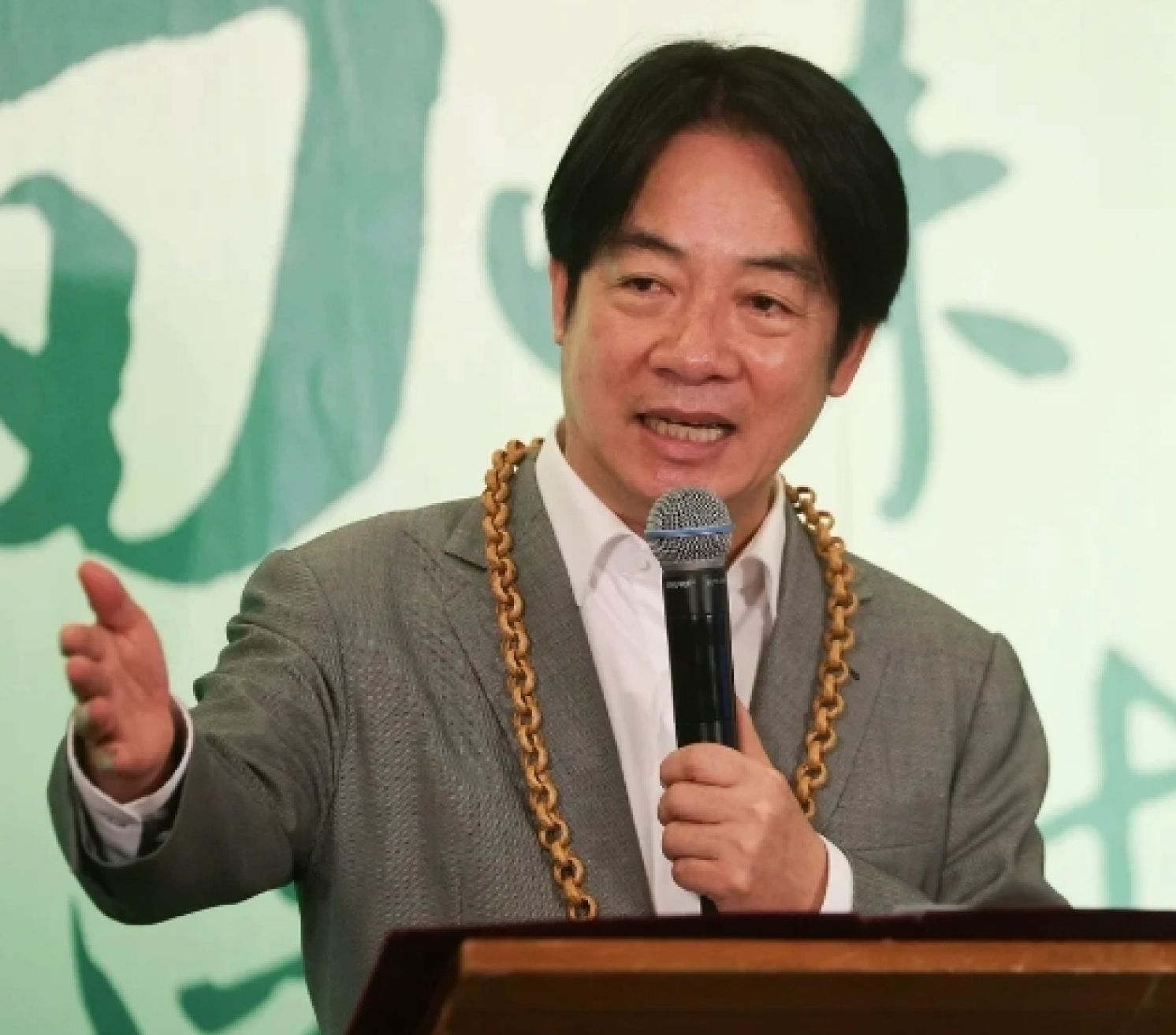
The Democratic Progressive Party (DPP) recently traveled south to Kaohsiung to hold a mobile meeting of its Central Standing Committee. Speaking off script at the meeting, President Lai Ching-te claimed that the Chinese Communist Party’s Beidaihe gathering had issued extremely stringent directives regarding Taiwan in four areas: opposing the passage of Taiwan’s defense budget, strengthening China’s “substantive governance” over Taiwan, cultivating a “fifth column” to promote unification, and instructing “forces in Taiwan” to support “Chinese patriotic forces” in the upcoming local elections. President Lai said that Kaohsiung was under tremendous pressure and that the election outcome would determine Taiwan’s future. “We absolutely must win,” he declared.
In Taiwan, creating a sense of impending national doom has long been a standard DPP election tactic. But is President Lai’s latest “China threat” card based on extraordinary, high-level intelligence, or is it merely an electoral maneuver that risks undermining his own credibility?
Since Chinese President Xi Jinping came to power, the traditional role of Beidaihe as a venue for factional consultation and political bargaining has clearly changed. Although senior leaders still routinely travel there for summer retreats, there is no regularly convened “Beidaihe meeting” with a formal agenda that produces official resolutions. Formal decision-making still has to go through established Party mechanisms such as the Politburo and Central Committee plenums.
Therefore, portraying the Beidaihe summer retreat as a formal decision-making meeting capable of issuing four secret directives on Taiwan does not correspond with how the Chinese Communist leadership actually operates in the Xi era.
Moreover, Beidaihe has always been one of the most difficult targets for intelligence agencies around the world to penetrate. Analysts can generally only infer what may have happened there by examining subsequent public appearances and personnel changes. Yet President Lai’s national security advisers appear almost as though they had been sitting inside the Beidaihe conference room taking minutes, able to enumerate all four directives on Taiwan in meticulous detail. It is as if they had suddenly turned into Tom Cruise, infiltrating Beidaihe to carry out a real-life Mission: Impossible.
A closer look at the supposed “secret directives” cited by President Lai shows that none of them requires infiltrating Beidaihe to uncover. At the Communist Party’s “2026 Taiwan Work Conference” in February, Chairman Wang Huning of the Chinese People’s Political Consultative Conference, publicly spoke of “firmly supporting patriotic pro-unification forces on the island” and “resolutely combating Taiwan independence.” In June, the Taiwan Affairs Office of the mainland’s State Council criticized Taiwan’s increased defense spending as an attempt to “seek independence through military means.” Meanwhile, Beijing’s continued normalization of military aircraft and naval patrols and its gray-zone operations, as well as its use of diplomacy and international law to constrain Taiwan’s governing authority and international space, are all widely known and ongoing developments.
In other words, these four supposed secret directives are either publicly stated policies or matters already reported in the news. Yet once bundled together, they suddenly become the “Beidaihe secret directives,” presented as evidence of Chinese Communist election interference—and therefore, the argument goes, Kaohsiung voters must elect Lai Jui-lung as mayor in order to safeguard Taiwan’s future. After making such an argument, does President Lai not realize how peculiar its logic sounds?
President Lai and his national security team owe the public an explanation: are these alleged secret directives based on direct intelligence, or are they the product of an overall intelligence assessment?
There are essentially two possible explanations for hthis situation. One is that national security advisers exaggerated the significance of the information, leading the president to make an erroneous judgment. The other is that the president himself politicized a national security assessment. Either way, the result is a distortion of the facts, making the president appear publicly as though he is out of touch with what is actually going on.
The current National Security Council includes Secretary-General Joseph Wu and deputy secretaries-general Lin Fei-fan, Enoch Wu, and Vincent Chao, all of whom have distinct political profiles. Yet one of the greatest taboos in national security work is allowing political positions to influence intelligence analysis. When an “assessment” turns into a “secret directive,” it may well be the consequence of politics interfering with intelligence.
If Beijing interferes in Taiwan’s elections through improper means, then it damages Taiwan’s democracy. But if the government uses a fabricated label to create fear, brands candidates from other political parties as “Chinese patriotic forces,” and portrays voters who do not support the DPP as “China’s forces in Taiwan,” then the party truly eroding Taiwan’s democracy is not the Communist Party, but the DPP.
From: https://www.chinatimes.com/opinion/20260817003213-262101?chdtv
〈Back to Taiwan Weekly Newsletter〉