Policy Mistakes Explain Setbacks During Visit
United Daily News Editorial, May 7, 2026
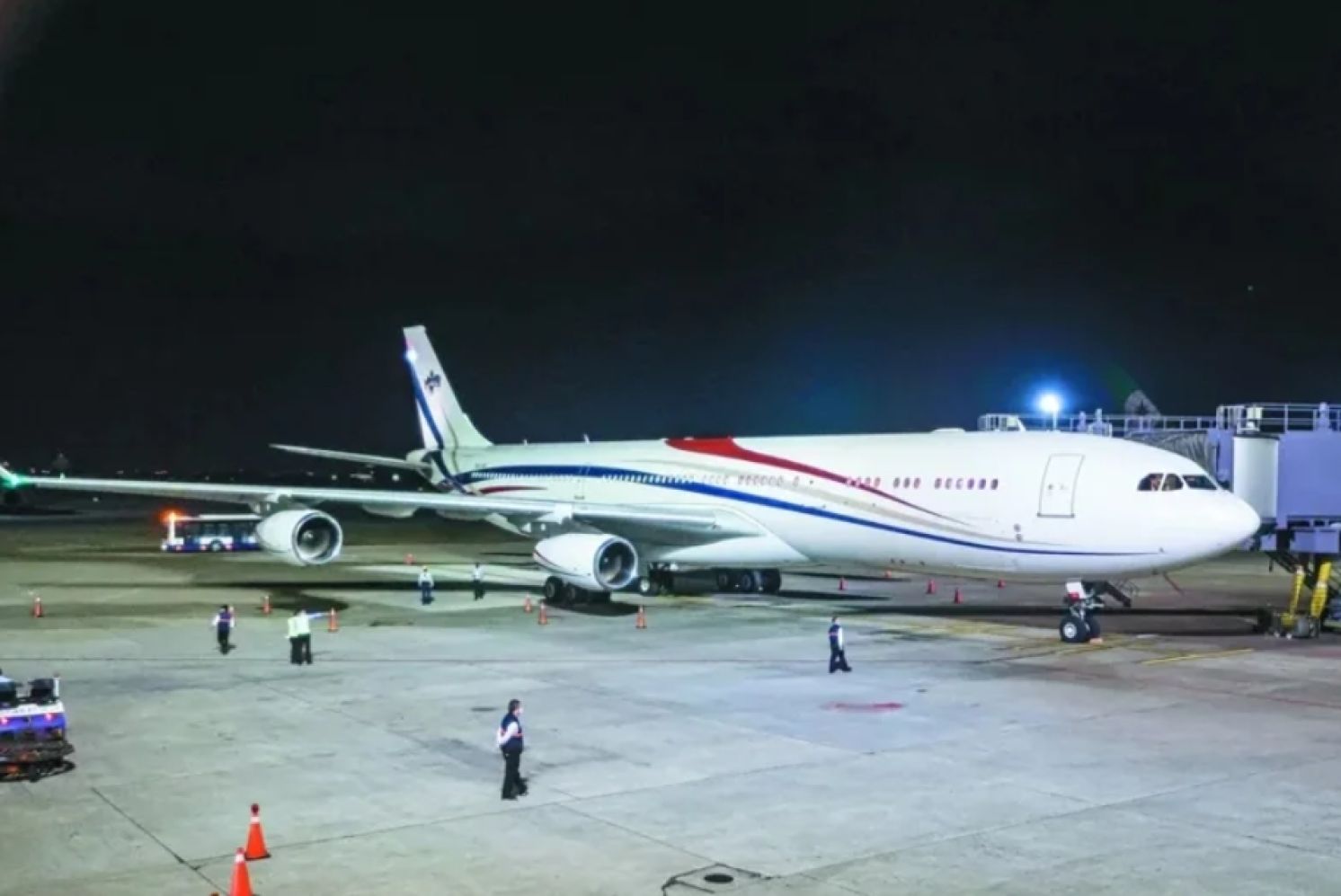
President Lai Ching-te encountered setbacks during his visit to Taiwan’s African ally, Eswatini, as his flight route was obstructed, delaying his arrival by a full ten days before he finally managed to arrive secretly aboard an Eswatini government aircraft. President Lai’s diplomatic determination and perseverance deserve recognition; however, such a “smuggling-style” visit, difficult as it was, lacked dignity, and the delayed arrival also made it difficult to justify the so-called “arrival then announce” (ATA) model. More importantly, it must be emphasized that the obstruction of this trip was not entirely caused by interference from Communist China, but rather because statements made by Taiwan’s “quasi-diplomatic partner,” Somaliland, crossed the African Union’s red line regarding separatism prevention, triggering backlash. This lesson must be remembered.
Apropos President Lai’s visit to Eswatini, the Office of the President announced on April 13 that President Lai would lead a delegation to Eswatini using a “direct flight model,” generally considered the safest and simplest arrangement. Unexpectedly, the problem emerged on April 19. Somaliland, which has mutual representative offices with Taiwan but lacks international recognition, issued a high-profile official statement expressing “strong welcome and support” for President Lai’s Africa visit and framed the trip as “a victory for Taiwan and Africa’s democratic partners.” Since Somaliland is a region that separated from Somalia and whose sovereignty has not been formally recognized by the international community, its statement led African countries—especially Somalia and its allies—to believe that the principle of territorial integrity was being challenged.
Under these circumstances, institutions under the African Union immediately took action, with Mauritius, Seychelles, and Madagascar unexpectedly revoking overflight permission for President Lai’s aircraft. Their purpose was to avoid encouraging separatist entities such as Somaliland through President Lai’s Africa visit, viewing any attempt to elevate Somaliland’s status as a provocation against Africa’s territorial integrity. From this perspective, the revocation of overflight permission by Mauritius and the other two countries may indeed have involved elements of CCP influence; however, at a deeper level, it was Somaliland’s high-profile remarks that touched the African Union’s sensitive nerves. Taiwan’s diplomatic officials cannot pretend to be unaware of such realities.
After Somaliland’s remarks angered African Union member states, Mauritius and the other two countries denied overflight rights for the presidential aircraft with only two days remaining before the planned April 22 departure, leaving little time to find alternative routes. It is understood that Taiwan’s diplomatic team explored the possibility of “transit” or “refueling” stops with Germany and Czech Republic, both considered friendly to Taiwan, but were ultimately rejected. Germany’s difficulty stemmed from the requirement to decide within “two hours” whether to allow President Lai’s aircraft to land at Frankfurt Airport. German authorities believed this was “an impossible mission” from an administrative standpoint and feared it could trigger major diplomatic controversy. The German government was even more concerned that if African countries continued blocking President Lai’s aircraft, it could become stranded in Germany in an awkward diplomatic situation. As for the Czech Republic, although relations with Taiwan have grown closer in recent years, it still chose a cautious avoidance strategy when confronted with issues involving sovereign aircraft and airspace sovereignty.
Eswatini is a landlocked country, meaning any aircraft entering or leaving must pass through the airspace of neighboring South Africa or Mozambique. Based on principles of neighborly relations and established flight-route practices, South Africa and Mozambique did not obstruct the takeoff and landing of Eswatini’s royal aircraft; such neighborly goodwill is not something Communist China could interfere with. Therefore, during President Lai’s return trip, the Eswatini aircraft maintained a low profile throughout, turning off its transponder shortly after takeoff, concealing its flight path, and taking a long detour through the uninhabited southern Indian Ocean to avoid tracking and harassment. Such discretion was, in fact, the safest approach.
President Lai’s successful visit to and return from Eswatini was made possible largely thanks to Eswatini Deputy Prime Minister Thulisile Dladla, who twice personally escorted the mission in the capacity of a “special envoy,” ensuring its success. What deserves vigilance is that President Lai’s overseas diplomacy—already constrained by the United States regarding transit diplomacy in Central and South America—now also faces restrictions even when visiting African allies. Many of these problems stem from Taiwan’s overly high-profile diplomatic operations, which ignore the special rules of the international environment and leave Taiwan in a passive position.
In 2006, then President Chen Shui-bian triggered a “lost diplomacy” controversy through the rash termination of the National Unification Council, leading him to be viewed as a “troublemaker,” which eventually contributed to what some described as “joint U.S.-China management of Taiwan.” Twenty years later, will President Lai become another President Chen?