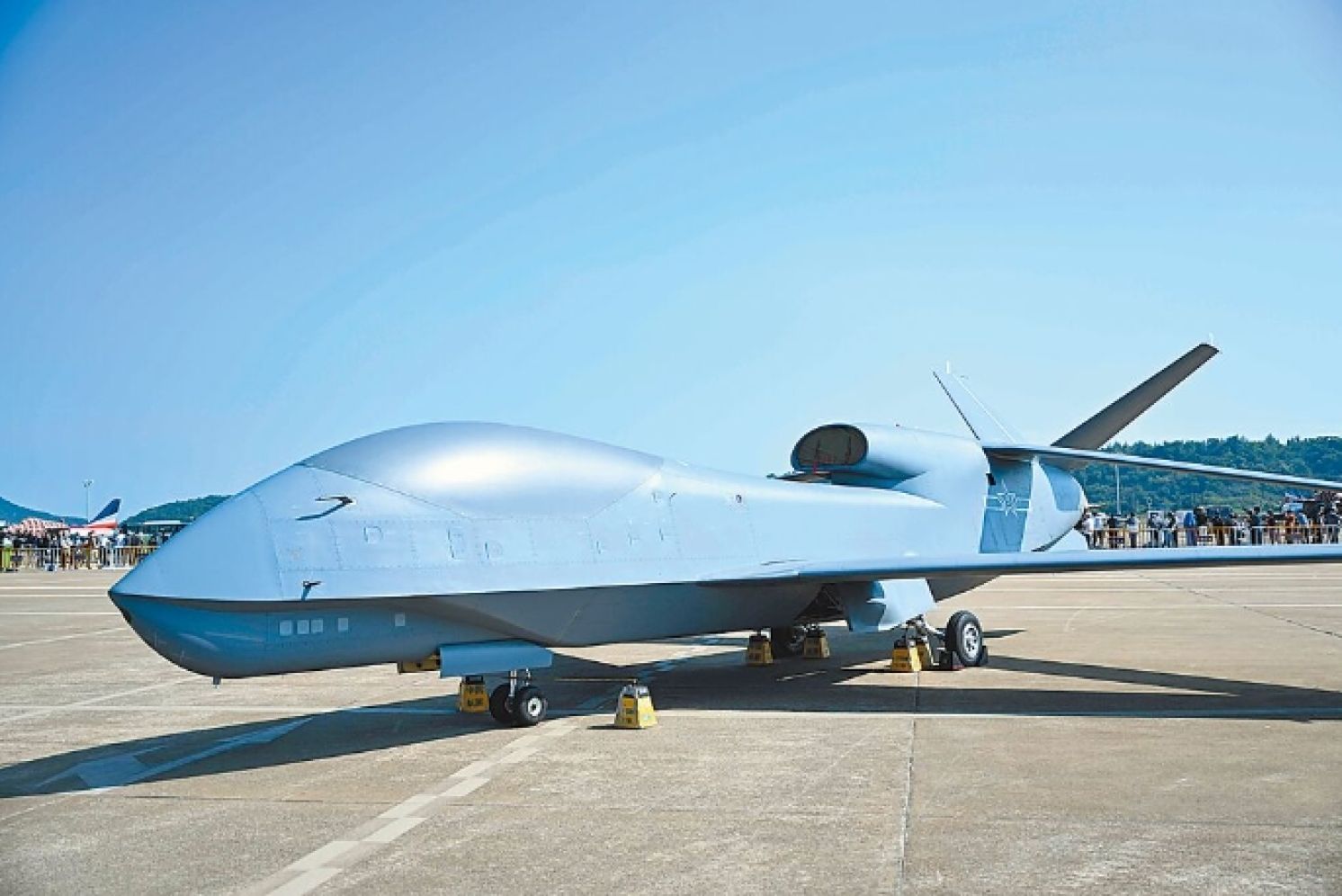
PLA Drones Intrude Pratas Airspace: Lawfare Escalating Against Taiwan
By Chung Chieh, The Storm Media Opinion, January 22, 2026
In the early hours of January 17, a People’s Liberation Army (PLA) reconnaissance drone entered Taiwan’s southwestern airspace. At first glance, this appeared to be yet another routine and familiar occurrence. However, the situation changed at 5:41 AM, when Republic of China military surveillance systems detected that the drone had begun approaching Pratas Island, and at 5:44 AM it entered the airspace over Pratas Island. Although the R.O.C. Armed Forces immediately notified the garrison personnel on Pratas Island, because the drone consistently maintained an altitude above the effective firing ceiling of the island’s ground-based air defense firepower, our side could only use international radio frequencies to broadcast warnings to PLA aircraft and vessels around Pratas Island that might be related to this operation, until the drone departed at 5:48 AM.
It is noteworthy that on the evening of January 17, mainland China’s official media outlet, China Central Television (CCTV), reported the incident by citing the Southern Theater Command’s public account, claiming that “the Southern Theater Command organized a drone to conduct normal flight training in the airspace near “China’s Dongsha Island,” which was completely legitimate and lawful.” This indicates that the incident was unlikely to have been an ad hoc decision by the Southern Theater Command, but rather an operation very likely planned and implemented by the Southern Theater Command following a decision by the CCP Central Committee.
If this assessment is accurate, then it would mean that Beijing’s legal warfare against Taiwan has undergone a dual escalation. First, the geographic scope has expanded from the Taiwan Strait to include the sea and airspace around Pratas Island. Second, the nature of the behavior has escalated from eroding our effective control to “hollowing out” our sovereignty and jurisdiction in the sea and airspace around specific outlying islands.
PLA actions around Pratas Island carry a strong “legal warfare” intent. By using fishing vessels and coast guard ships to intrude into our restricted and prohibited waters, Communist China seeks to signal its refusal to recognize the territorial sea and contiguous zone delineated by our side around the Pratas Islands in accordance with our own laws. However, despite the mainland’s frequent activities around Pratas Island, up until the end of 2025 its official vessels had not successfully entered the prohibited waters of the Pratas Islands—that is, within the scope of our territorial sea.
Therefore, the PLA drone on January 17 marked the first time that a PLA aircraft or vessel entered the airspace of our Pratas Islands, and it was a planned and deliberate action. This signifies that the geographic scope of the PLA legal warfare against Taiwan has expanded from the Taiwan Strait to include the Pratas Islands; moreover, because the actor was the PLA rather than a law enforcement agency, it indicates that the intensity of legal warfare actions has increased.
Mainland China’s legal warfare in the Taiwan Strait showed a clear escalation in the second half of 2025. First, on multiple occasions, mainland coast guard vessels escorted fishing boats across the median line into our Penghu waters. These coast guard vessels not only obstructed our Coast Guard Administration from enforcing the law against mainland fishing boats, but also deliberately conducted boarding and inspections of mainland fishing boats in Penghu waters, creating factual precedents of actual law enforcement. Second, in our restricted and prohibited waters around Kinmen, not only do numerous mainland vessels pass through on a daily basis, but some vessels deliberately anchor and remain for extended periods within the restricted and prohibited waters, or intentionally turn off their AIS systems within these waters, openly challenging our jurisdiction.
The mainland’s new pattern of behavior in Kinmen’s restricted and prohibited waters may be intended to signal to the outside world that our side is incapable of maintaining effective jurisdiction in those waters, thereby “hollowing out” our jurisdiction to support Beijing’s legal warfare claims.
PLA military drone’s incursion into Pratas airspace on January 17, combined with CCTV’s broadcast of related information that same evening, may reflect Beijing’s intention to highlight our inability to effectively respond to PLA aircraft entering Pratas airspace, thereby asserting that our side is incapable of exercising sovereignty over Pratas and “hollowing out” our sovereignty and jurisdiction over the Pratas Islands—just as it has done in the restricted and prohibited waters around Kinmen. This also means that CCP drones deliberately flying into the airspace of the Pratas Islands may occur again in the future, and may even become normalized.
Perhaps Taiwan should also consider the possibility that if the mainland unilaterally abandons the tacit understanding of not interfering with our resupply operations to Pratas Island, it may begin to sporadically, or even routinely, interfere with our aircraft and vessels conducting resupply missions—especially chartered civilian aircraft and leased merchant ships.
Similar situations have occurred in the past. For example, on October 15, 2020, a UNI Airways military-chartered flight en route to Pratas was notified by the Hong Kong Flight Information Region that it could not enter due to “dangerous activities nearby,” and was ultimately forced to return.
At that time, mainland China used technical reasons to compel our civilian aircraft to divert. In the future, however, it may instead invoke alleged violations of relevant mainland laws to support its legal warfare against us, or use such measures as a means of pressuring our government during periods of serious cross-strait political disputes. For instance, it could require our military-chartered flights to turn back on the grounds of carrying military personnel and supplies without permission and violating relevant mainland regulations; for merchant ships conducting Pratas resupply missions, it could not only demand that they turn back, but also potentially look for opportunities to conduct boarding inspections. Our national security authorities should prepare in advance and make prior arrangements for the possible situations that may arise.
The author is researcher at the Association for Strategic Foresight (ASF) and adjunct assistant professor at Tamkang University.