Lesson of the U.S.-Iran Conflict for Taiwan Strait
United Daily News Commentary, March 19, 2026
The U.S.–Iran conflict has tied down President Donald Trump, leading to the postponement of his originally scheduled meeting with Chinese President Xi Jinping at the end of March. The entire world is watching this war, including both sides of the Taiwan Strait, all of whom are observing and learning from battlefield tactics and strategies: the destructive capability of ballistic missiles, the interception rate of missile defense systems, and the asymmetric warfare potential of drones. From the current mutual damage and global economic turbulence, the lesson it offers is clear: whoever rashly initiates a war will be the sinner in history.
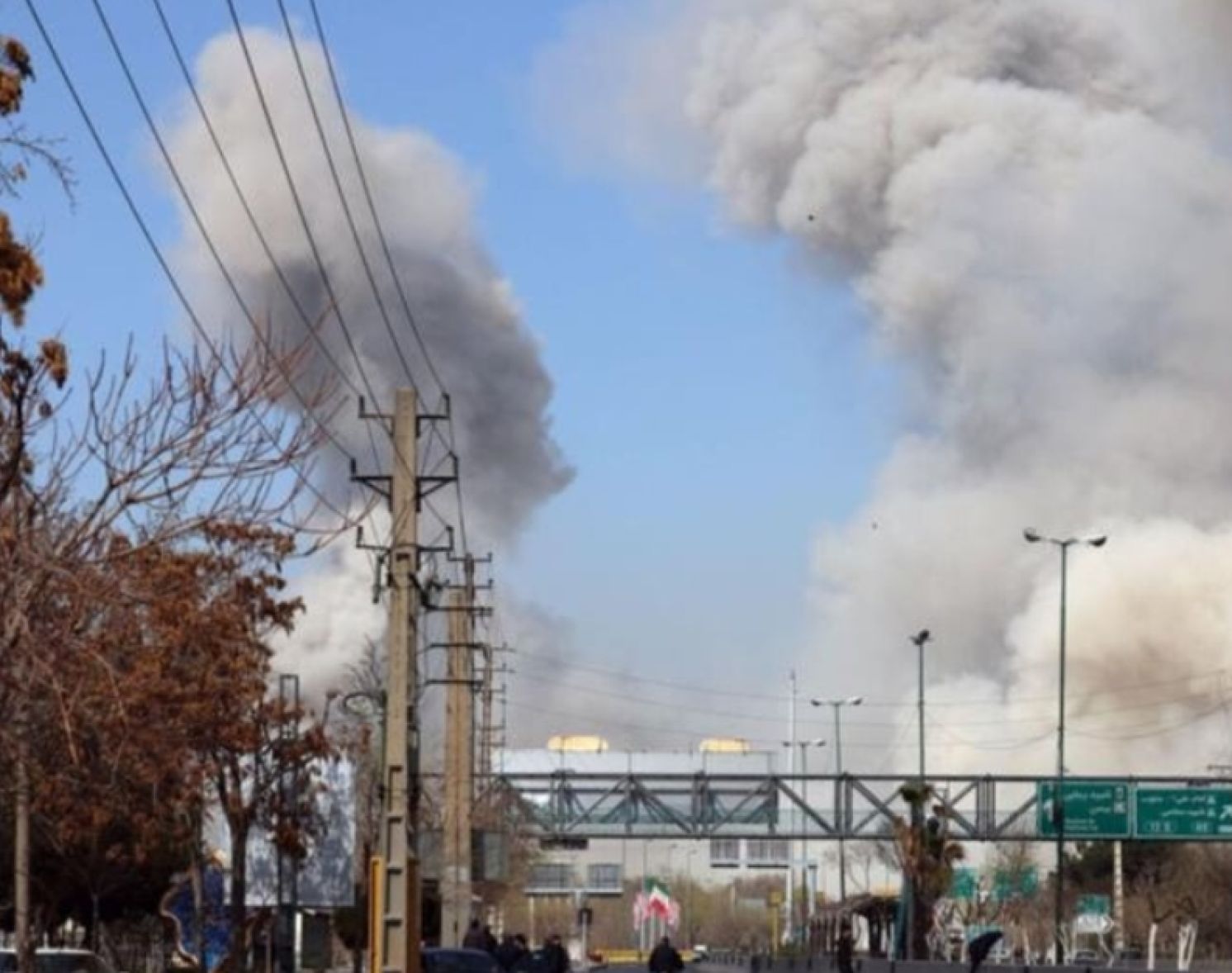
On February 28, following a U.S. and Israeli strike on senior Iranian military and political officials, Iran retaliated with various types of missiles, resulting in the largest missile warfare in human history. It also marked the first full-scale real-world stress test of modern strategic and tactical air defense systems (U.S. systems deployed at military bases worldwide and within Israeli territory). This conflict will become a classic case in future military textbooks, repeatedly analyzed and studied.
Several key observations can be drawn from this high-intensity missile exchange: First, Israel, globally recognized as having the strongest air defense capabilities (the only country in the world with a four-layered system covering long-, medium, short, and terminal-range defense), was still penetrated by Iranian missiles. This shows that the interception systems touted by the United States are no longer a myth, and it also demonstrates that hypersonic missiles have become extremely difficult to intercept.
Second, Iran has demonstrated through action that any military base assisting or serving the enemy—even those located within third countries—constitutes a legitimate target, including logistical bases or so-called “pseudo-neutral countries” that claim only to provide facilities without participating in military operations.
Third, hypersonic missiles have changed the rules of warfare, marking the end of the era of fixed bases. The locations of such bases are fully exposed, and increasingly capable satellites have already precisely identified them before the outbreak of war. Runways, fuel depots, radar installations, aprons, ammunition depots, and missile defense sites are all clearly known. Once war begins, all become priority targets for elimination and are subject to relentless saturation attacks.
This conflict has overturned many military experts’ previous assumptions, particularly regarding the need to reassess Iran’s missile capabilities. Iran’s use of low-cost drones to deplete high-value U.S. and Israeli interceptors is a combat model that many countries will study and emulate.
For the Taiwan Strait, considered by some to be among the most dangerous regions in the world, both sides and surrounding countries have much upon which to reflect. Taiwan may seek to increase procurement of drones to counter the People’s Liberation Army (PLA) through asymmetric warfare. Japan and South Korea may need to be concerned about the role of U.S. military bases on their soil in the event of a cross-Strait conflict. In particular, Japan’s statement that “a Taiwan contingency is a Japan contingency” suggests that if Japan becomes involved (by providing takeoff and landing for U.S. aircraft, logistical support, and early warning reconnaissance), it could become a target of PLA attacks.
For Communist China, years of military development—from the Second Artillery Corps to the Rocket Force—have resulted in a comprehensive missile arsenal ranging from intercontinental strategic nuclear weapons to hypersonic ballistic missiles and various short- and medium-range missiles. It also possesses tri-dimensional launch capabilities (land-based, sea-based, and air-based; Iran currently only has land-based capability), as well as various types of unmanned attack aircraft. If Iran’s missile forces can resist the United States and Israel to such an extent, this undoubtedly boosts confidence in the PLA’s strongest domain—its missile forces.
The essence of war is a life-and-death struggle. Once Pandora’s box is opened, it is difficult to turn back. The United States and Israel initiated the conflict lightly, and now the United States has been drawn into a quagmire by Israel. Mr. Trump’s Republican Party may face unfavorable prospects in the midterm elections, and the global situation has also been affected. For both sides of the Taiwan Strait, unlike Israel and Iran, which are divided by ethnicity, religion, and longstanding deep-seated hatred, there is no fundamental need to resolve cross-strait issues through brutal war. The real danger lies in miscalculation by one side or being misled by other countries into initiating conflict. This is a lesson both sides must take to heart.