Lai Administration Shifts Stance Decade After South China Sea Arbitration
China Times Editorial, July 15, 2026
On the 10th anniversary of the South China Sea arbitration ruling, 14 countries, including the United States and Japan, issued a joint statement affirming the legitimacy of the ruling and calling on China to comply with it. The Democratic Progressive Party (DPP) administration, which a decade ago had taken a clear stance of "non-acceptance," has now responded in a low-key and ambiguous manner, while also indicating that it "will work with like-minded countries to safeguard freedom of navigation in the South China Sea," effectively joining the 14 nations in directing criticism toward Beijing.
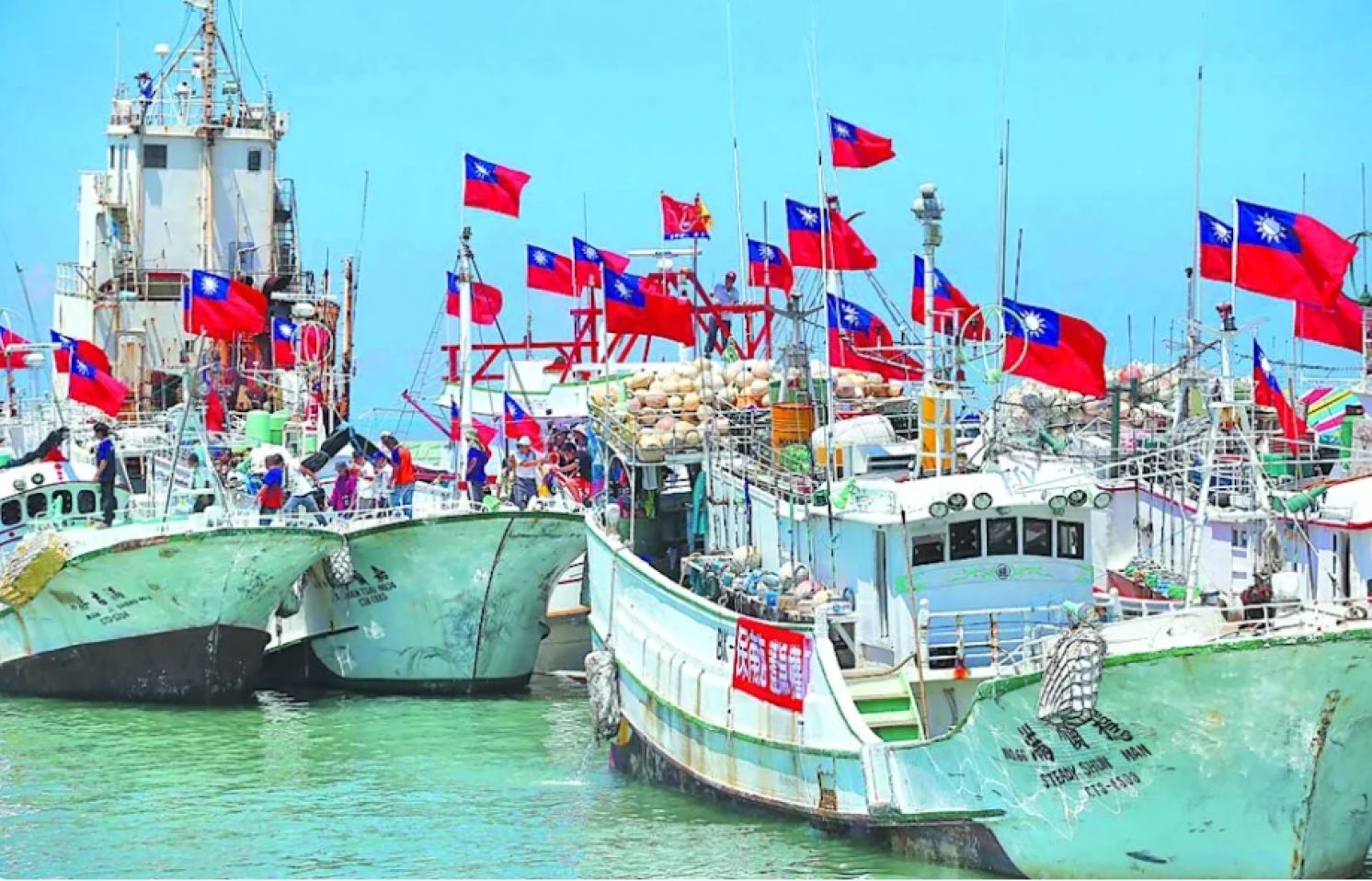
Looking back at the response by the administration of President Tsai Ing-wen a decade ago, it struck a balance between the Republic of China’s position and Taiwan-centric identity. It not only won support from both the Kuomintang (KMT) and the DPP domestically, but also drew a positive response from Beijing. The Tsai administration stated that the islands in the South China Sea are R.O.C. territory, and that the government would take firm action to safeguard national territory and related maritime rights. This was undoubtedly a declaration based on the R.O.C. legal claim embodied in the 11-dash line. At the same time, the administration explained that it rejected the arbitration because Taiwan had not been invited to participate, satisfying the DPP's aspiration for greater international participation.
Most intriguing was Beijing's response at the time. Then mainland Chinese Vice Minister of Foreign Affairs Liu Zhenmin stated that Taiwan has taken a clear and firm position in opposition, and safeguarding ancestral heritage in the South China Sea serves common interests. He added that both sides of the Taiwan Strait have reached a consensus on the issue. In other words, although President Tsai's inaugural address was regarded by Beijing's Taiwan affairs system as "an incomplete answer sheet," the foreign affairs system under Minister of Foreign Affairs Wang Yi unusually acknowledged that both sides of the Taiwan Strait have reached a consensus.
Beijing's position has always been clear. After Communist China was established in 1949, it declared that it had naturally inherited the R.O.C. sovereignty over the South China Sea. However, because the issue of cross-Strait separation remained unresolved, Beijing maintained that as long as the R.O.C. government on Taiwan exercised and asserted sovereignty over the South China Sea as "the representative of another part of China," it would respect the reality and set aside the dispute. For this reason, mainland China has consistently affirmed Taiwan’s recovery of islands in the South China Sea, while public opinion on the mainland also praises Taiwan’s decision not to interfere during the 1974 Battle of the Paracel Islands between Chinese and South Vietnamese forces. This position remained unchanged until the newly inaugurated DPP administration expressed its stance on the South China Sea arbitration ruling in 2016.
However, the Tsai administration's approach to South China Sea sovereignty ultimately lost momentum. Amid intensifying U.S.-China geopolitical rivalry, the DPP increasingly chose one side, gradually abandoning the R.O.C. position on sovereignty. From Beijing's perspective, once Taiwan was no longer able or willing to "represent another part of China," the mainland naturally advanced into the space that Taiwan had gradually relinquished. Through expanding diplomatic influence and increasingly capable quasi-military forces, Beijing has sought to assert sovereignty by exercising administrative control.
Following the South China Sea arbitration ruling, mainland China mobilized its vast infrastructure capabilities to construct large-scale artificial islands in the Spratly and Paracel Islands, including both military and civilian facilities. It also deployed aircraft and naval vessels for routine patrols. At the same time, the mainland continued the hardline strategy first demonstrated during the 2012 Diaoyutai Islands dispute, using maritime forces such as coast guard and maritime militia to establish a new status quo centered on the principle that "jurisdiction rests with us." This approach has led to repeated gray-zone confrontations with the Philippines. Mainland Chinese coast guard operations near Kinmen, Xiamen, and east of Taiwan are extensions and replications of this broader strategy.
Mainland China's nine-dash line substantially overlaps with the 11-dash line claim by the R.O.C. In essence, this overlap reflects the unique relationship across the Taiwan Strait and formed the legal foundation for both sides' shared opposition to the South China Sea arbitration ruling ten years ago. However, in pursuit of its policy that the two sides of the Strait are not subordinate to one another, the Lai administration has surrendered its own sovereignty position while disregarding the reality that Taiwan exercises effective control and governance over Taiping Island. Once sovereignty is abandoned, effective jurisdiction is destined to erode quickly. From the median line of the Taiwan Strait, to waters off Kinmen, East China Sea, and now South China Sea, Taiwan's jurisdiction has steadily contracted and retreated. Is this truly the outcome envisioned by the Lai administration when it speaks of safeguarding sovereignty?
From: https://www.chinatimes.com/opinion/20260715004282-262101