Lai Administration Accused of Shifting Blame
United Daily News Editorial, July 12, 2026
One week after the Central Union Oil Corp. carcinogenic cooking oil scandal erupted, President Lai Ching-te finally broke his silence, declaring that "those who should be held accountable will be held accountable, with absolutely no leniency." This was followed by the large-scale removal of related food products from shelves and extensive prosecutorial raids, quickly escalating the incident into the largest food safety scandal in Taiwan’s history in terms of the size of the companies involved and the level of those implicated. Yet the Lai administration has remained vague about exactly who should be held accountable and how.
The Lai administration’s handling of the scandal has been nothing short of chaotic. While the company unquestionably bears enormous responsibility, the Ministry of Health and Welfare (MOHW) and Food and Drug Administration (FDA) are likewise far from blameless. The relevant government agencies failed to prevent the problem in advance and instead chose to cover it up afterward, making it difficult for them to escape responsibility. Had local governments not taken matters into their own hands and pressured the central government to release the list of downstream manufacturers, the public would still have had no idea how many carcinogenic oil products they were continuing to consume.
Since the scandal broke, the Democratic Progressive Party (DPP) has repeatedly shifted responsibility onto local governments, steering public attention towards the argument that "the central and local governments should each bear their own responsibilities." When Minister of Health and Welfare Shih Chung-liang appeared before the Legislative Yuan for questioning, he brought only two sheets of paper. Only after persistent questioning did he reluctantly apologize "for the policy change," rather than apologizing for administrative negligence and the failure of Taiwan's food safety system. Minister Shih even cooperated with pro-DPP media outlets and the DPP’s political narrative by distorting remarks made by the deputy mayors of Taoyuan and Taichung, falsely accusing them of defending the company.
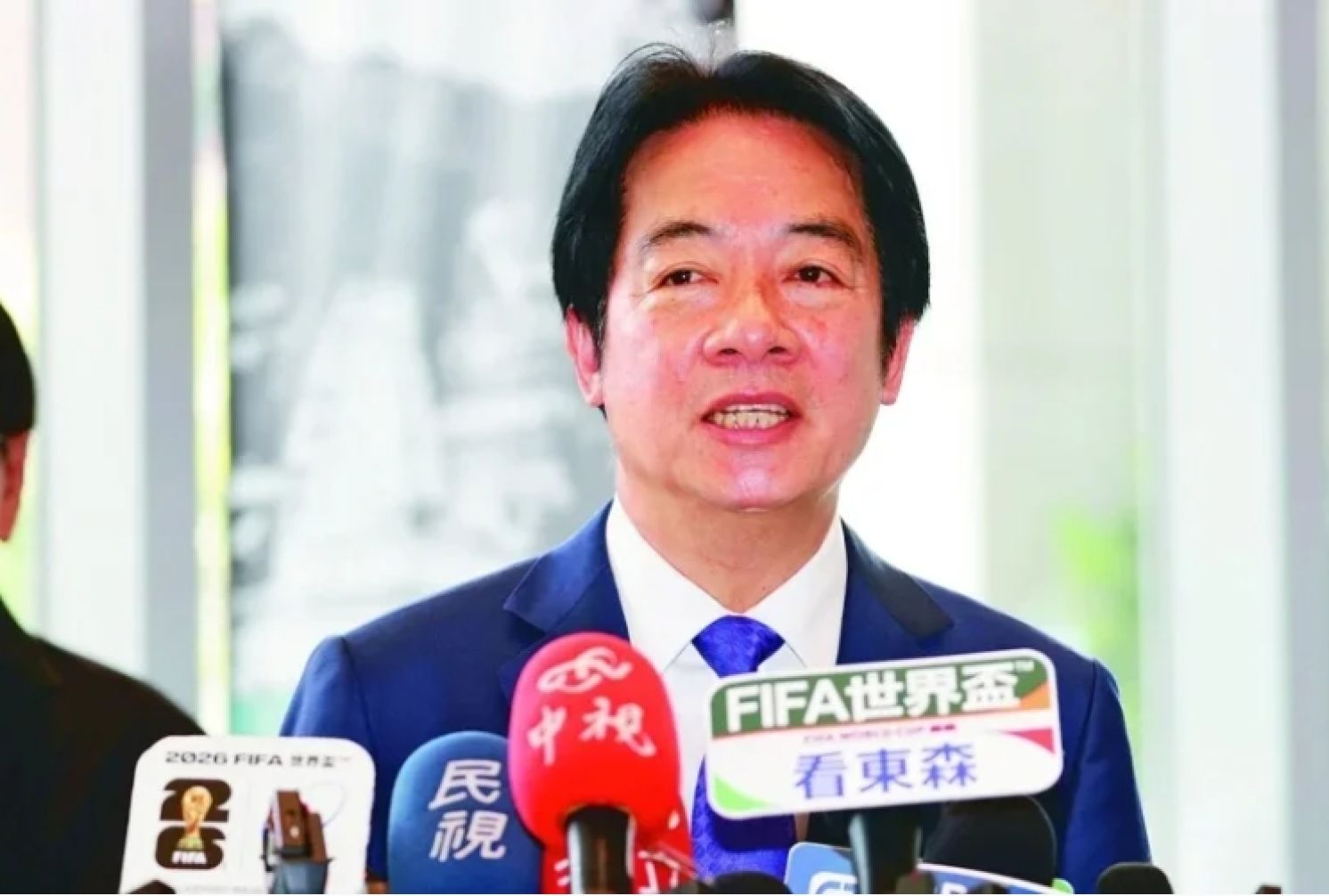
President Lai’s belated declaration of "absolutely no leniency" is itself highly revealing. He placed the blame for the incident entirely on "companies such as Central Union Oil Corp. for failing to immediately notify the competent authorities, thereby depriving them of the opportunity to resolve the problem in a timely manner." Consequently, his pledge that "those who should face legal consequences will be prosecuted according to law" are limited solely to the companies involved. His call for amendments to the Food Safety and Sanitation Act also appears to shift responsibility onto "an inadequate legal framework." From beginning to end, he made no mention of holding government officials accountable.
This incident recalls the Chang Guann Co. recycled waste oil scandal and the Ting Hsin feed oil scandal during the time of President Ma Ying-jeou. The DPP, then in opposition, strongly demanded that President Ma apologize and then-Premier Jiang Yi-huah step down. Then-Minister of Health and Welfare Chiu Wen-ta tendered his resignation immediately after the scandal, and then-FDA Director-General Yeh Ming-kung also stepped down. The stark contrast between the two administrations handled could hardly be greater.
The Lai administration’s attitude comes as no surprise. Over the past two years, its officials have shown virtually no sense of political accountability through resignation over policy failures. For example, Minister of Agriculture Chen Junne-jih, who incorrectly concluded that the Mataian River landslide dam posed "no obvious immediate danger," accepted no responsibility after the dam collapsed, resulting in multiple deaths and disappearances. Instead, local government officials bore the brunt of public criticism and were even prosecuted.
When confronted with political responsibility, the Lai administration refuses to admit mistakes or resign. Yet when presented with issues that can be exploited for political gain or used to divert public attention, it responds with remarkable speed and efficiency. Recently, following an incident in which a Hong Kong man punched a Japanese pro-DPP political commentator residing in Taiwan, police swiftly arrested the suspect, while the Mainland Affairs Council immediately characterized the case as "the first instance of cross-border repression following the implementation of China's Ethnic Unity and Progress Promotion Law." Soon afterward, criticism poured in from President Lai, pro-DPP commentators, and online supporters alike.
Even some DPP legislators have found the Lai administration’s handling of the scandal difficult to defend. Nevertheless, the administration appears to continue operating under the belief that "if we never admit mistakes, then there are no mistakes; if we never accept responsibility, then there is no responsibility." It seeks to paper over official negligence with empty rhetoric, conceal responsibility with falsehoods, and shift public attention through other political maneuvers. But repeated use of such tactics will convince no one beyond the party’s most loyal supporters