Ko Heavily Sentenced for Corruption: TPP Faces Risk of Collapse
China Times Editorial, March 27, 2026
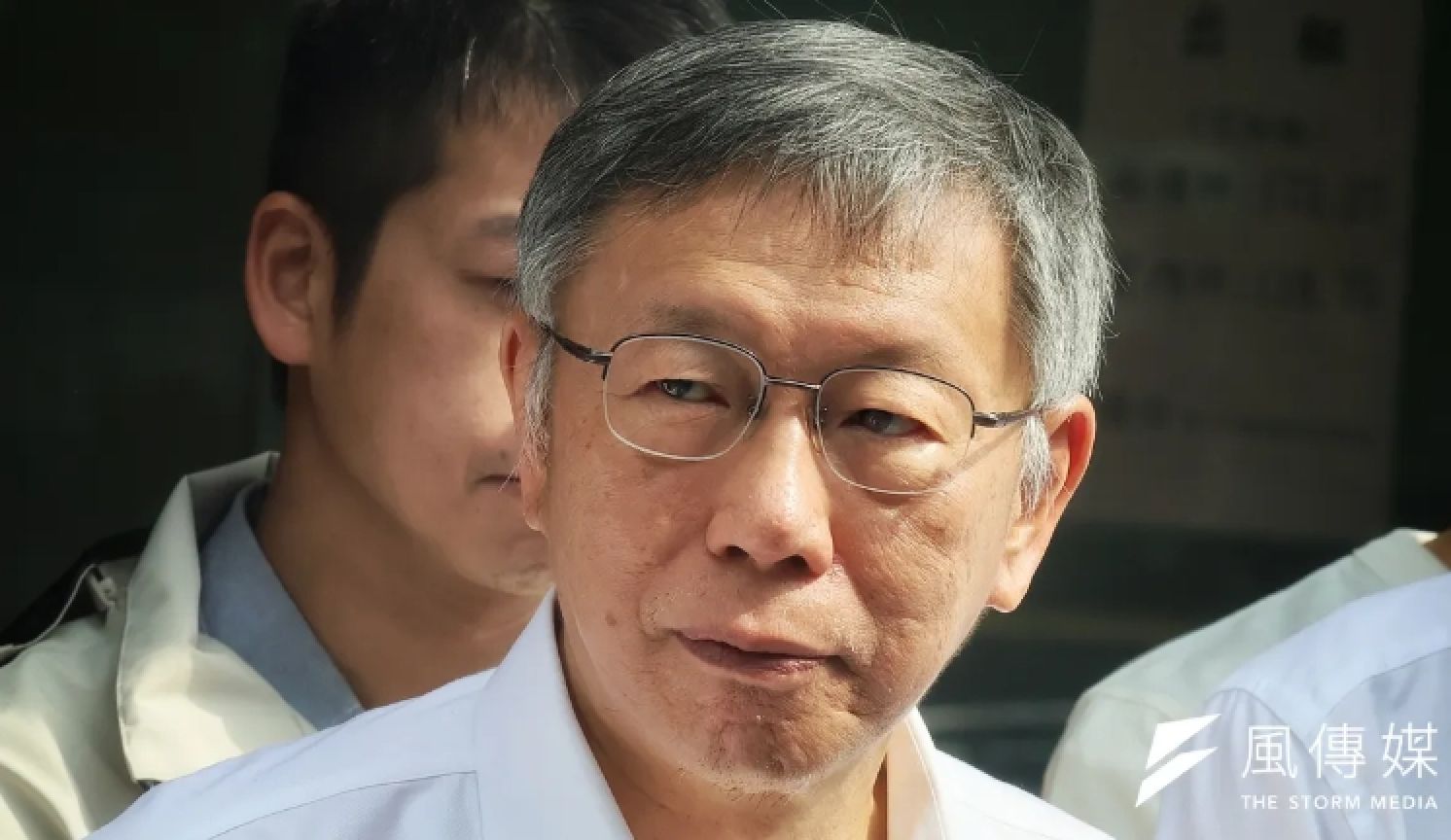
Ko Wen-je, former chairman of the Taiwan People’s Party (TPP), was implicated in four corruption lawsuits including the Living Mall case. On March 26, the Taipei District Court sentenced him heavily to 17 years. The former Taipei mayor angrily criticized this as a political purge in which the judiciary has become a political tool. The TPP also called for a march to Ketagalan Boulevard on March 29 to demand justice and judicial fairness, with support from the Kuomintang (KMT). Whether such a “battle against the judiciary” can resonate with the public and carve out a political path for opposition cooperation has drawn significant attention.
The prosecutors sought a sentence of 28 years and six months, while the Taipei District Court’s first-instance ruling imposed 17 years, clearly reflecting differing views in the determination of facts and evidence. The keylines in the alleged bribes identified in the prosecution, for which no concrete evidence was produced; under strict scrutiny, the judges found the evidence insufficient, eliminating the most controversial point in the original indictment.
However, regarding the charge against Ko of accepting bribes in breach of official duties, prosecutors found that NT$2.1 million (about US$65,000) had been transferred via proxy accounts into the TPP’s account. This political donation was regarded as an “advance payment” in the Living Mall. Although the amount is clearly disproportionate to the alleged illicit gains of up to NT$12.1 billion (about US$377 million), the elements of the offense of profiteering are met as long as a public official “knowingly violates the law” and enables others to obtain “illegal benefits.”
The collegiate bench determined that Ko continued to approve documents despite being repeatedly reminded of legal compliance issues, thereby establishing subjective criminal intent. Nevertheless, in the absence of decisive direct evidence, the prosecution and defense will continue to contest the case in the second instance. Whether the political donation is related to the Living Mall case will still depend on the higher court’s conviction. There remains considerable uncertainty as to whether the case can be finalized swiftly.
In particular, from the initiation of the investigation through its process, the entire case has been dogged by allegations of politically motivated prosecution. So-called “investigative secrets” were leaked to specific media outlets, repeatedly raising public doubts about collusion among the ruling party, prosecutors, and the media, thereby undermining judicial credibility. Moreover, during Ko’s detention process, the courts and prosecutors repeatedly staged dramatic reversals between detention and release on bail. There were also reports of procedural violations, such as prosecutors allegedly coercing confessions and having unauthorized private contact with the defendant, all of which have severely damaged the authority of the judiciary.
Another key issue is that, under the Presidential and Vice-Presidential Election and Recall Act, Ko would be barred for life from running in presidential elections. Although Minister of the Interior Liu Shih-fang stated that uncertainties remain before registration for the 2028 presidential election, and that the Ministry of the Interior (MOI) would proceed according to relevant regulations should court rulings change, this implies that if the second instance reduces the sentence or acquits him before registration, he could still run. However, given the current pace of judicial proceedings in similar cases, this would be quite difficult.
Such a situation naturally raises concerns over whether the TPP may consequently disintegrate. It is well known that since Ko founded the party, “Ko is the TPP, and the TPP is Ko,” making them inseparable. After being released on bail, Ko frequently acted as the party’s leading campaigner, canvassing votes for its candidates across Taiwan. On one hand, he sought to maintain political momentum; on the other, he defended himself in his legal case. This has led to a “two suns” phenomenon within the party, involving both him and the current TPP Chairman Huang Kuo-chang. Especially as Huang has been actively negotiating cooperation with KMT Chairwoman Cheng Li-wun for the year-end local elections, Ko’s heavy sentence—combined with his unconventional political style—means he is unlikely to be content with merely serving as the party’s “spiritual leader.” Instead, before his case is finalized, he will likely actively seek political alternatives, adding further uncertainty to opposition cooperation.
From the perspective of political effects, supporters may become more united due to suspicions that the case represents a politically motivated judicial purge, forming a so-called “victim effect.” On the other hand, centrist voters’ perception of Ko’s integrity may be shaken by the verdict. In particular, younger generations hold higher moral expectations for political figures; under such circumstances, whether Ko and the TPP can recover their lost political capital is unlikely to be achieved simply by taking to the streets or appealing to sympathy.
For the KMT, whose goal is to return to power in 2028, the situation is even more precarious. With Ko seemingly already eliminated from contention, avoiding a repeat of the failed opposition cooperation seen in the 2024 presidential election has become a delicate challenge. Although recent approval ratings show that both the Democratic Progressive Party (DPP) and KMT each retain around 35 percent support, with the TPP trailing behind, in the absence of any party securing an absolute majority, opposition forces have little choice but to cooperate if they are to overturn DPP rule.
The judicial “shock” of the Ko case has deepened public doubts about political interference in the judiciary and raised hopes that future changes in ruling parties could rectify perceived injustices. Opposition parties, all of which claim to have experienced “judicial persecution,” should accelerate cooperation. After all, “united they stand, divided they fall.” Continuing internal infighting while failing to confront external challenges would bring yet another disaster to the opposition.
From: https://www.chinatimes.com/opinion/20260327003977-262101