Election Interference Allegations Reflect Misjudgment of Cross-Strait Crisis
China Times Editorial, October 28, 2026
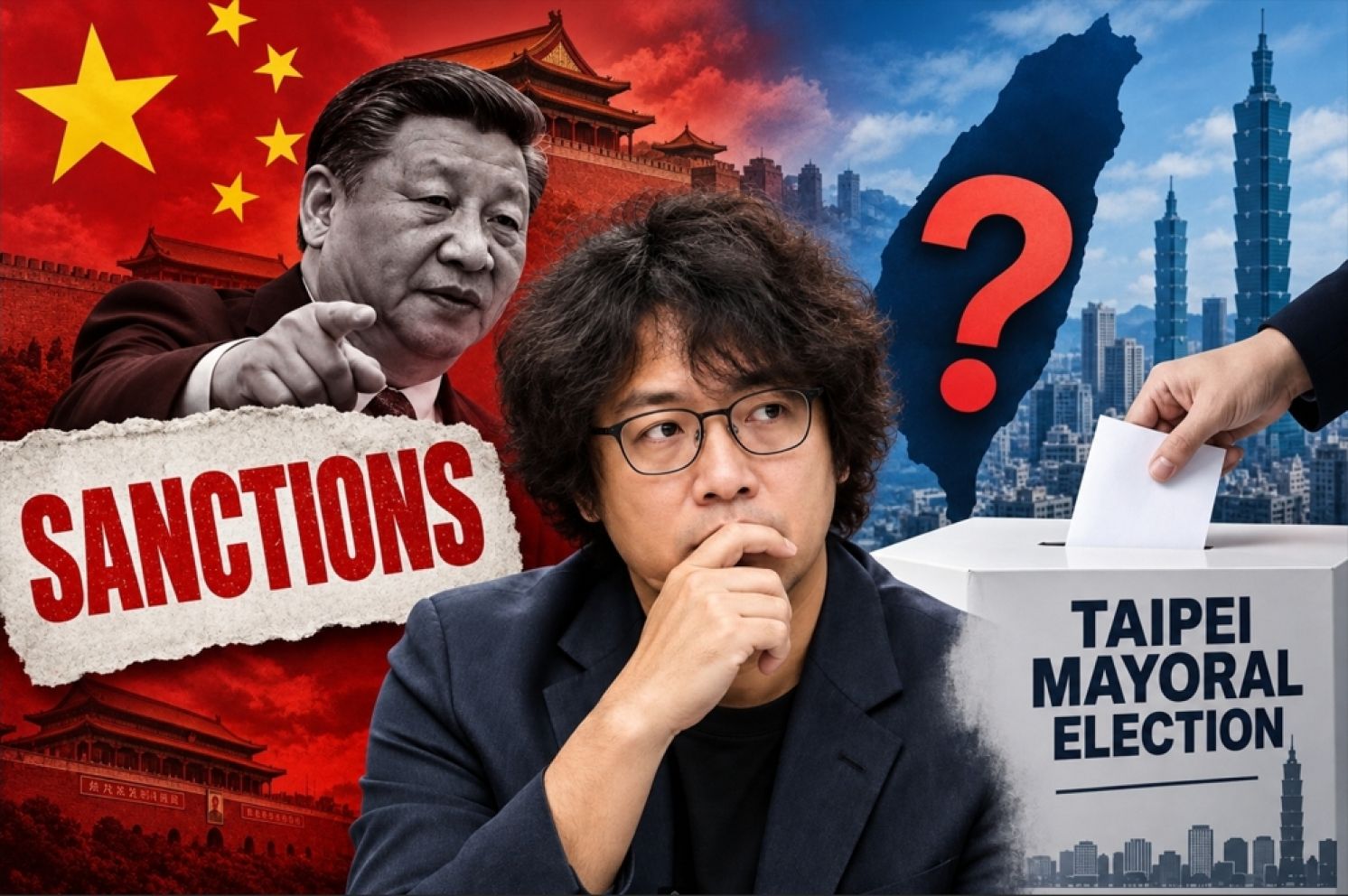
Democratic Progressive Party (DPP) Taipei mayoral candidate Shen Po-yang has accused China of engaging in "targeted election interference." At the Legislative Yuan, Director-General Tsai Ming-yen of the National Security Bureau (NSB) identified six methods of election interference employed by Communist China, attempting to link Beijing's sanctions against Mr. Shen to the election. However, is there sufficient factual evidence to substantiate Shen's accusations and the NSB's supporting claims? More fundamentally, while the mainland’s opposition to Shen is an established fact, when viewed in the broader context of mainland China's opposition to Taiwan independence, does the allegation of targeted election interference obscure the essence of cross-strait tensions and lead to a misjudgment of the real risks in cross-strait relations?
Communist China’s stance toward Mr. Shen demonstrates clear policy continuity. In October 2024, the Taiwan Affairs Office of the mainland’s State Council placed Shen and United Microelectronics Corporation (UMC) founder Robert Tsao on its list of "diehard Taiwan independence separatists" and imposed sanctions on the Kuma Academy. In June 2025, the sanctions were extended to a company owned by Shen's father. In October of this year, Beijing announced further sanctions against another company affiliated with his father. This series of actions has spanned three calendar years and began well before Shen entered the Taipei mayoral race. Beijing's publicly stated justification has consistently been opposition to Taiwan independence.
In recent years, Beijing's policy on Taiwan has emphasized the “One China” principle, “1992 Consensus,” opposition to Taiwan independence, and promotion of integrated development. Opposition to Taiwan independence represents a political bottom line, the 1992 Consensus serves as the political foundation of cross-Strait relations, and integrated development is a means of winning the hearts and minds of the Taiwanese people. Beijing's sanctions against Mr. Shen are concrete manifestation of its opposition to Taiwan independence. Although Beijing's decision to impose additional sanctions on Shen's family businesses during the local election period may objectively affect the electoral atmosphere and exert a certain degree of pressure, it is unlikely to influence the election results.
"Political sanctions" are not equivalent to "targeted election interference." The former constitutes the implementation of an established policy and is an objective description, whereas the latter requires supporting evidence. An action cannot be classified as election interference simply because it occurs during an election period.
On October 22, Director-General Tsai identified six methods of election interference: illicit funding, sponsored travel, discounted air tickets, disinformation, underground betting markets, and cyber intrusions. He also stated that evidence was being collected in preparation for referring cases to judicial authorities. Such intelligence warrants serious attention, but intelligence warnings, cases under investigation, and facts established through judicial proceedings represent different levels of evidentiary certainty. In particular, the issue of discounted air tickets remains a pre-election warning and cannot be treated as an established instance of election interference.
In an interview on October 19, Mr. Shen also acknowledged that public sanctions do not involve a direct quid pro quo for votes and may not necessarily meet the legal elements of an election interference offense. However, he argued that Beijing's pressure undermines electoral fairness and is likely to provoke resentment within Taiwanese society. These remarks illustrate the need to distinguish political pressure from illegal election interference, as well as the need to avoid conflating the intent to interfere in an election with its actual effects.
In fact, interpreting Beijing's sanctions against Taiwan independence as targeted election interference itself has the effect of cognitive manipulation. When anti-Taiwan independence policies are framed as matters of election security, the focus of public discussion shifts from Taiwan's domestic political debates to national security issues such as Chinese Communist election interference and the defense of democracy. This framing also undermines the legitimacy of the Kuomintang’s (KMT) positions advocating opposition to Taiwan independence, cross-strait exchanges, and peace.
Similar approaches to agenda-setting can be observed in Mr. Shen’s establishment of the Kuma Academy and in the political discourse surrounding the mass recall campaign. The Kuma Academy connects national security with civil defense, while the mass recall campaign elevated political competition to the level of national security. Both successfully mobilized society and achieved their objectives of amplifying political issues.
Taiwan must guard against foreign election interference while also safeguarding legitimate political competition. Criticizing the DPP, supporting cross-strait exchanges, and advocating improved cross-strait relations are all normal political positions and activities in a democratic society. National security must be protected in accordance with the law, and government intimidation must not be allowed to suppress cross-strait policy discussions.
From: https://www.chinatimes.com/opinion/20261028003595-262102?chdtv