Disaster Alliance Formed: Lai Administration Misses the Point Amid Trump-Xi Summit
China Times Editorial, September 21, 2026
President Donald Trump of the United States and Chinese President Xi Jinping will hold their second summit of the year on September 24. Amid Mr. Trump's longstanding advocacy of a "grand bargain," considerable attention is being paid to whether Taiwan will become a bargaining chip at the negotiating table. Yet at this moment, the administration of President Lai Ching-te has conspicuously announced the establishment of the World Alliance for Disaster Management (WADM), claiming that it aims to make Taiwan a hub for multinational disaster prevention cooperation. This is nothing more than an attempt to send Washington and Beijing multiple messages that Taiwan "will not give up international participation," with a strong undertone of rivalry.
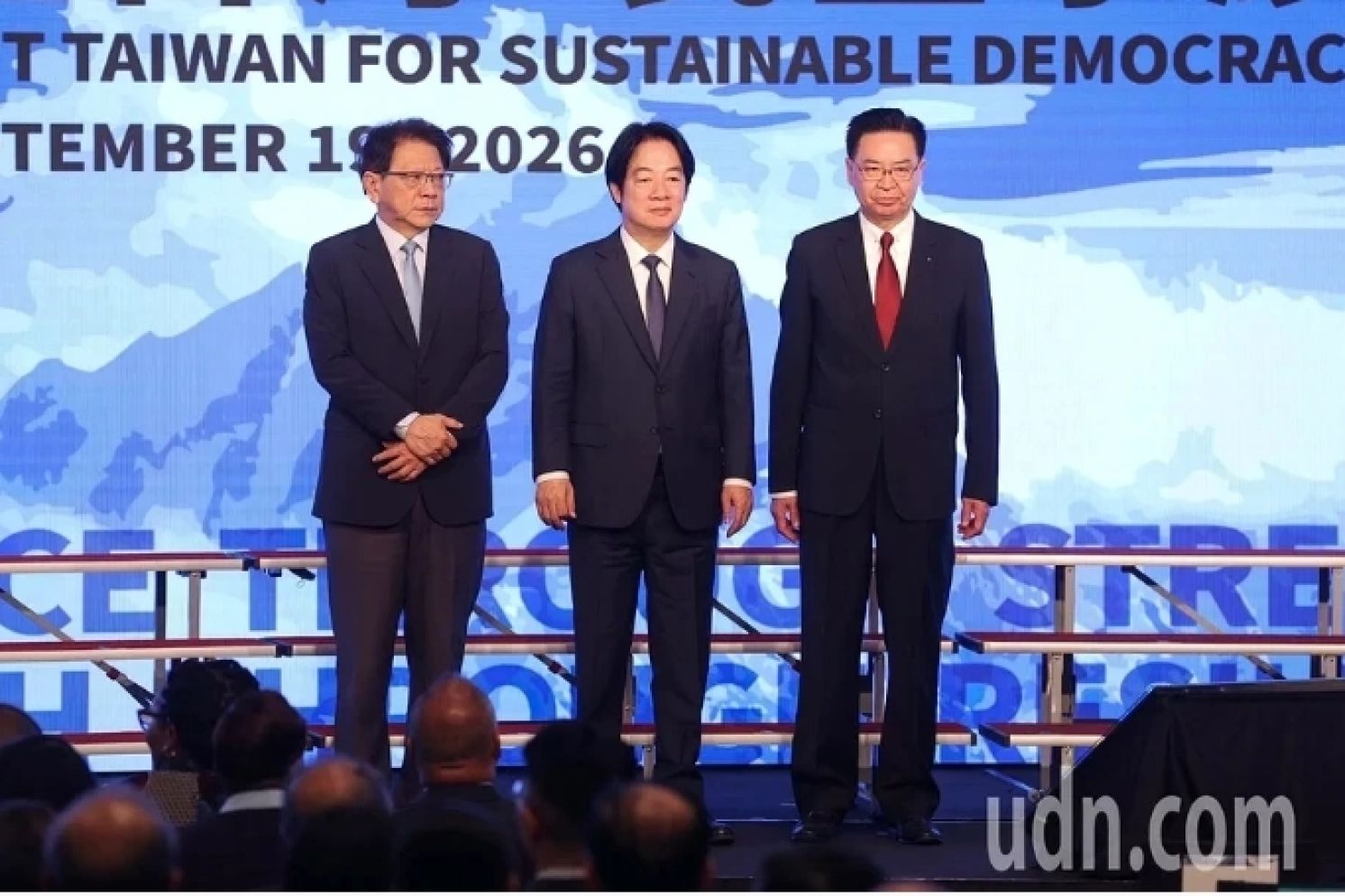
On September 19, the government held the second "Whole-of-Society Defense Resilience International Forum," where President Lai announced the establishment of the new international organization, WADM, in an attempt to use disaster resilience as a starting point to convey to the international community a message of Taiwan's self-reliance and determination to strengthen itself.
The WADM currently has 13 member countries, 17 observers, and 11 partners. Its founding member countries include Taiwan's existing diplomatic allies: Eswatini, the Marshall Islands, Palau, Tuvalu, Belize, Guatemala, Haiti, Paraguay, St. Kitts and Nevis, St. Lucia, and St. Vincent and the Grenadines, for a total of 11 allies, with Somaliland also joining. Most of these countries are developing economies that are relatively underdeveloped in disaster prevention and relief technology as well as industrial and commercial development, and have long relied on Taiwan's financial assistance.
By contrast, the alliance's observers include disaster prevention agencies and organizations from developed countries such as the United States, Japan, the United Kingdom, Germany, the Netherlands, Poland, and Turkey, creating the unusual phenomenon of a clear disparity in overall disaster prevention resources between member countries and observers. These countries do not have substantive diplomatic relations with Taiwan, and the ranks and identities of their participating representatives have not been fully disclosed, raising questions about whether WADM will actually be able to provide cross-border assistance when disasters occur.
In particular, the Ministry of Foreign Affairs has stated that matters such as WADM's operating budget, methods, and work plans will only be discussed and decided with member countries after the secretariat is established. Yet the Lai administration has still rushed to launch the initiative with great fanfare, giving it a strong flavor of domestic propaganda.
The WADM's operational framework is quite similar to that of the Global Cooperation and Training Framework (GCTF), established in 2015. Both avoid the rigid threshold of sovereign-state status and instead focus on softer issues such as workshops. However, the GCTF was jointly launched by Taiwan and the United States at the time, subsequently attracting substantive participation from major countries including Japan, Australia, Canada, and the United Kingdom, and it has long covered humanitarian assistance and disaster prevention and relief. By comparison, the United States is not a founding country of WADM this time, raising genuine doubts about whether WADM can replicate the GCTF's experience.
It cannot be denied that during the September 21 earthquake of 1999, some 41 international search-and-rescue teams from 20 countries came to Taiwan to assist, allowing Taiwan to witness the power of international cooperation in disaster rescue. The government subsequently established a special search-and-rescue team and strengthened its training, conducted exchanges and joint exercises with countries including the United States, Japan, and Turkey, and dispatched teams to Haiti and other countries for rescue operations. However, because of international political factors, when disasters have struck certain countries, Taiwan has still faced the predicament of being turned away despite expressing its willingness to participate.
Now, the Lai administration is proclaiming its ambition to turn Taiwan into a "hub for multinational disaster prevention cooperation," even as the country's domestic disaster prevention capabilities face severe challenges. Central and southern Taiwan have repeatedly been battered by extreme weather and torrential rainfall this year, with numerous cities and counties frequently suffering severe flooding. The government has yet to master the fundamentals of disaster prevention at home, but is already rushing to establish an international disaster management alliance, effectively putting the cart before the horse.
In the face of U.S.-China strategic rivalry, what Taiwan needs is pragmatic diplomacy and solid economic and trade strength, rather than spending large sums of money to manufacture its own "international organization" and create an illusion of prosperity in which nations from around the world flock to Taiwan. If the ruling Democratic Progressive Party (DPP) cannot free itself from this mindset of governance by domestic propaganda and over-ambition, Taiwan may lose even more substantive room for survival and strategic maneuver on the international stage.
From: https://www.chinatimes.com/opinion/20260921003480-262101?chdtv