Democratic Checks on Trump May Not Make Taiwan Safer
China Times Editorial, November 5, 2026
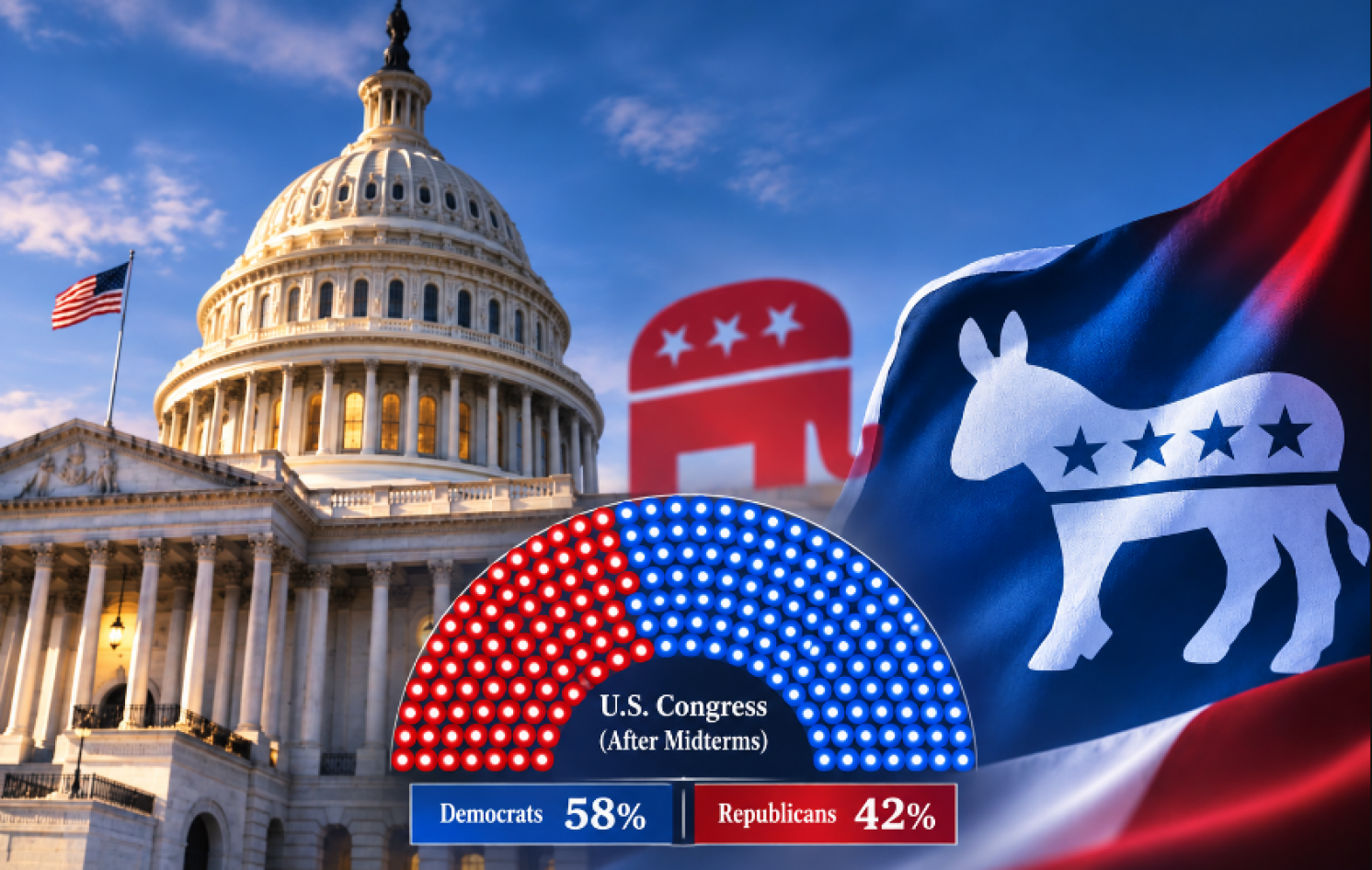
With the midterm elections in the United States now concluded, what Taiwan should pay attention to is the underlying message conveyed by American public opinion. Americans generally oppose the war with Iran and tariffs. The election results suggest that politicians aspiring to run in 2028 may become even more reluctant to support costly interventions in foreign affairs in response to voters' expectations.
This sets the direction for the new Congressional policy towards China. In Washington policy circles, not appearing weak toward China remains one of the few areas of bipartisan consensus. However, if Democrats seek to pressure Mr. Trump into taking a tougher stance against China, they must first consider the economic costs. Having won control of Congress by capitalizing on voters' dissatisfaction with rising prices, Democrats are preparing to launch a "100-hour legislative blitz" in January, focusing on eliminating tariffs and restoring healthcare subsidies. If they then turn around and impose additional tariffs on China or expand restrictions, then Beijing could retaliate through rare earth exports, soybean purchases, and Boeing orders. The ultimate costs would fall on American consumers and agricultural states. Before adopting a tougher stance toward China, Democrats must answer a fundamental question from voters: Will prices rise again?
Second, Congress has fewer tools at its disposal than many imagine. Tariffs are imposed by the president under existing congressional authorizations. Reclaiming that authority would require new legislation or a supermajority of more than two-thirds in both chambers of Congress, a threshold Democrats did not achieve in this election. Decisions regarding tariffs on China, the tightening or loosening of export controls, and the terms of agreements reached at summits remain in Mr. Trump's hands. Mr. Trump and Xi Jinping may meet twice more, at the APEC summit in Shenzhen and the G20 summit in Miami at the end of the year. If a president who no longer faces reelection pressure insists on negotiating a deal with Beijing, Congress will find it difficult to stand in his way.
For Taiwan, the first impact of the new U.S. Congress will come from the development of artificial intelligence. According to U.S. opinion polls, more than half of voters express concerns about AI and its related infrastructure because data centers consume electricity and water resources and drive up electricity bills. Such perceptions have become a source of bipartisan public discontent. A Democratic-controlled Congress may introduce regulations targeting major AI developers, raising investment costs in the United States for Taiwan's server, cooling, and power supply industries. Taiwanese companies investing in the United States must consider not only tariffs but also where their electricity and water will come from and whether local residents will welcome them.
The second impact concerns the distinction between the symbolic and substantive aspects of congressional support for Taiwan. Symbolic support will undoubtedly continue, with Democrats maintaining their backing for Taiwan-related provisions in congressional resolutions and the National Defense Authorization Act. However, a group of senior Republican senators who have supported Taiwan have left Congress due to electoral defeats, retirement, or death. Rebuilding their accumulated experience will take years. More importantly, arms sales notifications, transit arrangements, and the wording of summit statements fall under executive authority. The US$14 billion arms sale to Taiwan remains on hold. Congress can hold hearings and exert pressure, but it cannot sign off on the deal on behalf of the White House.
Therefore, Taiwan must observe not only what Congress says but also how Congress interacts with the White House. The activities of the House Select Committee on Strategic Competition between the United States and the Chinese Communist Party, the Congressional Taiwan Caucus and Senate Taiwan Caucus, and whether the two parties use Taiwan as a political tool to attack their opponents all warrant attention. The new Congress will not be anti-Taiwan, but it will be more concerned about Americans' financial well-being. Taiwan must directly link its investments in the United States to American jobs, supply chain security, and stability in the Indo-Pacific. It must also recognize that the Trump administration's China policy seeks deals and dialogue rather than comprehensive confrontation. Although pro-Taiwan voices on Capitol Hill are reassuring, genuine support must ultimately translate into concrete policies.
Democratic control of Congress may not necessarily change Mr. Trump's attitude toward Taiwan. On the contrary, domestic political setbacks could prompt Mr. Trump to adopt an even tougher stance in foreign negotiations and potentially make greater demands of Taiwan. Mr. Trump's electoral defeat does not mean he has lost power, nor does the Democrats' congressional victory mean Taiwan is safer.
From: https://www.chinatimes.com/opinion/20261105005058-262101?chdtv