DPP Administration Refuses Dialogue, Blocking Cross-Strait Exchanges
United Daily News Report, April 17, 2026
After the meeting between Chairwoman Cheng Li-wun of the Kuomintang (KMT) and Chinese President Xi Jinping in Beijing, mainland China revealed that its Association for Tourism Exchange Across the Taiwan Straits (ATETS) had recently once again sent a letter to the Taiwan Visitors Association (TVA), calling for the swift and comprehensive restoration of cross-strait passenger direct flights. This was originally an opportunity to restart functional negotiations and resume cross-strait people-to-people exchanges, but it ultimately remained shelved under President Lai Ching-te’s policy stance of political confrontation.
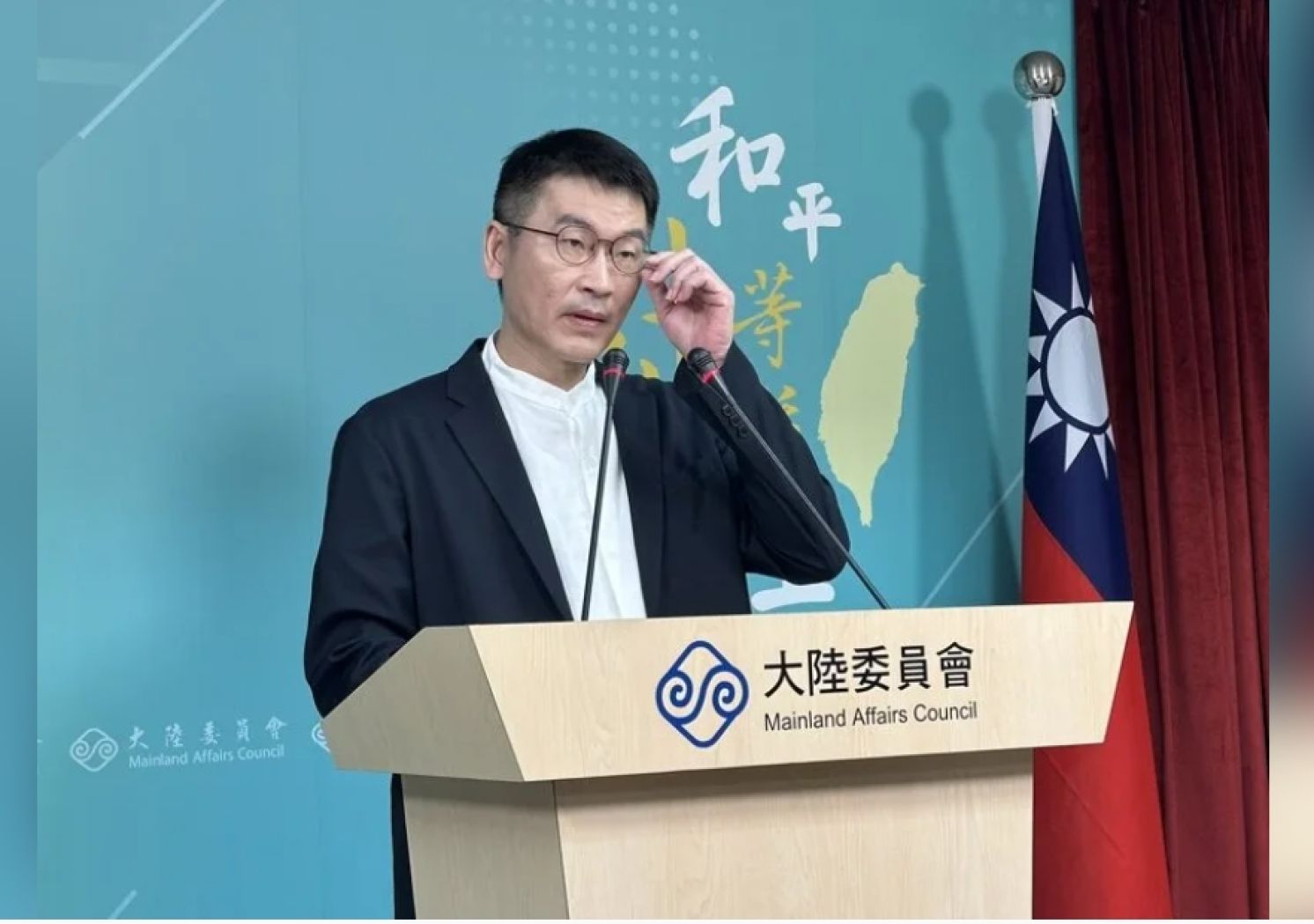
Deputy Minister Liang Wen-chieh of the Mainland Affairs Council (MAC) confirmed yesterday that the letter was sent on April 7. The MAC chose to withhold it for nearly ten days before making it public only after external inquiries. What is even more puzzling is that the Executive Yuan stated yesterday morning that it would “conduct a pragmatic assessment” after receiving the letter, and Mr. Liang also said at a press conference in the afternoon that they would “initiate an evaluation,” speaking in a reserved tone that raised expectations among tourism industry operators. Unexpectedly, in less than two hours, the MAC issued a press release rejecting Beijing’s request, stating that “existing flight destinations are already sufficient to meet demand, with no urgent need for expansion,” and further criticizing it as a bargaining chip in KMT–Communist Party dealings aimed at pressuring our government, adding that the government would not succumb to China’s united front tactics and political manipulation.
In the past few years, Taiwan has communicated with mainland China through mechanisms such as the TVA and ATETS and cross-strait joint crime-fighting frameworks, only to be repeatedly “left unread” by the other side. The mainland has used this to emphasize that without the 1992 Consensus, there can be no official or semi-official communication. This time, the mainland set aside “political preconditions” and proactively sent a letter via ATETS, a rare instance of the mainland “taking the initiative” to communicate since the Democratic Progressive Party (DPP) returned to power.
Taiwan’s “refusal to receive the ball” inevitably raises doubts about whether the Lai administration’s claims of being “pragmatic,” “conducting evaluations,” and pursuing “orderly exchanges” are merely stalling tactics. It suggests not only a lack of genuine concern for cross-strait people-to-people exchange needs, but also no real intention to assess passenger load factors or operational benefits for airlines in opening new routes. Anything related to cross-strait affairs is viewed negatively, avoided, and left untouched.
Mainland China sent the letter before the Cheng–Xi meeting, indicating that the ten measures were already planned prior to Ms. Cheng’s visit. The government was also aware of this in advance but evidently did not take it seriously; the so-called evaluation appears to be a mere excuse. It is not as though the mainland has not assessed this development, but the act of sending the letter itself serves to demonstrate that the obstacles to cross-strait communication and exchange stem from the DPP administration.
It cannot be denied that mainland China’s proactive letter this time carries the implication of “making a move.” This was originally an opportunity to revive existing negotiation mechanisms and foster an atmosphere for dialogue, and the Lai administration could have used it to externally signal that communication channels with the mainland remain open. However, without even initiating research or showing willingness to engage, the MAC directly “spiked the ball” back. This clearly reflects a predetermined stance at the highest levels: any measure proposed by the mainland is uniformly labeled as a Chinese Communist united front tool. Such preconceived hostility not only eliminates space for professional policy discussion but also abruptly collapses the potential for a thaw in cross-strait dialogue, effectively validating the mainland’s allegations and demonstrating the DPP administration’s disorientation responding to changing cross-strait relations.