Calls to "Abandon Taiwan" Resurface Ahead of Trump-Xi Meeting
China Times Editorial, September 16, 2026
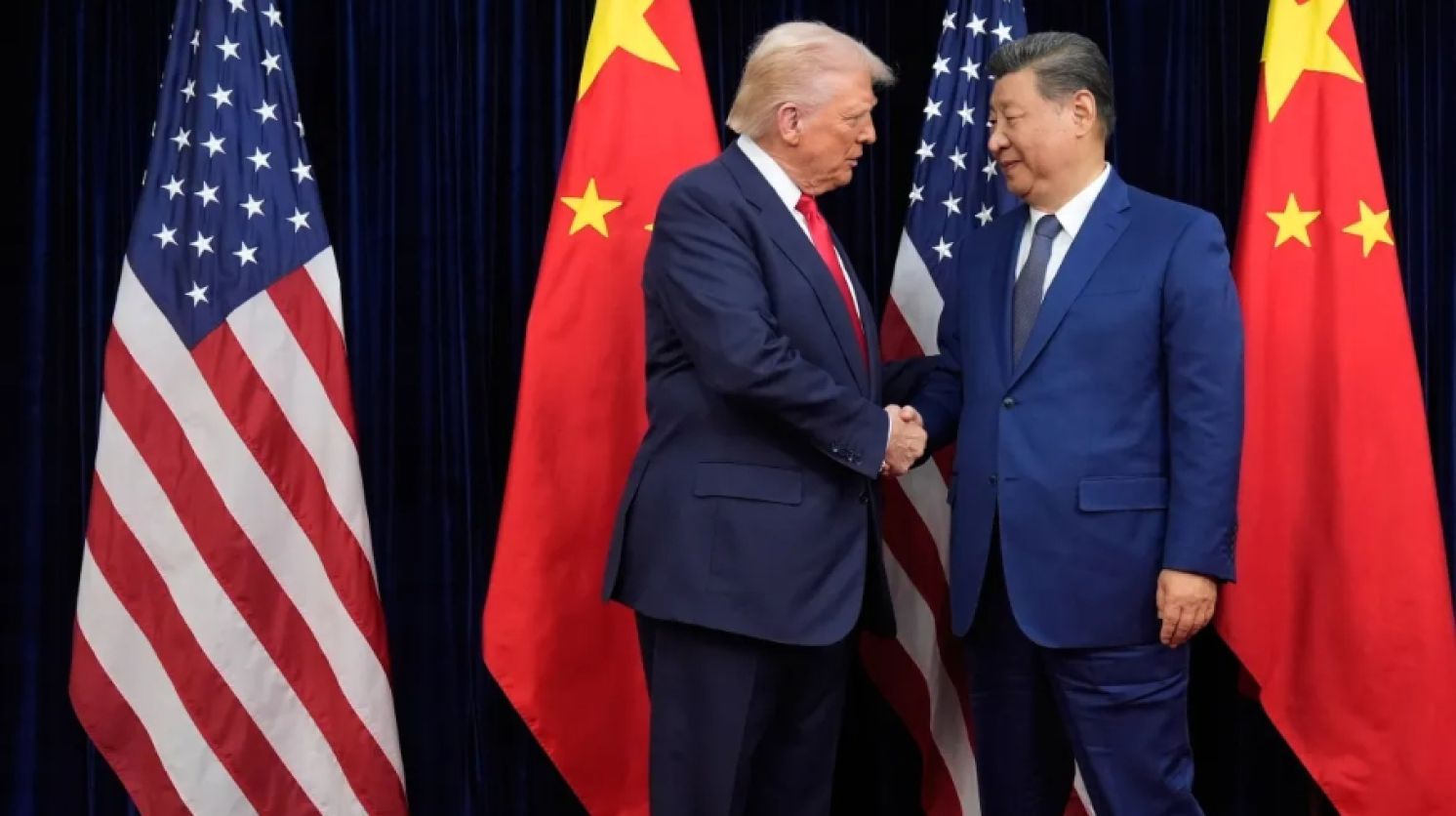
The summit between President Donald Trump of the United States and Chinese President Xi Jinping is about to take place, and international media discussions of the Taiwan Strait have also increased significantly. Recently, some in Washington have advocated strengthening deterrence along the First Island Chain. The press has published detailed analyses of whether Taiwan should be abandoned, while others have proposed moving the center of U.S. military operations in Asia back to the Second Island Chain to reduce the risk of the U.S. military becoming directly involved in a conflict in the Taiwan Strait or East Asia. Even former Secretary of State Hillary Clinton, who advocated the “Pivot to Asia” during her tenure, publicly warned in an interview that U.S. military capabilities are continuing to be depleted by the war with Iran and multiple crises on different fronts. If this situation continues, then the United States will eventually be unable to assist its allies, including Taiwan.
These signals may not mean that the United States has now decided to abandon Taiwan, but they clearly reflect a significant decline in confidence among U.S. elites in their ability to effectively constrain China.
For a long time, discussions in Taiwan about the United States have often reduced the issue to one question: “Will the United States come to Taiwan’s defense?” Behind this question lies another unspoken assumption: We believe that as long as the United States is willing to act, it has sufficient power to contain China.
However, what may actually be changing now is precisely this assumption. Washington has not suddenly stopped caring about Taiwan. Rather, more and more people are beginning to calculate the costs: If war really breaks out in the Taiwan Strait, then how much will the United States ultimately have to pay?
To be fair, the United States remains the world’s most important power. Prominent actors in Washington still support Taiwan, attach importance to the First Island Chain, and advocate deterring China. The proposal of a Second Island Chain strategy by think tanks does not mean that the U.S. government is preparing to withdraw from the First Island Chain; media discussions about abandoning Taiwan do not mean that the White House has already decided to abandon Taiwan. But precisely for this reason, Taiwan cannot replace its own strategic thinking with the belief that “the United States will certainly never abandon Taiwan.”
Over the years, Taiwan’s biggest problem has been that increasingly close U.S.-Taiwan relations has too easily been used as a domestic political achievement. Over time, relations with the United States have gradually shifted from a national strategy into something politically correct. If Taiwan’s pro-American policy ultimately amounts to nothing more than hoping that the United States will take a harder line against China on Taiwan’s behalf, that is not a complete national strategy. It means entrusting Taiwan’s own security to the choices of another country.
What Taiwan truly needs to do is make it clear to Washington that maintaining Taiwan’s security is in the interests of the United States, while at the same time making effective use of U.S.-Taiwan relations to increase Taiwan’s leverage in handling cross-strait relations amid the highly asymmetric disadvantage in the Taiwan Strait.
As the United States begins recalculating the costs of military assistance, Taiwan cannot respond with helplessness alone. Instead, it needs to reclaim its strategic agency. Both defense and foreign affairs need to be handled pragmatically. In defense, the focus should not be placed solely on increasing the budget. A society that is deeply divided internally, with people viewing one another as enemies, will find it difficult to form truly credible deterrence no matter how many weapons it purchases.
The same applies to diplomacy. The focus should not be successful secret foreign visits followed by domestic publicity about “diplomatic breakthrough” and political rhetoric on Beijing’s pressure. Such maneuvers risk actually undermining Taiwan’s international space once the news cycle passes. Cross-Strait policy, likewise, cannot be reduced to mutual verbal attacks and a refusal to communicate. Increasing military preparedness while reducing the risk of political miscalculation can and should be pursued simultaneously; that is what a mature security strategy requires.
Before the Xi-Trump summit, various narratives questioning U.S. reliability and advocating “abandoning Taiwan” will certainly continue to emerge. Taiwan has no need to panic or shift its stance on partnership with the United States. But if the government continues to treat American cooperation as the only direction, toughness towards China as its only language, and domestic political mobilization as its cross-strait policy, then it will only make Taiwan more vulnerable to being repriced by the United States.
From: https://www.chinatimes.com/opinion/20260916004361-262101?chdtv