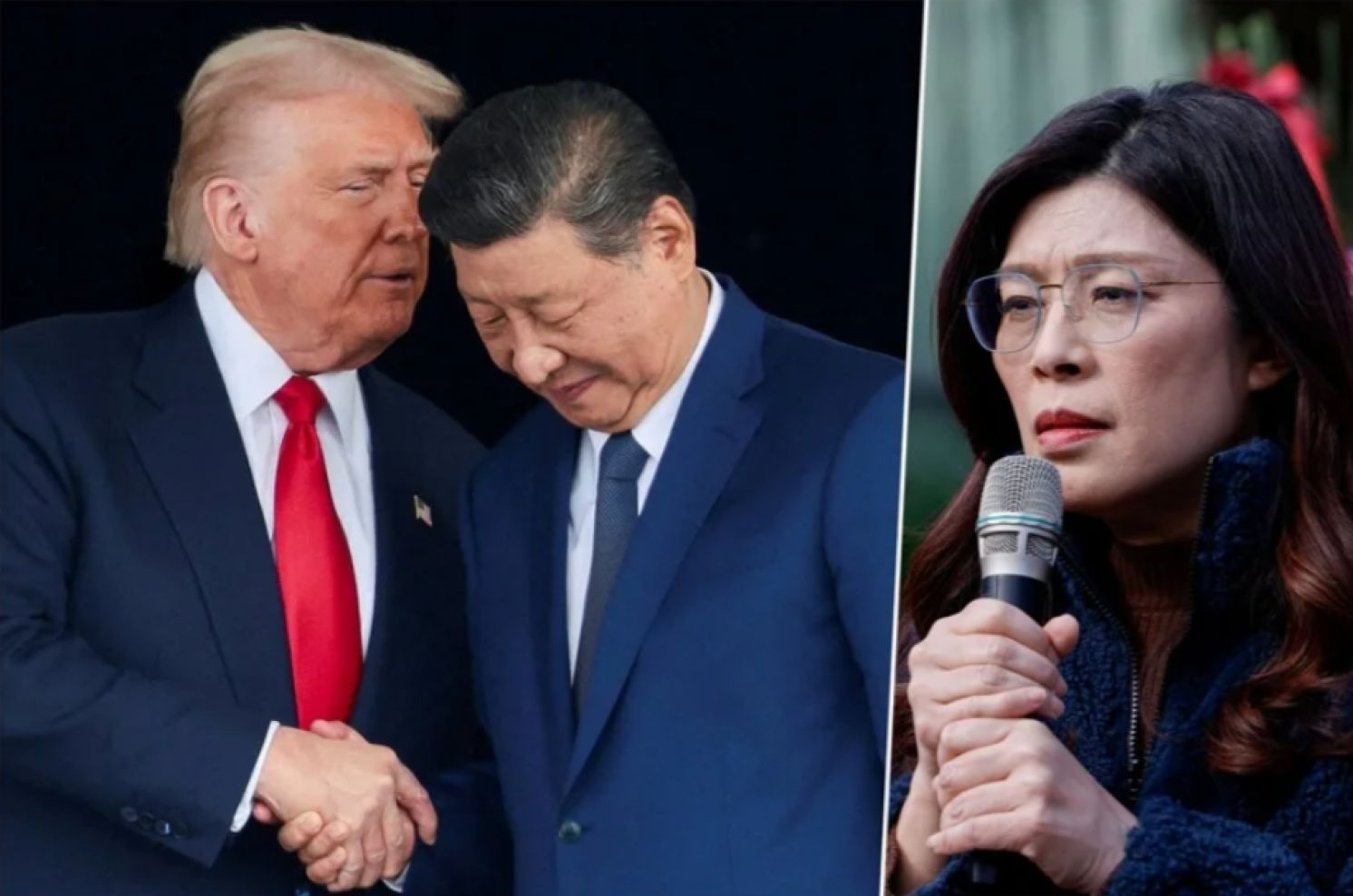
Before Meeting Trump, Beijing Seeks Cross-Strait Stability
United Daily News Report, March 31, 2026
Yesterday morning, both the Kuomintang (KMT) and Chinese Communist Party (CCP) announced that KMT Chairwoman Cheng Li-wun will soon visit mainland China. The timing is somewhat sudden, yet not entirely unexpected. After President Donald Trump of the United States confirmed that his visit to China would be postponed until mid-May, Cheng’s trip was only a matter of when it would be announced. What is notable this time is that Director Song Tao of the Taiwan Affairs Office of the CCP Central Committee, personally “authorized the announcement,” underscoring an unusual level of importance attached by the CCP.
Current cross-strait relations are undeniably poor. An even more serious situation is that since the end of 2016, for nearly a decade, no sitting leader of any major political party in Taiwan has sat down face-to-face with a CCP leader for direct communication. Dialogue at both the “party” and “government” levels across the strait has long been in a state of “dual freeze,” with only lower-level interactions continuing. Cheng’s visit will help fill this gap at an appropriate time, allowing cross-strait exchanges and dialogue to return to the “right track.”
In recent years, the mainland has repeatedly emphasized “firmly grasping the leadership and initiative in cross-strait relations,” frequently introducing unilateral preferential policies toward Taiwan or anti-independence measures. Coupled with increasingly evident pro-independence rhetoric and actions from Taiwan’s ruling team, many have begun to believe that cross-strait relations have entered a “historical garbage time.” However, Cheng’s visit highlights that Taiwan’s major political parties still possess “agency” within cross-strait relations, and that opportunities remain to ease tensions and expand space. The “small cross-strait” in the Taiwan Strait is not necessarily destined to be subordinate to the “big cross-strait” across the Pacific.
Unlike previous instances where visits by the KMT chair were announced by a spokesperson for the Taiwan Affairs Office, this time the announcement was made directly by Song, with a level of protocol approaching that of then President Ma Ying-jeou’s meeting with mainland Chinese leader Xi Jinping in November 2015. In the broader context of the CCP’s external relations, it is extremely rare for a ministerial-level official to personally announce the visit of a foreign guest. Song’s appearance also effectively signals that a “Cheng–Xi meeting” is all but certain.
With the schedule of U.S. President Donald Trump’s meeting with Xi delayed, Trump had originally been set to arrive in the mainland on March 31—the CCP’s decision to announce Cheng’s invitation on March 30 was likely made after weighing international conditions and cross-strait relations, resulting in a decision within a short period of time. In other words, amid the stalemate and high uncertainty surrounding the Iran conflict, the Russia–Ukraine war, U.S.–China relations, China–Japan relations, and the South China Sea issue, as well as ahead of Taiwan’s local elections at the end of the year and the CCP’s 20th Central Committee Fifth Plenary Session, Beijing has decided to first seek greater certainty and stability in cross-strait relations. This may be the key reason that the Cheng–Xi meeting has significantly “overtaken” the Trump–Xi meeting.
According to the KMT, the key objectives of Cheng’s trip are to “seek peace for the Taiwan Strait” and “enhance the well-being of the people,” while the CCP has stated it aims “to promote the peaceful development of relations between the KMT and the CCP as well as cross-strait relations.” The focus going forward will not only be on what positions Cheng expresses on cross-strait discourse after arriving on the mainland, but more importantly on what signals Xi will send to Taiwan, and how these will impact Taiwan’s internal situation and cross-strait relations.