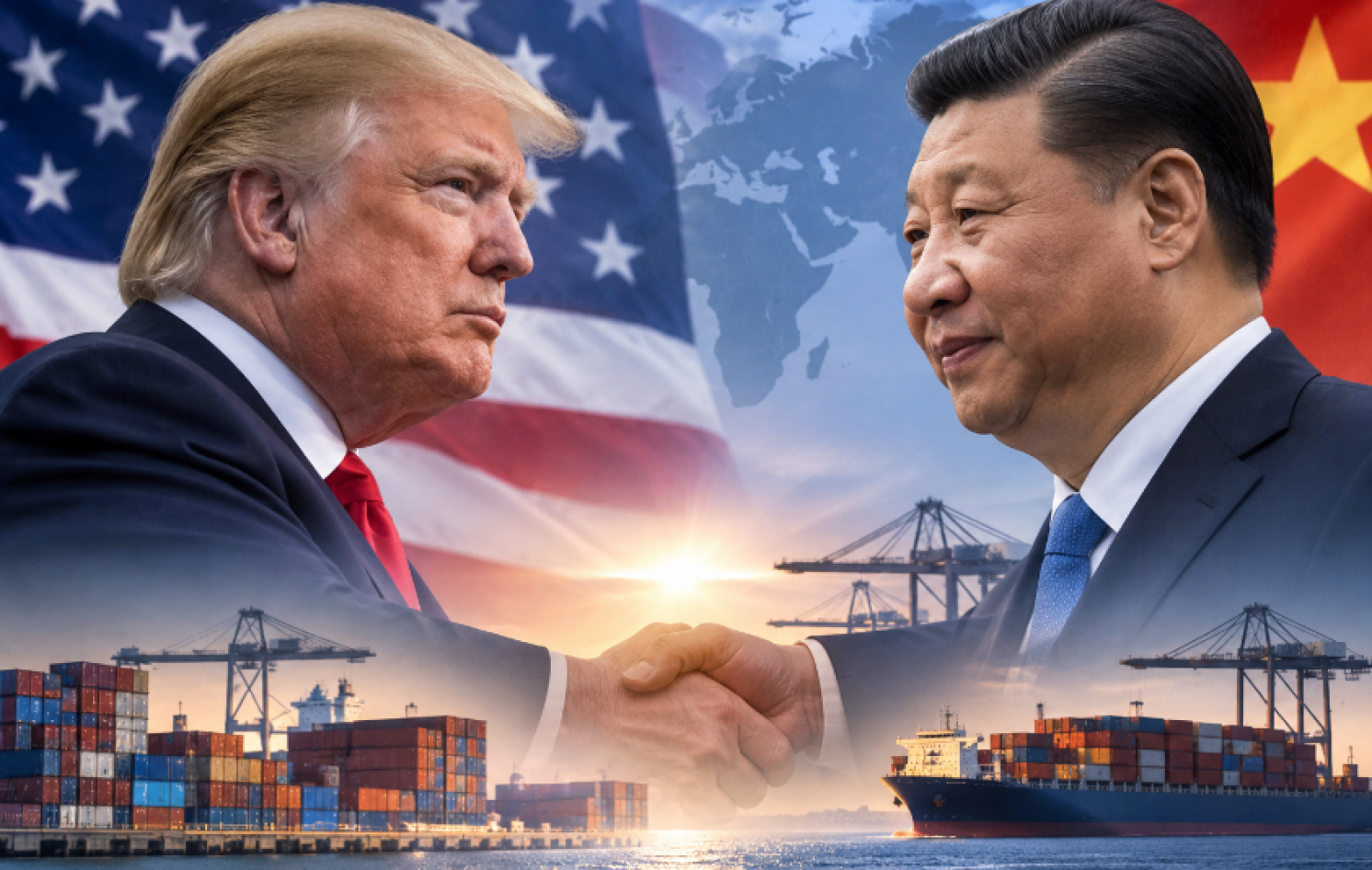
As Trump Faces Domestic Setbacks, Beijing May Seize Opportunity to Advance Grand U.S.-China Bargain
China Times Editorial, November 5, 2026
With the midterm elections in the United States concluded, the Democratic Party has secured majorities in both the House of Representatives and the Senate. Many observers believe that President Donald Trump has entered his "lame-duck era," while a new generation of Republican leaders is eagerly eyeing the 2028 presidential election. However, under the U.S. constitutional system, foreign affairs and national security powers rest with the president, and Mr. Trump continues to wield significant influence over the future direction of U.S.-China relations.
The "China factor" did not feature prominently in this midterm election. The Russia-Ukraine war and the war with Iran were the fundamental factors shaping the election results. Furthermore, U.S.-China competition has become prolonged and structural, and public discourse surrounding the China threat has reached a point of fatigue in domestic electoral politics. Moreover, after nearly a decade of intense confrontation between the United States and China, Americans, even if they dislike or fear China, have had to accept the established reality that China now stands on relatively equal footing with the United States, with both sides possessing the ability to constrain each other.
This brings us back to the consensus on establishing a "constructive strategic stability relationship" reached between Mr. Trump and Chinese President Xi Jinping during former’s visit to Beijing in May this year. Maintaining "strategic stability" between the United States and China is a shared objective among establishment foreign policy and national security advisers across party lines in Washington. Trump's transactional approach and his efforts to handle relations with China without ideological constraints have contributed to the warming of U.S.-China relations and the resumption of constructive interactions this year.
Following the midterm elections, Mr. Trump may become a "lame duck" domestically, but foreign affairs could instead provide him with opportunities to achieve meaningful accomplishments and even establish a historical legacy. Having encountered setbacks in Europe and the Middle East, will Trump redirect his attention to the Asia-Pacific and place U.S.-China relations higher on his agenda?
From Beijing's perspective, the establishment of a "constructive strategic stability relationship" between China and the United States can be regarded as mainland China's most significant diplomatic achievement in recent years. This is because the concept encompasses China's core narrative of overcoming the Thucydides Trap, achieving a peaceful rise, and realizing national rejuvenation. Beijing will undoubtedly "cherish" the remaining two-plus years of the Trump presidency and capitalize on his desire to secure diplomatic achievements and enhance his historical reputation to promote more significant and difficult-to-reverse political arrangements between the United States and China.
Developments increasingly demonstrate that technological innovation is the decisive battleground in U.S.-China competition. Following the midterm elections, the United States may return to the "small yard, high fence" approach to technological restrictions. However, the effectiveness of this strategy remains highly questionable and continues to generate substantial controversy within the United States. Mainland China, by contrast, faces no such internal controversy and has already combined its new whole-of-nation system with market-oriented mechanisms to continuously establish new technological advantages. Mainland China continues to prioritize "getting its own house in order" at this stage, making a peaceful and stable external environment an essential prerequisite.
Against this backdrop, looking ahead to the upcoming Asia-Pacific Economic Cooperation (APEC) Leaders' Meeting in Shenzhen, the underlying direction of a U.S.-China summit, or even a meeting among the "three major powers" of the United States, China, and Russia, is expected to remain unchanged: maintaining the international peace order and jointly committing not to initiate nuclear war. Mr. Xi needs multiple meetings with Mr. Trump to demonstrate his stature as a leader of a major power, while Mr. Trump needs Mr. Xi to reaffirm his status as an indispensable global leader despite the midterm election results. Under these circumstances, a U.S.-China "grand bargain" may become even more achievable. Taiwan has complicated feelings towards Mr. Trump, but subjective preferences should not interfere with objective assessments. Dialogue and reconciliation with mainland China, along with the maintenance of peaceful cross-strait exchanges, remain the best course of action.
From: https://www.chinatimes.com/opinion/20261105003959-262102?chdtv