Arms Purchases Only for Show: Does Lai Administration Truly Care About Defense Resilience?
United Daily News Commentary, July 21, 2026
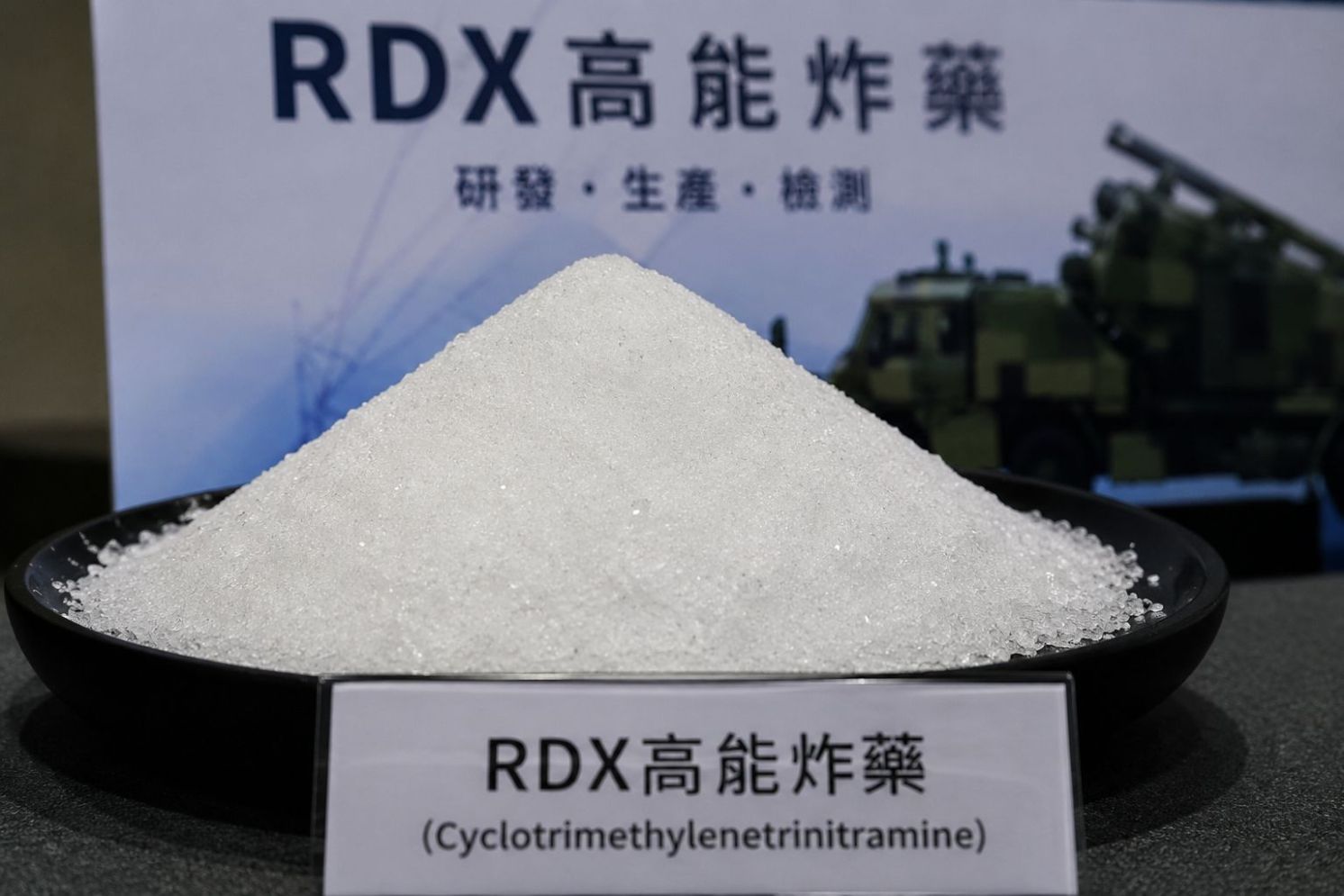
Fumai International Co., a Tainan-based company engaged in interior decoration, registered an expansion into international trade business last year and soon afterward won the Ministry of National Defense's (MND) tender for RDX high-energy explosives, prompting opposition lawmakers to question the deal. Minister of National Defense Wellington Koo denied any wrongdoing, but yesterday the MND confirmed that Fumai had failed to obtain an export permit from the country of origin and that the contract had therefore been terminated.
At the end of last year, Legislator Wang Hung-wei revealed that Fumai had won the RDX procurement contract with a bid of NT$570 million (about US$17.6 million). Since the company had a registered capital of only NT$19 million (about US$587,000), coupled with the fact that the MND had not purchased RDX from overseas for many years, the circumstances aroused public suspicion about the "mystery" behind the deal. There were even claims that the company had close ties with President Lai Ching-te. At the time, Fumai asserted that it had obtained an exclusive ten-year agency agreement from a major American manufacturer. Minister Koo responded angrily during an interview, asking, "Does setting a minimum capital requirement necessarily make it easier for a company to fulfill a contract? Does focusing on the company's name make it capable of fulfilling the contract?" He also criticized the allegations as "grossly exaggerated, untrue, and harmful to national security."
Minister Koo spoke forcefully, but only half a year later, the contractor failed to obtain India's export permit. As for the previously claimed exclusive agency agreement with the major American manufacturer, no one knows whether it was genuine, and in any case, it proved useless. When KMT Legislator Ma Wen-chun asked about the contract's implementation status, Director-General Lin Wen-hsiang of the Armaments Bureau stated that Fumai had failed to obtain the required export permit within 180 days after signing the contract. As of July 6, it was already 36 days overdue. The MND therefore terminated the contract in accordance with the law, confiscated the performance bond and imposed penalties totaling NT$83.9 million (about US$2.5 million), while also suspending the company's bidding eligibility and placing it on the blacklist of disqualified contractors.
Every statement made by the director-general proves one thing: the MND’s review mechanism is riddled with loopholes, and the Fumai case is merely one example. Minister Koo's forceful defense of the contractor last year reflected only his instincts as a lawyer, showing that he had not done sufficient homework on the defense industry or military procurement.
Even before the Fumai case, there had already been numerous "snake swallowing an elephant" procurement cases within the MND. One example involves ammunition and primer procurement, which followed almost the same pattern as the Fumai case: Several small companies amended their business registrations then immediately secured military procurement contracts. The greatest controversy was that these companies lacked any proven track record. Not only did legislators question the MND’s lax review process and warn that it could create the risk of disruptions in military supplies, but even several Control Yuan members known for their strong Democratic Progressive Party (DPP) backgrounds found the situation unacceptable.
Strictly speaking, while the Fumai case is only a microcosm, it has undeniably delayed the timetable for defense equipment procurement. The replenishment of the armed forces' core ammunition has consequently been postponed by more than half a year, the development of asymmetric combat capabilities has been affected, and the establishment of domestic production lines has also been disrupted. Did those responsible treat national security and military preparedness as a trivial matter? Or were they simply preoccupied with taking care of politically connected pro-DPP businesses?
Even the Control Yuan, despite facing the prospect of abolition, recognized the problem. Last month, Members Lai Ting-ming, Yeh Yi-jin, and Hsiao Tzu-yu submitted a report indicating that the MND had blindly relied on the lowest-bid principle, allowing inexperienced contractors to win bids easily while disregarding professional qualifications and proven performance. The MND failed to conduct substantive reviews of contractors' military industry backgrounds, capabilities in transporting explosives, or genuine cooperative relationships with international original manufacturers. The result was that bad money drove out good.
Another problem is that the MND has effectively sidelined the National Defense Industry Development Act. Although the law had already been enacted and includes an inter-agency industrial cooperation mechanism to prevent unqualified shell companies or inexperienced firms from participating in major military procurement projects, the administrative inertia and agency protectionism of the Armed Forces led most procurement projects to bypass this mechanism and proceed without coordination. The situation has retarded the development of Taiwan's domestic defense industrial supply chain, further delaying the timetable for strengthening national defense preparedness.
From: https://vip.udn.com/vip/story/122367/9641302?from=vipudn_maincate_latest