War Anxiety Reshapes Taiwan's Public Opinion
China Times Opinion, May 14, 2026
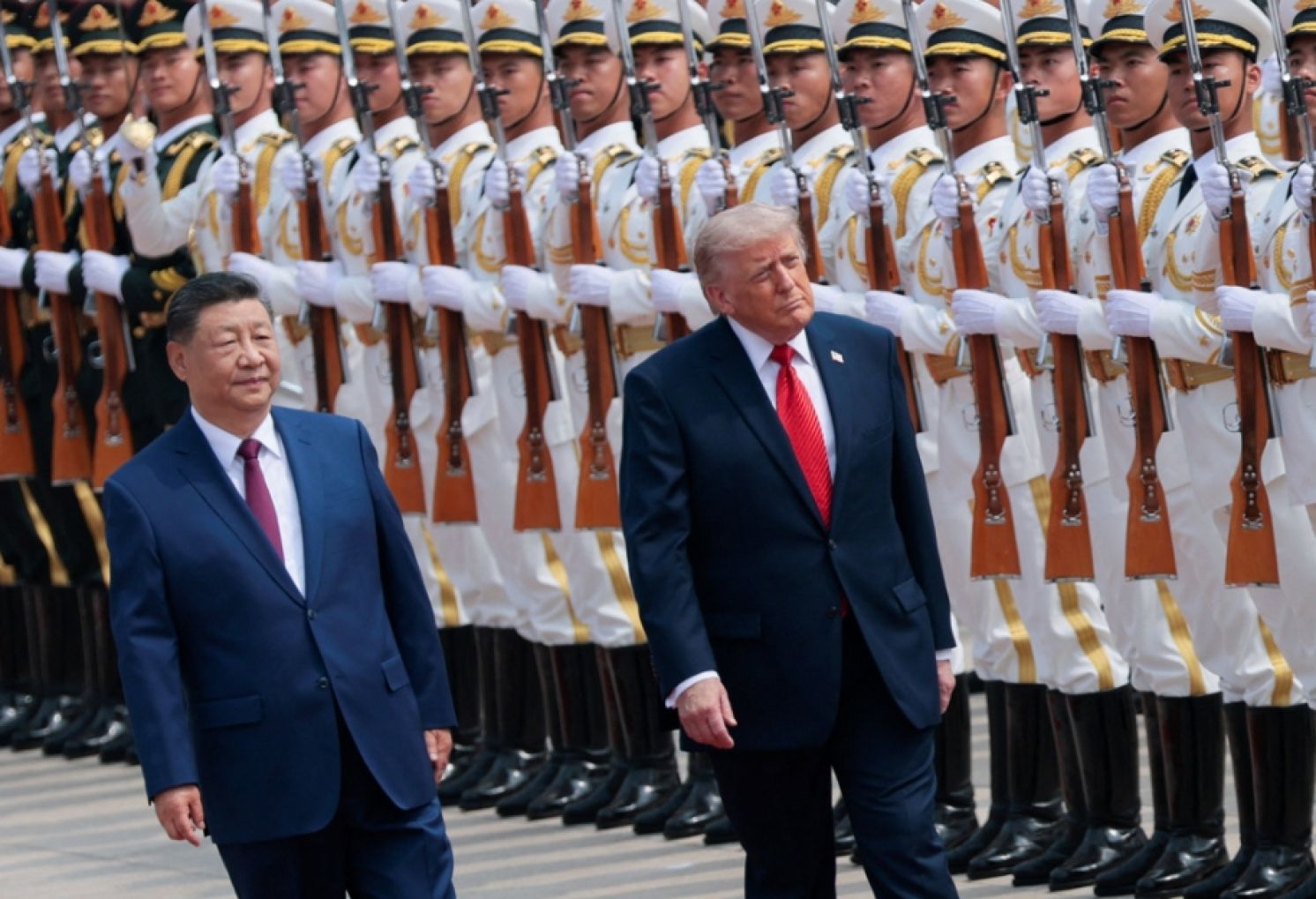
After President Donald Trump of the United States and Chinese President Xi Jinping met in Beijing, Taiwan once again became a core issue on the bargaining table between the United States and China. During the meeting, Mr. Xi clearly told Mr. Trump that the Taiwan issue is the most important issue in U.S.-China relations, and that if it is not handled properly, the two countries could “collide or even come into conflict.” Before the meeting, Mr. Trump had already stated that he would discuss arms sales to Taiwan with Mr. Xi. Taken together, these two developments have had a far deeper psychological impact on Taiwanese society than the government’s verbal reassurance that there were “no surprises.”
In recent years, the Democratic Progressive Party (DPP) administration has repeatedly emphasized that Taiwan-U.S. relations are rock solid. After the Trump-Xi meeting concluded on May 14, the Ministry of Foreign Affairs also stressed that “Beijing is the only risk to peace and stability.” These statements are not entirely wrong, but if they cause those in power to lose vigilance and believe that simply increasing the defense budget and intensifying anti-China rhetoric can manage cross-strait risks, then that itself is Taiwan’s real national security crisis.
What deserves the most attention regarding the Trump-Xi meeting is not only Beijing’s increasingly hardline stance toward Taiwan, but also the fact that Washington did not clearly address the Taiwan issue in its public statements. This means Taiwan can no longer place its security in one-sided interpretations.
The latest political survey by Formosa E-Newsletter shows that 53.7 percent of respondents believe that increasing various forms of cross-strait exchanges would reduce hostility between the two sides and be more beneficial to Taiwan, while 35.3 percent believe it would make it easier for the other side to conduct united front operations and would be detrimental to Taiwan. This does not mean Taiwanese society has suddenly changed; rather, war anxiety is transforming the political judgment of the Taiwanese people. People see that Taiwan can be discussed in U.S.-China negotiations, they see Beijing’s military pressure continuously escalating, and they also see that beyond large-scale arms purchases and political mobilization, the DPP administration has still failed to offer methods for reducing risks.
Even more alarming is that the poll shows that if the “peaceful reunification” advocated by Beijing could prevent war across the Taiwan Strait, 22.4 percent said they could accept it. Although the proportion is only slightly above 20 percent, when converted into actual population numbers, it amounts to more than 4 million people. This is not a figure that can simply be mocked as representing a “surrender faction,” but rather a serious warning sign indicating that as fear of war deepens, more and more people will place survival and security ahead of institutional choices.
If the DPP continues to portray calls for exchange as united front infiltration, label doubts about arms purchases as pro-American skepticism, and treat calls for easing cross-strait tensions as cognitive warfare, then it will only intensify social anxiety. The people are not unaware of the threat posed by China, nor do they fail to understand that Taiwan needs defense capabilities. What concerns the people is that the government keeps emphasizing the growing risk of war while failing to provide a corresponding political solution. Preparing for war is necessary, but preparation cannot replace communication. Arms purchases are also necessary, but they cannot become a fig leaf for ineffective governance.
After the Trump-Xi meeting, what President Lai Ching-te’s administration most needs to confront is not what Beijing said, nor whether Mr. Trump is “selling out Taiwan,” but the fact that Taiwan’s internal sense of security is eroding. When more than 50 percent of the public hopes for increased cross-strait exchanges, and more than 20 percent are willing to accept “peaceful reunification” under the premise of avoiding war, this indicates that war anxiety has already begun reshaping public opinion in Taiwan.
If the DPP still intends only to consolidate its support base through anti-China and pro-Taiwan rhetoric, while remaining unwilling to rebuild channels for cross-strait communication or clearly explain to the people what its peace strategy is, then what awaits change will not merely be polling numbers, but Taiwan’s future room for survival.
(The author is the chairman of Formosa E-Newsletter.)
From: https://www.chinatimes.com/opinion/20260514004409-262104?chdtv