TAO and AIT Compete for Taiwan's Public Opinion
China Times Editorial, July 6, 2026
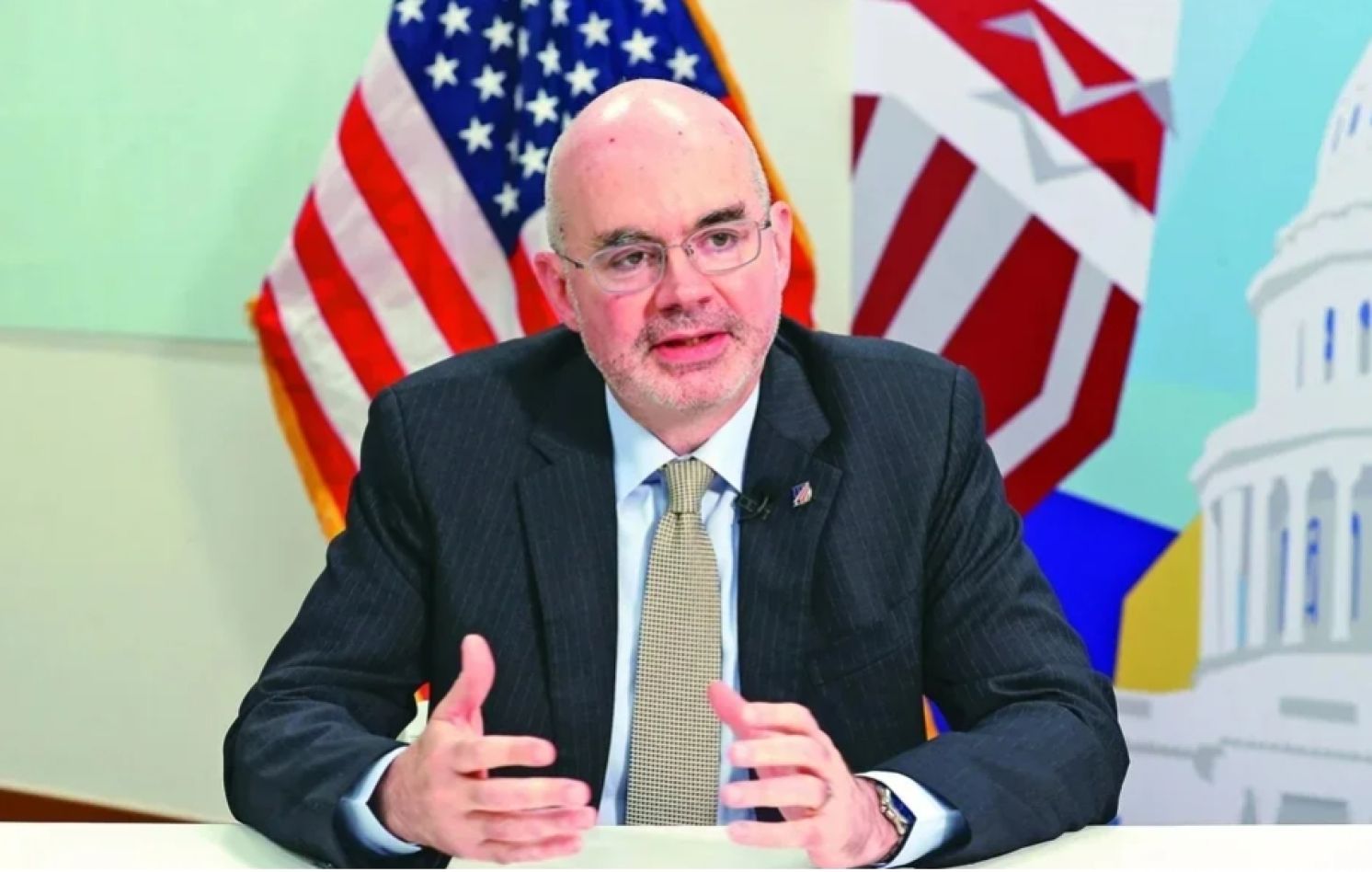
Comparing the recent remarks by Director Raymond Greene of the American Institute in Taiwan (AIT) and the spokesperson for the Taiwan Affairs Office (TAO) of mainland China’s State Council, one common trend stands out: both have placed greater emphasis on Taiwanese public opinion. This marks a significant departure from the past.
Director Greene's recent remarks can be summarized into three key points. First, the mutual attraction between the two sides of the Taiwan Strait no longer exists as it once did. Second, the fact that 70 percent of the Taiwanese public supports maintaining the status quo can serve as a foundation for cross-strait dialogue, and Beijing should not impose political preconditions for such dialogue. Third, he warned Beijing that attempts to create divisions within Taiwan would not produce the desired outcome.
Regarding U.S.-Taiwan relations, Director Greene particularly emphasized that U.S. policy toward Taiwan remains unchanged and that U.S. arms sales to Taiwan have not been suspended. He strongly promoted Taiwan's development of its drone industry, urged both the Kuomintang (KMT) and Democratic Progressive Party (DPP) to approve a special budget for drones, and advocated "turning Taiwan into a hive of drones" to restore the military balance across the Taiwan Strait through asymmetric capabilities.
The TAO spokesperson quickly responded to Director Greene's remarks without mentioning him by name. The spokesperson warned that any attempt to alter the status quo would fail and reiterated that the resumption of cross-strait dialogue must be premised on the abolition of the DPP’s Taiwan independence platform. At the same time, however, the spokesperson reaffirmed the policy of "uniting Taiwan compatriots, deepening exchanges and cooperation, and promoting integrated development," while announcing plans to expand youth summer camp exchange programs.
The core of Beijing's strategy toward Taiwan is a precise separation between officials and the public. It deliberately distinguishes the "Taiwan authorities and U.S. officials" from the "broad mass of Taiwan compatriots." Toward officials, Beijing adopts an extremely hardline approach, portraying the administration of President Lai Ching-te and U.S. diplomats as "Taiwan independence separatist forces" and "external interference forces," using strong rhetoric to criticize and reject them. Toward the public, however, Beijing extends a welcoming hand. Taiwanese youth, grassroots communities, businesspeople, and entertainers are regarded as groups to be won over and united, while China seeks to create an atmosphere that is warm, friendly, and full of opportunities for development.
The United States, on the one hand, encourages Taiwan to increase its defense budget, purchase more American weapons, and accelerate the relocation of the semiconductor industry ecosystem to the United States. On the other hand, it is deepening technological and security cooperation while seeking greater support from the Taiwanese public. Beijing is similarly applying pressure on the Democratic Progressive Party government while simultaneously promoting exchanges, youth programs, cultural interaction, and integration initiatives. The competition between China and the United States for influence over Taiwan remains a long-term contest, with neither side holding a decisive advantage.
Director Greene cited the fact that "70 percent of the public supports maintaining the status quo" in urging Beijing to engage in dialogue with Taiwan's democratically elected government without imposing preconditions. The TAO, meanwhile, emphasized "uniting Taiwan compatriots" and "respecting and caring for Taiwan compatriots." Both sides have placed the people of Taiwan at the center of their narratives, indicating that the focus of competition has shifted toward public opinion.
In the past, the United States valued Taiwan primarily for its strategic importance and out of political and military necessity. Today, while continuing to focus on political and military issues, it has also begun seeking the trust of the Taiwanese people, directly addressing skepticism toward the United States and actively promoting supply chain cooperation in the hope of demonstrating that U.S.-Taiwan cooperation extends beyond military affairs to encompass shared interests in technology, industry, and future development.
In the past, Beijing's Taiwan policy focused primarily on the issue of unification for political purposes. Today, while continuing to pursue unification, it has also elevated "deepening exchanges and cooperation" and "integrated development" to the core of its approach. It continues to promote initiatives such as the Straits Forum, youth exchanges, cultural exchanges, tourism, and market opening, hoping that increased practical engagement will improve China's image within Taiwanese society.
Both sides have begun placing less emphasis on ideology and greater emphasis on winning public support. This also serves as a reminder to Taiwan that it should not define itself merely as an object of U.S.-China competition. Instead, Taiwan should observe how the policies of both sides evolve, consider which choices best serve its long-term interests, and act accordingly.
Peace must be built upon the trust of the people, the accumulation of exchanges, and the sharing of common interests. Whichever side is better able to respond to the Taiwanese people's expectations for peace, security, and development is likely to gain the advantage in this new competition for public support.
From: https://www.chinatimes.com/opinion/20260706003440-262102?chdtv