Sovereignty Lost in Taiwan's Eastern Waters: Challenge for Lai Administration
China Times Editorial, June 11, 2026
The controversy surrounding Japan and the Philippines’ unilateral announcement of Exclusive Economic Zone (EEZ) delimitation talks in waters east of Taiwan continues to escalate. As public opposition grows within Taiwan and mainland China’s maritime armed and law enforcement forces respond forcefully, the administration of President Lai Ching-te may soon face a situation even more severe than the one that followed the visit by then-Speaker Nancy Pelosi of the United States House of Representatives to Taiwan in 2022, after which the People’s Liberation Army (PLA) effectively rendered the median line of the Taiwan Strait obsolete.
Following the announcement, the Lai administration neither sought remedial measures nor demonstrated the ability to persuade Japan and the Philippines to reconsider. Instead, it has resorted internationally to the same distraction tactics long exhausted in domestic political struggles, claiming that the Japanese and Philippine initiative is primarily “directed at China” and has no bearing on Taiwan’s interests. The government has also attempted to downplay the significance of the proposed delimitation by citing the existence of the Taiwan-Japan Fisheries Agreement and the Taiwan-Philippines Agreement Concerning the Facilitation of Cooperation on Law Enforcement in Fisheries Matters.
A closer examination reveals that both agreements were signed under former President Ma Ying-jeou and the tacit understanding of cross-strait “diplomatic truce,” which enabled Taiwan to conclude formal agreements with foreign governments. Neither agreement involved changes to EEZ boundaries. The Taiwan-Japan agreement addressed only which waters around the Diaoyutai Islands would be exempt from the application of the other party’s laws, thereby allowing Taiwanese fishermen to operate without interference, and which waters would constitute “special cooperation zones” where each side would manage its own fishermen.
Similarly, the Taiwan-Philippines agreement focused on ensuring that law enforcement actions would avoid violence or unnecessary use of force, requiring one-hour advance notification to the other side’s competent authorities before enforcement activities in overlapping waters, and establishing a mechanism for the prompt release of detained persons and vessels. In short, neither the Taiwan-Japan nor the Taiwan-Philippines fisheries agreements involved any alteration of existing maritime claims. With Japan and the Philippines now negotiating EEZ boundaries, there is no guarantee that Taiwan’s overlapping maritime claims will continue to be respected once their negotiations are concluded.
It is foreseeable that, having proceeded with negotiations while excluding Taiwan, Japan and the Philippines will support each other’s exercise of sovereign rights as coastal states within any newly delimited maritime zones. Since Taiwan was not regarded by either party as a sovereign actor requiring prior consultation or participation in the negotiations, Taiwan may ultimately be forced to rely on, or simply assume, the “goodwill” of both countries in future fisheries management practices. More troubling is the fact that Taiwan concluded fisheries agreements with Japan in 2013 and with the Philippines in 2015 through official channels, yet when the parties move to negotiate the legally superior matter of delimiting overlapping EEZ claims, Taiwan has been excluded from the negotiating table. This significant shift not only reflects a substantial regression in Taiwan’s sovereign status under Democratic Progressive Party (DPP) governance, but also suggests that Japan and the Philippines, under current international circumstances, prefer to negotiate privately while avoiding direct engagement with Taiwan in order to prevent stronger reactions and countermeasures from mainland China.
Beyond Japan-Philippine relations, Taiwan’s sovereignty and dignity have suffered a notable setback. In waters east of Taiwan, where Taiwan has traditionally exercised maritime administrative authority, the Lai administration’s silence and inability to resist what critics describe as Japanese and Philippine encroachment have invited the involvement of mainland China’s Coast Guard, maritime traffic management authorities, maritime rescue agencies, and marine survey and exploration units. As a result, maritime rights that Taiwan previously exercised exclusively in waters east of the island are now facing new challenges. Mainland sources have even asserted that the waters east of Taiwan may eventually enter a “near-seas governance model” similar to those applied in the South China Sea, Yellow Sea, and East China Sea.
Past experience suggests that once mainland China initiates regularized maritime law enforcement following a major incident, such deployments rarely recede. This pattern has been observed in the waters around the Diaoyutai Islands following Japan’s nationalization policy and in the waters around Kinmen after the fatal capsizing incident involving mainland fishermen. The waters east of Taiwan may now be entering a similar phase.
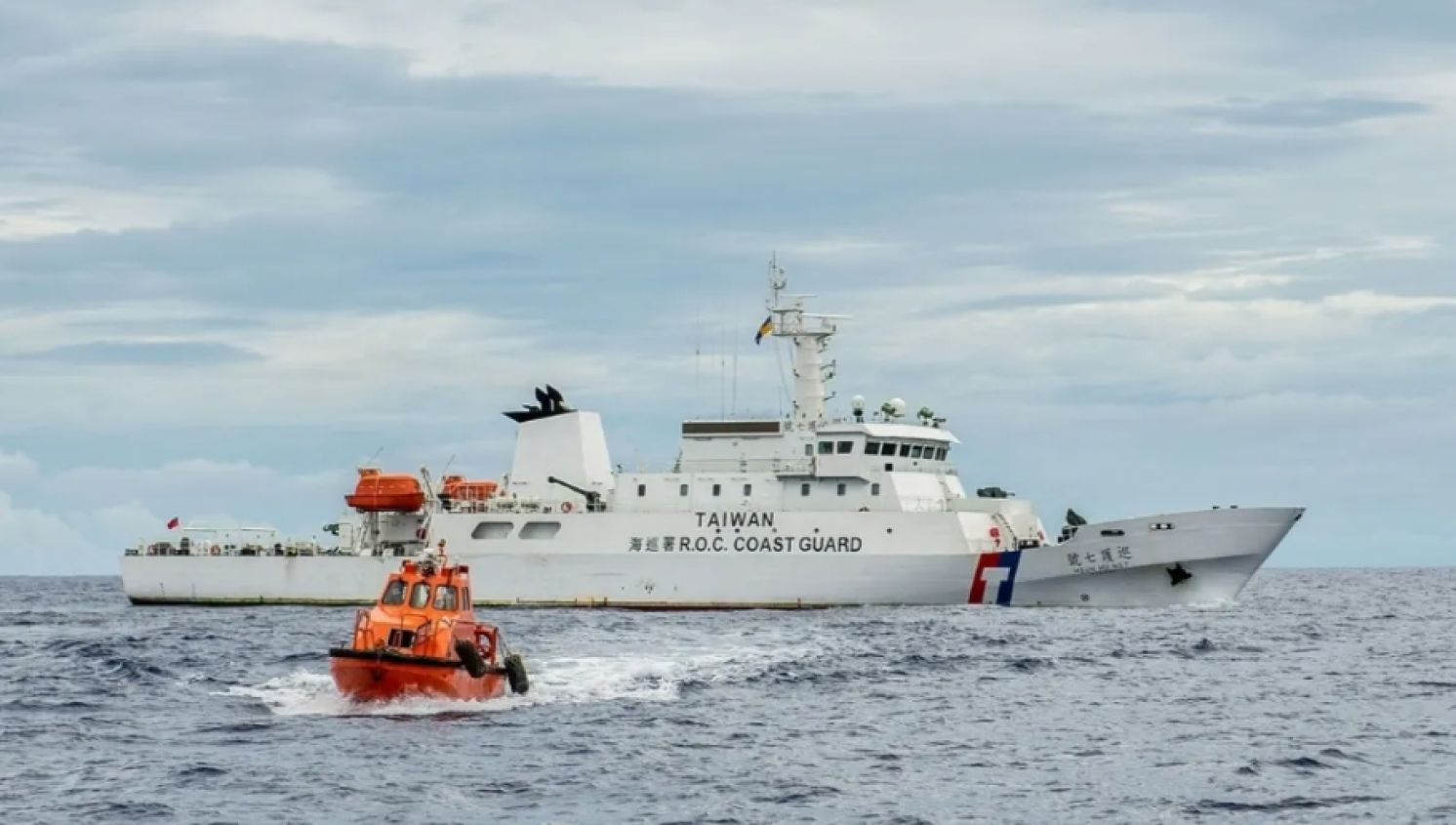
As Taiwan’s Coast Guard and mainland Chinese maritime forces increasingly operate simultaneously in waters east of Taiwan, avoiding accidental confrontations and cross-strait conflict, establishing clear operational understandings between the two sides, and ultimately coordinating efforts to protect fishermen may become a new challenge facing the Lai administration.
From: https://www.chinatimes.com/opinion/20260611004263-262101?chdtv