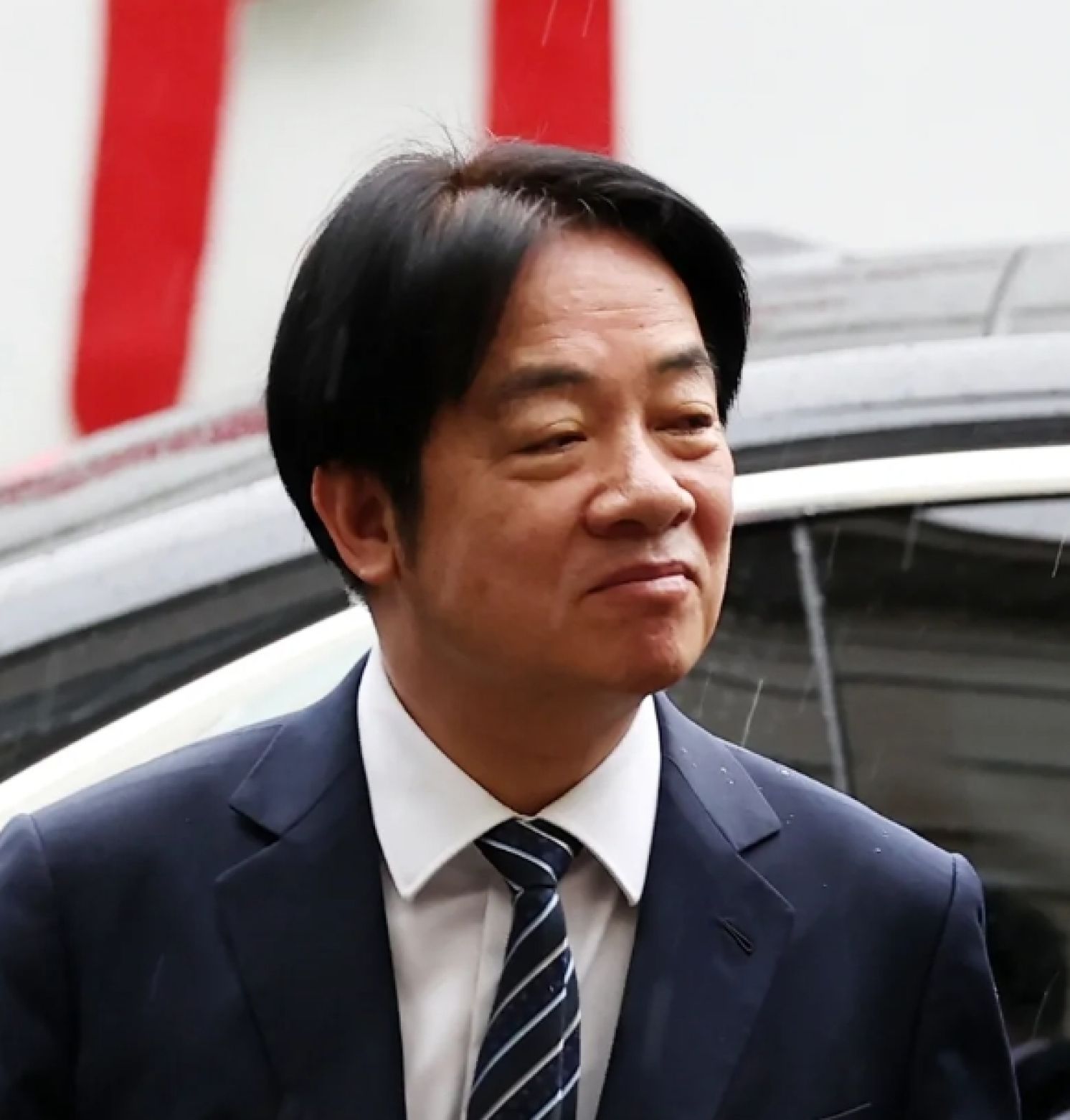
President Lai's Three Steps Towards Dictatorship
United Daily News Opinion, December 26 2025
When a nation’s highest leader turns the slogan of “defending democracy” into a weapon for eliminating dissent, and when grand justices who should safeguard the constitutional bottom line degenerate into servants and pathfinders for those in power, we must ask seriously: how far is President Lai Ching-te, the one directing these actions, from the “evil” of constitutional destruction?
In just over a year since President Lai took office, Taiwan has experienced unprecedented political turmoil and democratic regression. From launching a mass recall campaign targeting opposition legislators, to the Executive Yuan’s unprecedented and unconstitutional creation of a “non-countersignature” administrative veto, and finally to the Constitutional Court’s controversial ruling in which five grand justices forcibly unlocked procedural thresholds—these three major evils resemble three heavy shackles, locking away the vitality of Taiwan’s democracy. This is not merely a struggle among blue, green, and white camps; it is a life-or-death moment for the constitutional order itself.
At the beginning of his presidency, faced with the political reality of a weak ruling party and a strong opposition, President Lai did not display the statesmanship needed to seek consensus. Instead, he chose the most extreme path of confrontation, with the “mass recall” as its clearest manifestation. The failure of the recalls does not mean that the public offers unreserved support to the blue and white parties; rather, it reflects a collective fear of “Lai-style abuse of power.” When a ruler cannot win votes within the legislative chamber, he attempts to secure total control by destroying the opposition’s seats. Weaponizing recall in this way marks President Lai’s first step away from the spirit of democracy.
If recalls are political mobilization, then Premier Cho Jung-tai’s exercise—under President Lai’s direction—of a so-called “non-countersignature power” against the Fiscal Allocation Act after a failed reconsideration vote is an outright act of constitutional vandalism. When a reconsideration motion is rejected by parliament, President Lai and Premier Cho nevertheless rendered a law passed on third reading into wastepaper by refusing to countersign and promulgate it.
How is this any different from warlord Yuan Shih-kai’s contempt for parliament and embrace of dictatorship in the early Republic of China? This is no longer a dispute over legal interpretation; it is a blatant trampling of legislative authority by the executive branch. This self-invented “administrative veto” has completely distorted the system of checks and balances, and in the eyes of the public has gradually fused President Lai’s image with that of a modern “Lai Shih-kai,” willing to wreck the constitutional system to impose his personal will.
Most chilling of all is the collective fall of the Constitutional Court. With only eight grand justices remaining, five nevertheless issued a highly controversial ruling, completely shattering the final line of defense of procedural justice.
Through “self-interpretation,” these five grand justices forcibly “logged out” the three colleagues who refused to participate in unlawful deliberations, lowering the threshold to complete their judgment. The grand justices ceased to be guardians of the Constitution and instead became executors of President Lai’s will. This form of “constitutional-interpretation dictatorship” has plunged Taiwan’s democracy into its darkest hour.
The common core of President Lai’s three great evils is simple: an inability to accept defeat. Unable to accept losing a parliamentary majority, he resorts to recalls; unable to accept defeat in reconsideration, he invents non-countersignature; unable to prevail in legal battles, he turns to the grand justices to overturn outcomes. This arrogance—demanding that the will of the majority bow to a minority—is pushing Taiwan toward the precipice of a constitutional crisis.
The true way forward does not lie in further confrontation, but in a return to procedural justice. A presidential impeachment motion is about to be proposed, representing the Constitution’s ultimate tool for the legislature to check abuses of power. If President Lai continues to ignore the warning bells of public opinion, then history will deliver its harshest verdict. The people of Taiwan do not need a “Lai Shih-kai.” They need a law-abiding president who reveres the Constitution and respects the popular will.