President Lai's Inviting Jensen Huang to Tour Power Plant Exposes Reality of Electricity Shortage
United Daily News Opinion, June 6, 2026
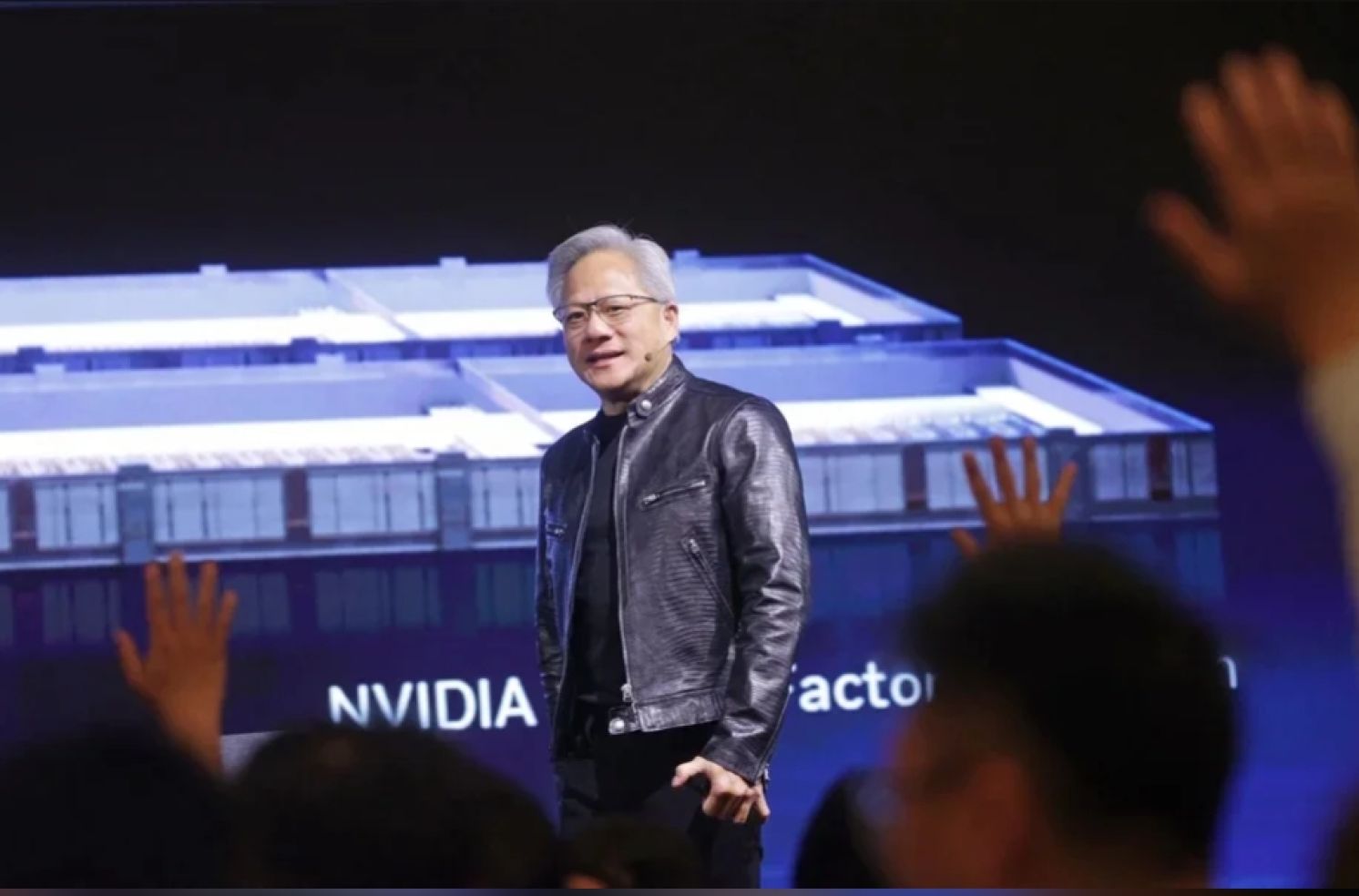
NVIDIA CEO Jensen Huang stayed in Taiwan for more than 10 days, creating a wave of “Jensanity.” In addition to attracting attention by visiting various night markets and sampling local food, the topic that generated the most discussion was his undisguised concern about Taiwan’s energy issues. In particular, when he was asked about the government’s guarantee that Taiwan would not face electricity shortages before 2034, his spontaneous response of “Maybe” struck directly at the Democratic Progressive Party’s (DPP) most vulnerable point on the power shortage issue.
On June 5, President Lai Ching-te invited Huang to visit a power plant, saying that after the visit he would have greater confidence in Taiwan’s power supply. Huang gladly accepted the invitation. The most intriguing question is which power plant President Lai plans to show him that could convince Huang that Taiwan’s electricity supply is truly secure.
Ever since the DPP administration began promoting a nuclear-free homeland policy, the issue of “power shortages” has remained a cloud hanging over the public, and it has also been one of the most sensitive issues for the DPP administration. This explains why, when Huang said Taiwan needed more energy, DPP Taipei mayoral candidate Shen Pao-yang focused on whether Huang meant “Energy” rather than “Electricity,” and redirected the discussion toward delays in the construction of Taipei substations. It was not until Huang personally said “Electricity” four times that Shen had no choice but to accept the situation.
Perhaps the most damaging moment came when a reporter asked Huang about the government’s promise that Taiwan would have sufficient electricity through 2034. When Huang replied with “Maybe,” the silence and awkwardness at the scene were unmistakable. In fact, Huang is not the only one with concerns. As early as 2023, then-Chairman Mark Liu of the Taiwan Semiconductor Manufacturing Company (TSMC) stated at a shareholders’ meeting: “The government says there will be no power shortages before 2025. We can only believe it.” Those words reflected concerns about the stability of Taiwan’s electricity supply.
This is why President Lai, while attending Computex, specifically stated that stable electricity supply would not be a problem through 2032. He emphasized that the government would continue promoting a second energy transition, ensuring that wherever technological development goes, stable electricity will follow, and guaranteeing that Taiwan remains a secure and reliable base for the artificial intelligence (AI) industry to grow. Many observers interpreted these remarks as a direct response to Huang’s concerns about energy issues.
Moreover, during a televised interview on June 5, President Lai extended another invitation to Huang, expressing hope that during his next visit to Taiwan, he could tour a power plant and receive a briefing from Chairman Tseng Wen-sheng of the Taiwan Power Company, after which Huang would gain confidence. Huang responded that it would be a great honor, while once again emphasizing that “Taiwan needs energy.”
The question remains: Which power plant can President Lai show Huang? Taipei Mayor Chiang Wan-an has already suggested, “He could visit Nuclear Power Plant No. 3.” Nuclear power is widely regarded as the most stable source of baseload electricity, and Huang has publicly expressed support for nuclear energy in the past. However, all of Taiwan’s nuclear power plants have now been shut down, and even if they were to be restarted, it would likely take at least two years. As for renewable energy, it cannot serve as baseload power, leaving thermal power generation as the primary option.
President Lai also stated on June 5 that Taipower currently maintains a reserve margin of about 20 percent. For every 100 units of electricity generated, approximately 20 units remain available as reserve capacity for dispatch, indicating that Taiwan’s electricity supply is currently sufficient. However, even if electricity is adequate today, major projects under development—including the Southern Taiwan Science Park’s Shalun campus and the Chiayi Science Park, where TSMC and its supply-chain partners are expected to establish operations—will significantly increase power demand. Can electricity supply keep pace with these growing needs? After listening to those polished presentations, will Huang truly be convinced that Taiwan does not face a power shortage?
In May last year, despite repeated calls from various sectors, the Lai administration insisted on shutting down Nuclear Power Plant No. 3. It seems that only after hearing Huang’s “Maybe” did the government realize how low its level of public trust has become.