President Lai's High-Stakes Diplomatic Gamble
China Times Opinion, May 4, 2026
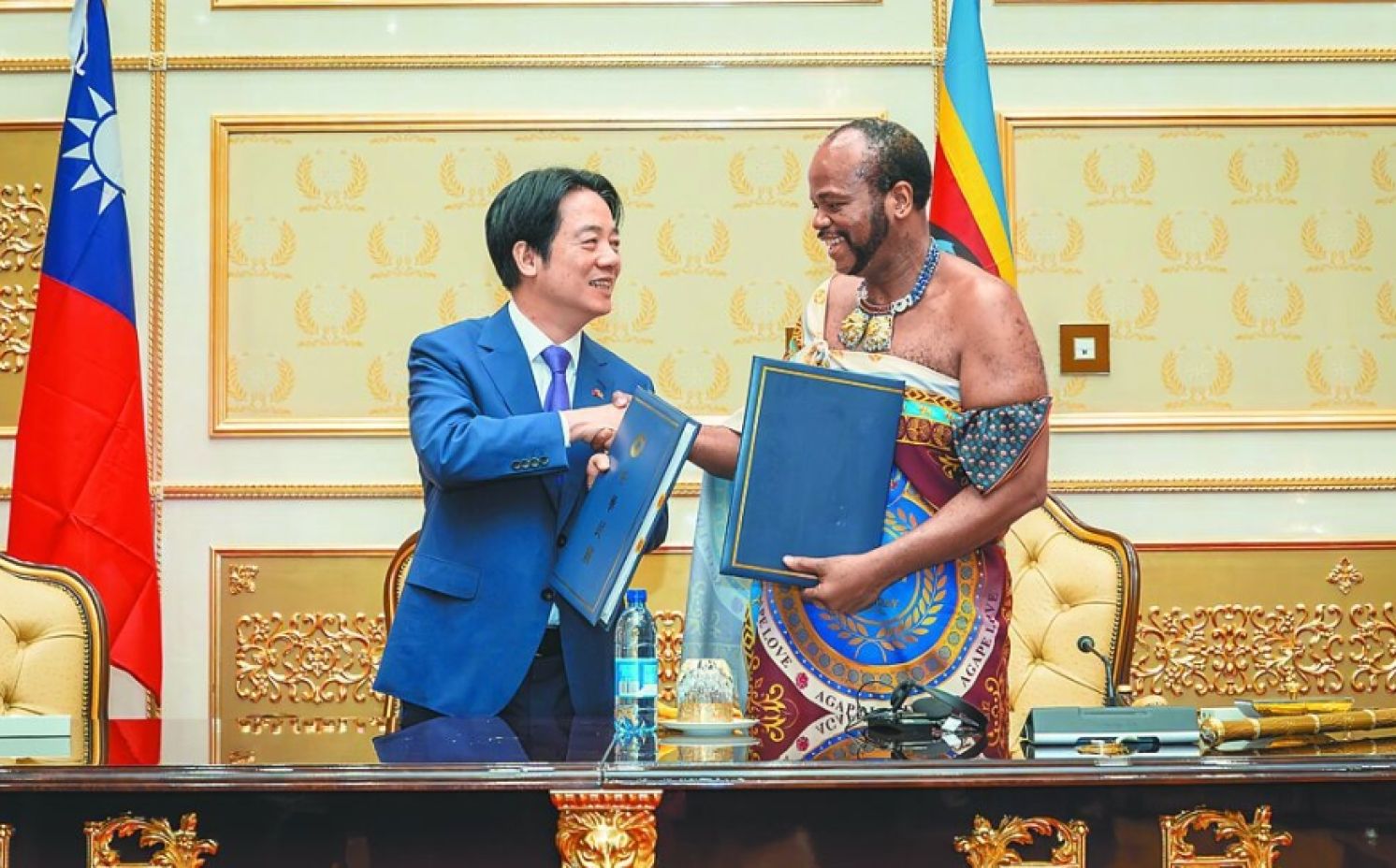
President Lai Ching-te arrived in the Kingdom of Eswatini aboard the country’s official aircraft, publicly announcing a breakthrough of diplomatic blockade. On the surface, this appeared to be a diplomatic visit to Taiwan’s only African ally; however, against the backdrop of intensifying U.S.-China competition, rising cross-strait tensions, and the upcoming meeting between President Donald Trump of the United States and Chinese President Xi Jinping, it was also a highly politicized battle of international signaling.
The trip was originally postponed after Seychelles, Mauritius, and Madagascar withdrew flight permissions. It is generally believed that this was due to pressure from China. Although Beijing denied exerting pressure, it simultaneously expressed “high appreciation” for the decisions made by those countries. Regardless of whether Beijing acted directly, its intention to block Taiwan was made quite clear.
In response, President Lai, through confidential arrangements, broke through the blockade by boarding Eswatini’s official aircraft, signaling to the world through action that “Taiwan will never be intimidated by pressure from Beijing.” For many people in Taiwan, President Lai’s decision may have been inspiring; but for others calmly observing the risks across the Taiwan Strait, concerns are inevitable: does this represent an escalation in cross-strait confrontation? And has sufficient preparation been made for the risks that may follow?
Beijing’s attempt to shrink Taiwan’s international space certainly requires a response from Taiwan in order to demonstrate to the world that it still possesses diplomatic agency. From the perspective of national dignity, such countermeasures are necessary and politically compelling. However, international politics has never been driven by courage alone. Courage without strategic planning can become a gamble; determination without risk management can force the entire population to bear the consequences together.
President Lai may believe that Beijing is unlikely to react excessively at this moment. The reason is that China is currently competing with the United States for global leadership while also trying to cultivate the image of a “responsible major power” among the Global South. If Beijing were to retaliate too aggressively against President Lai’s visit to an African ally, the international community would instead see China using great-power pressure against a small democracy, thereby undermining its diplomatic narrative. On the other hand, an overreaction from Beijing could also trigger even stronger anti-China sentiment within Taiwan and potentially recreate political mobilization similar to the Sunflower Student Movement, which could ultimately benefit the ruling party politically.
Therefore, Beijing’s more likely course of action may not be an immediate and comprehensive escalation of military pressure, but rather an attempt to negotiate with the United States Government under President Donald Trump. Beijing could frame the matter as Mr. Lai’s “provoking the status quo” and request that Washington manage the “reckless behavior” of Taiwan’s leader. This is the point about which Taiwan truly needs to be vigilant. With the Trump-Xi meeting approaching, if the Taiwan issue is placed on the negotiating table between the United States and China, Taipei must consider whether Washington will view the Lai administration’s actions as a principled stand deserving support for an ally, or as a risk that increases America’s strategic burden.
This is Taiwan’s most sensitive diplomatic reality at present. The United States supports Taiwan, but that does not necessarily mean it supports every political action Taiwan may take that could escalate risks. Allies sympathize with Taiwan’s situation, but they may not be willing to bear the costs of every effort Taiwan makes to break through diplomatic isolation. If Taiwan hopes to keep the international community on its side, then it must convince the world that it is not emotionally provoking China, but rather defending its own rights in a rational, steady, and necessary manner.
What President Lai demonstrated this time was the posture of a wartime leader: refusing to retreat, refusing to hide, and refusing to accept Beijing drawing the boundaries of Taiwan’s actions. Such a posture can rally supporters and certainly sends a clear signal to China. But wartime leaders need more than courage; they also need to assure the people that the government is prepared to withstand the pressure that follows. After this diplomatic breakthrough, if Beijing intensifies military intimidation, diplomatic isolation, economic coercion, or information warfare operations, does Taiwan already have a comprehensive response plan? And if allies merely issue statements of concern without taking substantive action, how should Taiwan respond?
Politicians cannot make decisions based solely on temporary applause. It is understandable that supporters are excited, but the costs borne by the nation are not carried solely by those who press the “like” button. Taiwanese society also cannot understand this issue through the simplistic labels of either “courage” or “provocation.” A truly mature democracy should simultaneously recognize the necessity of defending national dignity while also seriously questioning the strategic costs that follow such actions.
President Lai successfully arrived in Eswatini, indeed breaking through Beijing’s blockade and declaring to the world that Taiwan will not be intimidated by external pressure. Yet from a broader strategic perspective, this gamble has only just begun. The real question is not whether President Lai managed to fly out, but whether Taiwan can bear the consequences that come after.
Taiwan is already at the table. What remains to be seen is how Beijing will play its cards, how the United States will respond, and whether Taiwan itself clearly understands that if this situation changes, the cost may not merely be temporary political confrontation, but potentially a complete reshuffling of the country’s future.
(The author is associate professor in the Department of Political Science at Sam Houston State University.)
From: https://www.chinatimes.com/opinion/20260504003765-262104?chdtv