Most Open Military Exercise in History: What's Beijing Staged May Not Be Beijing's Script
China Times Opinion, August 10, 2026
The Han Kuang military exercise this year is the most open in history, with the scenarios and training objectives deliberately made as transparent as possible to the outside world. It is intended not only for Beijing to see, but also for the United States. Although the military gap across the Taiwan Strait has widened, if Communist China were to invade Taiwan, how Taiwan would resist is something Taiwan’s military wants Beijing to see this time, so that the other side will consider the costs it would have to bear to seize Taiwan militarily. Whether Beijing would actually fight according to the tactics designed by Taiwan, however, is another matter.
The Han Kuang Exercise is conducted in preparation for a potential Chinese Communist invasion of Taiwan—a case of being prepared rather than caught off guard. The fundamental nature of this year’s scenarios has not changed, but the range of exercises has expanded. For example, the locations of mobile tactical positions are changed every year; ports are treated as key defensive points; cross-regional reinforcements focus primarily on moving forces from south to north; even the “Wan Jun Plan,” under which “English teachers” (U.S. military advisers) observe throughout the process as the commander-in-chief is evacuated, has been made public for Taiwan’s people to see—and openly made known to Beijing as well.
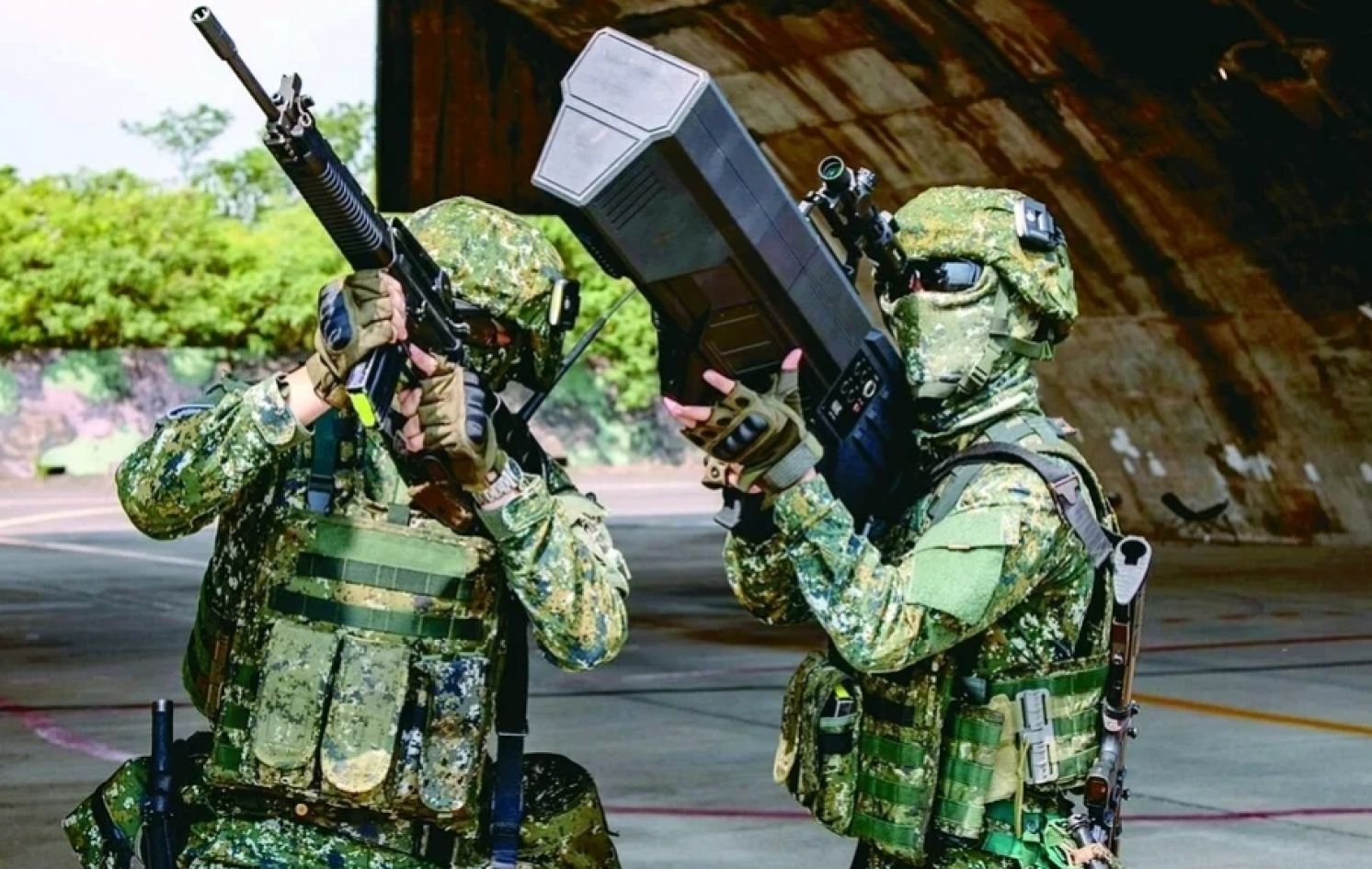
The Han Kuang Exercise this year has no script and no rehearsal. Live-force exercises on Taiwan’s main island are conducted without live ammunition, while the deliberately staged “firepower shows” that had been rehearsed year after year have also been canceled. These changes overturn the public’s established perception of Han Kuang. At the same time, however, military personnel have been pushed further out of their comfort zones, undergoing 10 consecutive days and nine nights of round-the-clock, high-pressure simulations to confront the harshest and most realistic battlefield conditions without a pre-determined script.
To test societal resilience during wartime, 14 cities and counties in central and northern Taiwan also conducted a test for the first time during the air-raid drills in which mobile network speeds were deliberately reduced, simulating a realistic scenario in which communications are disrupted by an enemy attack. This tests whether military units can operate independently in a decentralized manner when communications are cut off. In addition, this year saw the first implementation of full-brigade mobilization for two brigades in the north and south, with all personnel equipped with American-provided military equipment, although the equipment still requires inspection and maintenance. These training scenarios are all deliberately designed to let Beijing know that if war breaks out across the Taiwan Strait, this is how Taiwan’s military is prepared to defend its homeland.
The theme of the Han Kuang Exercise this year, “multi-domain denial and resilient defense,” makes it clear that the military intends to fight a prolonged war. Multi-domain denial means continuously reinforcing forces across different regions. This reflects the Chief of the General Staff’s authority over military deployments and also indicates that the hypothetical enemy may not only attack from the western coast but could also launch attacks from the east. Meanwhile, resilient defense clearly points toward a prolonged war and urban warfare. However, Taiwan has a high population density, and many retired senior naval and air force officers still argue that any war should be fought in the Taiwan Strait. Once the fighting reaches street and urban warfare, it would mean that the navy and air force had already been destroyed, leaving only ground forces to continue fighting. In that case, “how long could the war really last?” Moreover, the mainland would not fight according to the Han Kuang script either.
From: https://www.chinatimes.com/newspapers/20260810000451-260121?chdtv