How to Define Status Quo?President Lai's Differs from Past
United Daily News Editorial, June 26, 2026
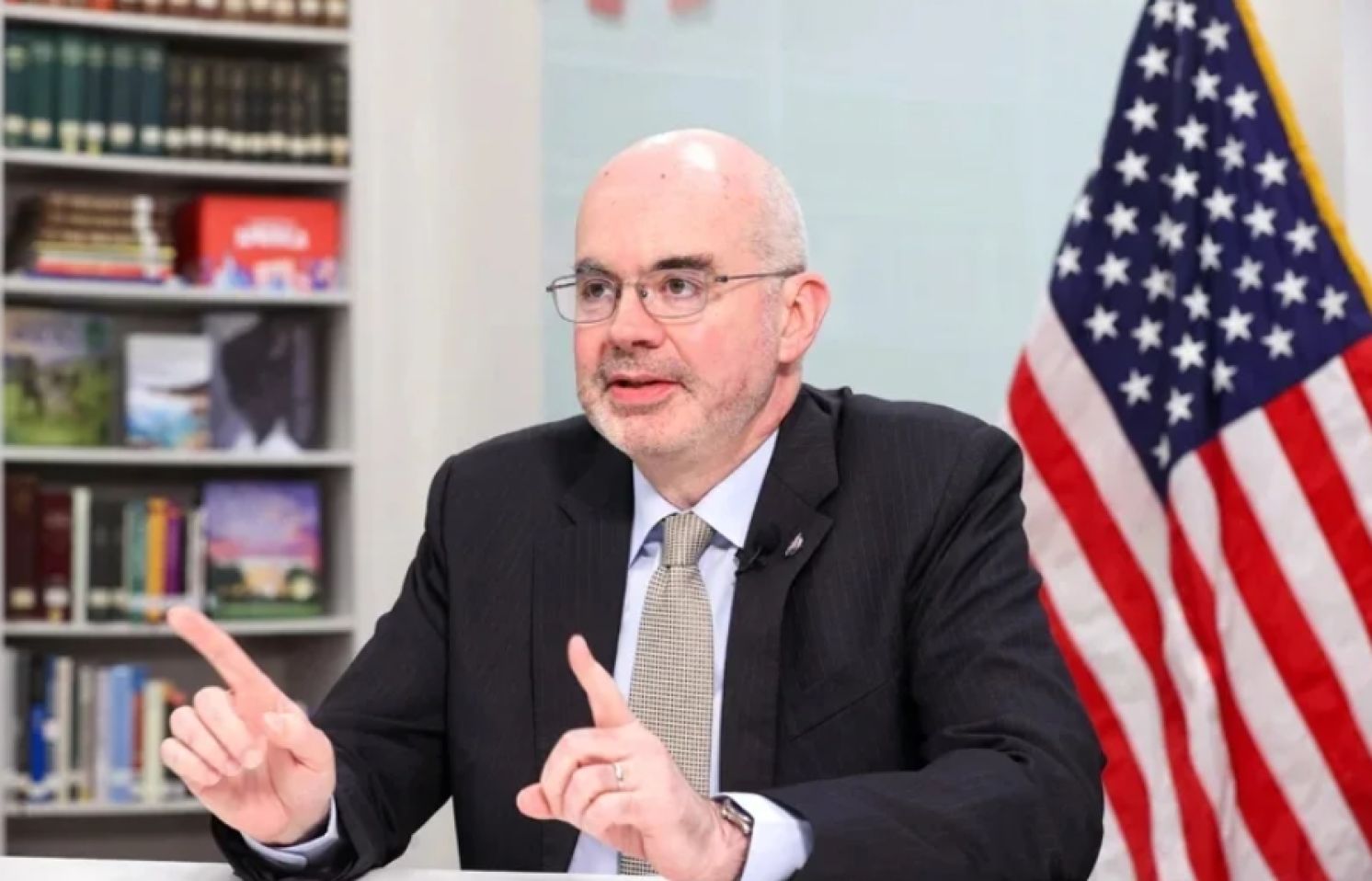
In an exclusive interview with United Daily News, Director Raymond Greene of the American Institute in Taiwan (AIT) stated that 70 percent support in Taiwan’s public opinion for maintaining the status quo could serve as an excellent foundation for dialogue between Taiwan’s democratically elected leaders and Beijing. Chairwoman Cheng Li-wun of the Kuomintang (KMT) responded that only through cross-strait exchanges and dialogue can the status quo be maintained. Su Chi, former secretary-general of the National Security Council, said that the Democratic Progressive Party (DPP) has already undermined its own concept of “maintaining the status quo” through the claim of “mutual non-subordination.” He further questioned whether the status quo referred to by Greene is the status quo of 2016 or that of 2026.
Public support for maintaining the status quo did not emerge only during the Tsai administration. In fact, it was only in 2018, when a portion of public opinion shifted toward supporting unification, that support for maintaining the status quo fell below 70 percent. Yet Director Greene attributed Taiwan society’s consensus in support of maintaining the status quo to former President Tsai Ing-wen; this may be limited by his personal experience and perspective.
Director Greene also stated that the mutual attraction across the Taiwan Strait that existed 10 years ago no longer exists, and that people are now concerned that cross-strait relations may move toward conflict. This remark is thought-provoking. The confrontation and tensions across the Strait stem partly from geopolitical factors and partly from ideological opposition. Director Greene described the current situation but avoided discussing the causes behind it. Ironically, both former President Tsai and incumbent President Lai Ching-te have said they wish to maintain the status quo, yet thanks to the policies of the Tsai and Lai administrations, as well as American politicians, Taiwan’s security perimeter has steadily retreated over the past decade, gradually moving closer to the main island. The DPP administration’s diplomacy has also led Taiwan into repeated setbacks, to the extent that even when President Lai seeks to visit Taiwan’s remaining diplomatic allies, he cannot confidently step beyond Taiwan’s borders.
How did this happen? Communist China’s military intimidation and pressure certainly bears significant responsibility. Beyond that, the first factor was the first term of President Donald Trump in the United States, which sounded the opening call of a new Cold War and forced countries to choose sides, turning Taiwan into a pawn in America’s strategy against China. Second, former President Tsai tore up that “unfinished answer sheet.” In fact, her greatest contribution to maintaining the status quo was equating the 1992 Consensus with “One Country, Two Systems” and effectively placing those words in Chinese President Xi Jinping’s mouth, leaving him angry to this day. The stigmatized 1992 Consensus has since struggled to recover. Third, President Lai used the new “Two-State Theory” to destroy the common foundation in cross-strait relations, creating the new status quo that Director Greene described as one in which “everyone is worried about moving toward conflict.”
Over the past decade, Taiwan’s ruling and opposition camps, as well as the United States, have all claimed to support maintaining the status quo, but each defines the status quo differently. The KMT defines it according to the Constitution of the Republic of China; the DPP’s version emphasizes that the R.O.C. and the People’s Republic of China are not subordinate to one another; while the United States uses strategic ambiguity to preserve a status quo of no use of force and no independence declaration. The difference is that the status quo advocated by the KMT allows for exchanges, dialogue, and the avoidance of war, whereas the status quo emphasized by the DPP leads only to conflict, confrontation, and war. Meanwhile, Trump has made it clear that he does not welcome Taiwan independence disrupting the status quo, nor is he willing to fight a war for Taiwan. The Lai administration has further portrayed exchanges as pro-China, described the pursuit of peace as accommodating China, characterized oversight of the defense budget as weakening Taiwan’s defense, and even labeled efforts to avoid war as surrender, continuously creating enemies within Taiwan itself.
If Director Greene cannot see how former President Tsai, under the banner of transitional justice, relentlessly pursued the opposition parties, or how President Lai has promoted a large-scale recall campaign aimed at completely eliminating the opposition, then he need only look at how President Lai “Ten Lectures on National Unity” divided the country and sought to eliminate so-called “impurities,” and he would understand where the problem lies.
Director Greene also said that Taiwan’s political parties are closer in their views than people imagine when it comes to issues such as Taiwan, democracy, security, and prosperity. However, in reality, once factors such as power and ideology are taken into account, the gap between the blue and green camps may be much wider than Greene imagines. The fundamental question is whether President Lai can change what is described as his authoritarian character and his tendency to view the blue and white camps as enemies. But what kind of cross-strait status quo and domestic political reconciliation does Director Greene actually seek?