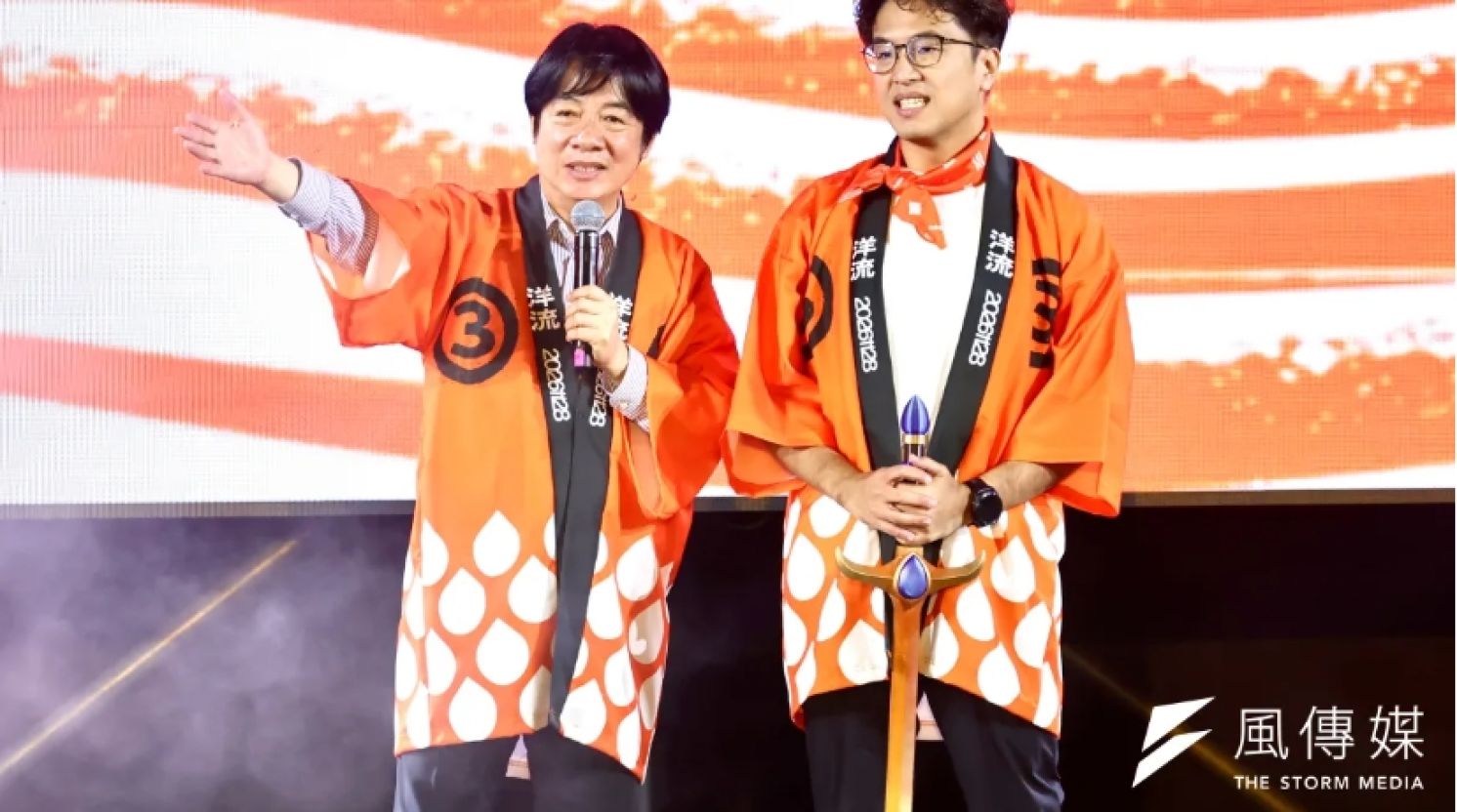
"Yang Wave" Gains Momentum, Adding Uncertainty to Taiwan's Security Outlook in 2028
By Yao Chung-yuan, The Storm Media Opinion, November 18, 2026
Although Taiwan's democracy should not be subject to external interference, the results of any election in Taiwan will undoubtedly attract the attention and scrutiny of Chinese Communist authorities. This is especially true of the current mayoral election in Taiwan's capital, in which the Democratic Progressive Party (DPP) has nominated Taipei mayoral candidate Shen Po-yang, known to have a strong conviction for Taiwan independence.
Although Mr. Shen, who specializes in "China's cognitive warfare," has avoided discussing cross-strait relations and national security during his campaign, some international media outlets have focused on whether the "Yang Wave" movement, supported by the Bluebird movement and Taiwan independence advocates, is showing signs of spreading to counties and cities across Taiwan. Some Hong Kong media outlets have even suggested that the DPP's strategic objective in nominating Shen for Taipei mayor is to pave the way for President Lai Ching-te's re-election bid in 2028.
Mr. Shen has long been designated a "diehard Taiwan independence separatist" by the Beijing government. In other words, the "Yang Current whirlwind" jointly cultivated by the DPP and Taiwan independence advocates is, from the perspective of Chinese President Xi Jinping, an unmistakable provocation against the mainland. It may even be intended to use the political influence of the "Yang Wave's spread across Taiwan" to continually disrupt the existing atmosphere of cross-strait relations.
If these two forces—the Lai administration and the Yang Wave movement—converge and continue to grow through the 2028 presidential election, their impact on Taiwan's domestic politics and society will undoubtedly be enormous.
Mr. Shen, who previously maintained an extremely hardline anti-China stance and a distinct pro-Taiwan independence identity, has been portrayed by the DPP and pro-DPP media as a kind, honest, soft-spoken "warm-hearted man" and a "new-generation political leader of Taiwan." Since this image was established, he has indeed received celebrity-like adoration and enthusiastic support from hundreds of thousands of young voters across the country.
However, recent media reports and allegations by a Taiwan People's Party (TPP) legislator have indicated that Shen previously recorded a one-hour instructional video titled "How TikTok Affects National Security," which is reportedly still being shown at recruit training camps and during reservist recall training courses across the country. This is clearly an act of "administrative non-neutrality." Evidently, the Yang Wave's influence is not confined to Taipei but has spread to numerous counties and cities throughout Taiwan. It may even have penetrated the Ministry of National Defense and entered the military. This is precisely the "coattail effect of the Yang Wave" that the DPP's central leadership hopes to achieve.
The "Bluebird Movement" and the "mass recall vote," which have repeatedly generated hatred, social conflict, and divisions among different groups in the past, as well as the current Yang Wave activities, which have already initiated numerous incidents involving the spread of misinformation, warrant closer examination. A thorough study and analysis would reveal that the forces responsible for forming and primarily supporting these movements are virtually the same group of people. In other words, these movements are products of meticulous planning and manipulation by politically motivated politicians and Taiwan independence advocates.
With just ten days remaining until Taiwan's local elections, the campaign has entered its decisive stage. The Taipei mayoral race is becoming increasingly intense, with both the Kuomintang (KMT) and DPP determined to win this key battleground.
In recent days, both Vice President Hsiao Bi-khim and Premier Cho Jung-tai have publicly appeared to cheer on the Yang Wave campaign's vehicle-based canvassing teams. Secretary-General Pan Men-an, Office of the President, also made a special appearance at a DPP election campaign meeting, where he praised the spillover effect of the Yang Wave's cross-county and cross-city campaigning. These developments demonstrate that the DPP is mobilizing the full resources and strength of the Office of the President, Executive Yuan, and party organization to keep building momentum for the Yang Wave.
Although DPP supporters and DPP-friendly media have packaged the Yang Wave as a sunny, uplifting "warm current," the dark shadow of "Taiwan independence" has always remained behind it. This is highly detrimental to internal harmony in Taiwan and peace across the Taiwan Strait. While the future direction of the Yang Wave after the November 28 local elections remains unknown, a closer examination from the perspective of Taiwan Strait security suggests that, if the movement survives and continues spreading to counties and cities nationwide, it could become a major variable affecting Taiwan's national security and social stability in 2028!
(The author is an adjunct professor and formerly served as deputy director-general and acting director-general of the Department of Strategic Planning, Ministry of National Defense, and former advisory committee member, Control Yuan.)