"Journey into Judicial Psychedelia: The Xiang Xin Case is Shame on Taiwan's Judiciary."
United Daily News Editorial, September 9, 2023
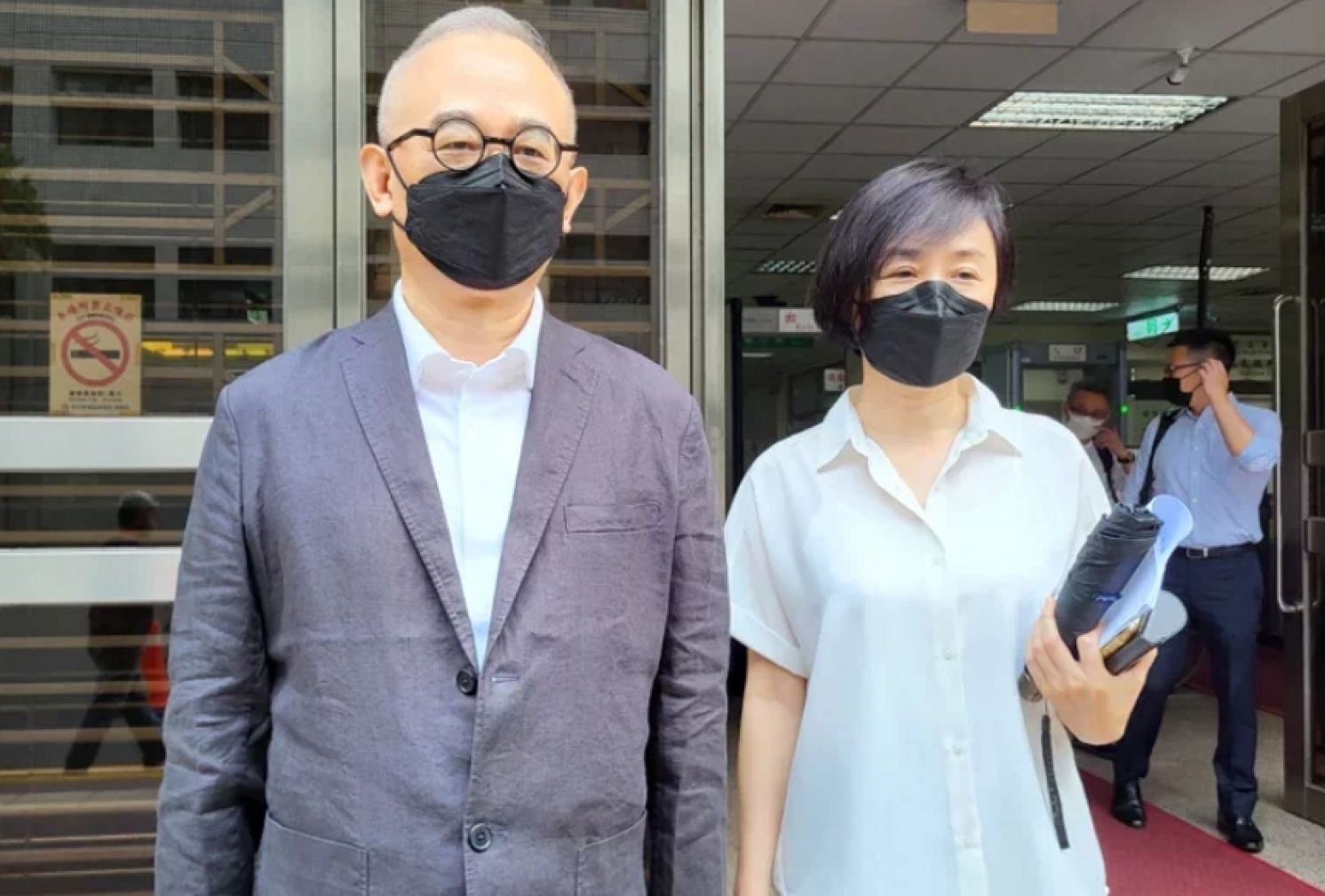
After dragging on for four years, mainland Chinese businessman Xiang Xin and his wife Gong Qing, who were accused of espionage and money laundering, have undergone two rounds of review by the Taipei District Prosecutors Office. The charges in the espionage case have been dropped, while the money laundering case has been through both the first and second trials, resulting in a verdict of not guilty in both instances. However, the couple is still subject to travel restrictions. Whether they can return to their home in mainland China depends on whether the Taiwan High Prosecutors Office exercises restraint. These two cases are fundamentally a "shame for Taiwan's judiciary."
The couple was accused of spying for China, solely based on the unilateral statement made by Wang Liqiang in Australia on the eve of the 2019 presidential election in Taiwan when Wang also claimed he was a "spy” for China and referred to Xiang as the "Intelligence Chief for the Chinese People's Liberation Army General Staff Department in the Hong Kong and Taiwan Region." Furthermore, Wang alleged that the Chinese Communist Party was involved in Taiwan's local elections by donating money to Han Kuo-yu from overseas, helping him win the 2018 Kaohsiung mayoral election. These accusations immediately sparked an international political storm.
In light of these circumstances, the administration of President Tsai Ing-wen extensively managed this situation by deploying national security and law enforcement agencies for cross-border investigations. Additionally, there were reports of involvement by intelligence units from the "Five Eyes Alliance," suggesting a deliberate effort to internationalize the Wang Liqiang incident. During this period, Xiang and Gong, while residing in Taiwan, faced accusations of espionage, leading to their confinement within Taiwan under the National Security Act.
It is essential to note that the allegations of espionage against this couple primarily relied on Wang’s one-sided testimony. Subsequently, when no concrete evidence supporting charges of espionage emerged, the Taipei District Prosecutors Office resorted to pursuing “money laundering" charges against them. This legal maneuver has resulted in the imposition of travel restrictions on the accused couple for four years.
Early this year, Wang Liqiang, a self-claimed spy who applied for political asylum in Australia, was found by an Australian court to have committed serious crimes in mainland China and engaged in severe fraudulent activities against overseas Chinese doing business in Australia. The Australian government did not recognize Wang’s "spy" status and rejected his application for political asylum before deporting him back to mainland China.
It is now clear that the so-called "Wang Liqiang spy case" was nothing more than a farce, leading to unfortunate consequences for the couple. The issue lay in the fact that the Taiwan judicial system willingly played a role as an accomplice in this political drama.
Wang Liqiang's big lies might be difficult to distinguish from the truth initially, but as the facts continue to emerge, the outside world gradually saw through the lies. Why then did the Tsai administration and the judicial branch persist in restricting the couple's movements? The key lay in the timing of the Wang case, which conveniently allowed the Democratic Progressive Party to manipulate anti-China issues and gain political advantage in the presidential election.
To put it bluntly, rather than saying Wang Liqiang lied, it's more accurate to say that politicians used Wang’s lies to deceive the general public. It can be said that from Wang’s case to that of the couple's, the Tsai administration initially exploited "international public opinion" and "domestic pro-green public opinion" in mutual reinforcement. They followed this tactic with political maneuvering and then involved the law enforcement system, turning a simple misunderstanding into an international issue. As a result, the couple turned into victims of political manipulation. Is the judiciary still able to exaggerate that Taiwan is a Rechtsstaat when the judiciary willingly self-degenerates?
This case has dragged on for four years, and the performance of the judicial system has brought shame to Taiwan. Although the High Court has acquitted the couple, the possibility of an appeal by the prosecution still hangs over them, keeping them under travel restrictions. The prosecution should abandon the appeal and put an end to this shameful episode in the judicial arena.