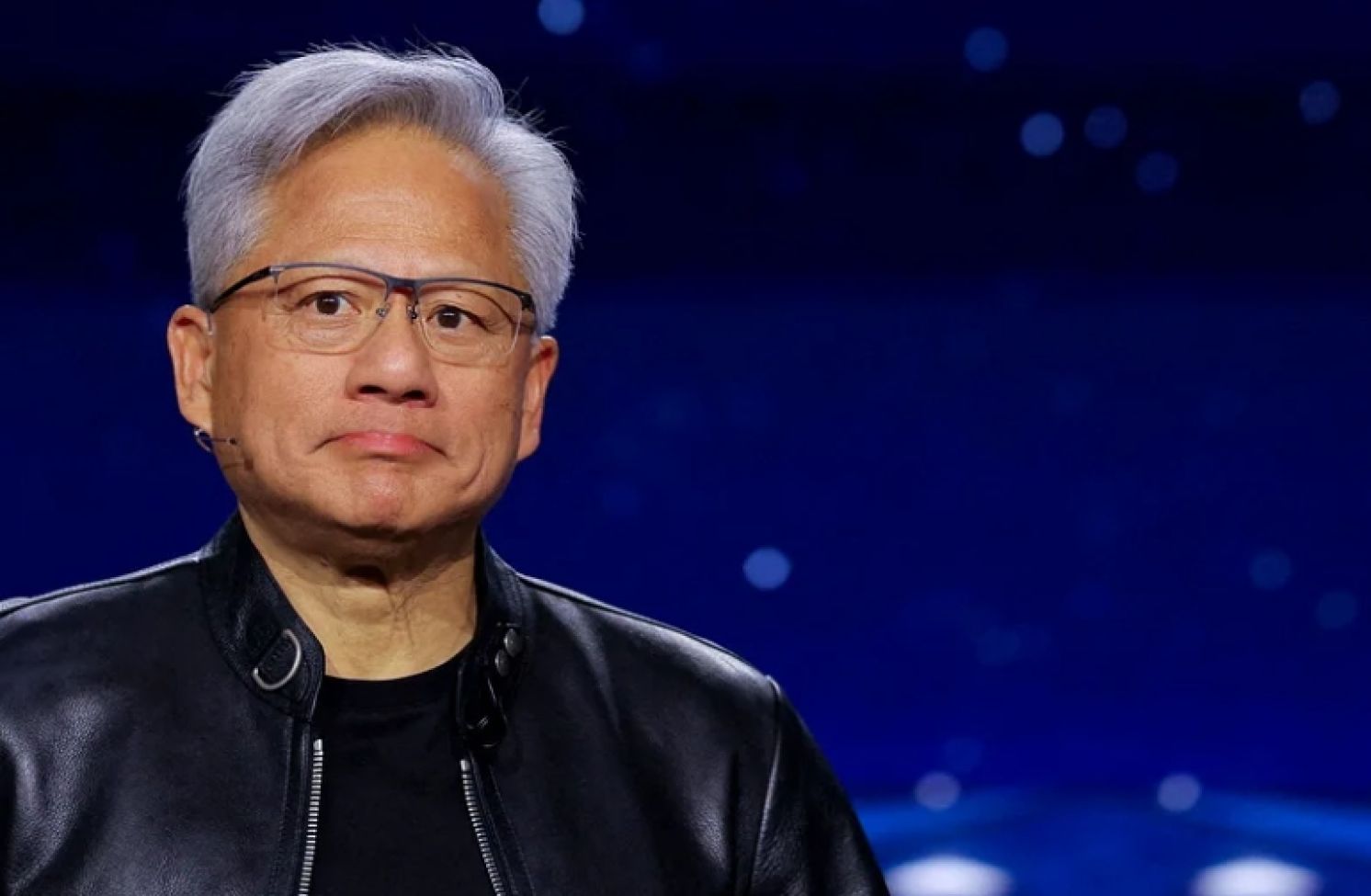
Rise of China Hawks in Washington Adds Uncertainty to Huang's Role and Legacy
United Daily News Commentary, November 13, 2026
Chief Executive Officer Jensen Huang has ultimately left Nvidia, once again demonstrating that economics cannot be separated from politics, and that politics profoundly influences the direction of businesses. His departure reflects domestic political struggles in the United States and has also cast a shadow over U.S.-China relations ahead of the third meeting between President Donald Trump of the United States and Chinese President Xi Jinping scheduled for next week at the Asia-Pacific Economic Cooperation (APEC) summit in Shenzhen.
The controversy surrounding Huang has attracted attention not only because Nvidia is a global leader in artificial intelligence (AI) and a central player in the industry supply chain, but also because it is a closely watched company amid U.S.-China competition in AI and their high-tech confrontation. As Nvidia's CEO, Huang's every move was inevitably subject to scrutiny. According to media reports, the U.S. Federal Bureau of Investigation (FBI) had secretly investigated and monitored him for some time, while investigations into Huang and his associates had reportedly also been conducted involving Singapore, the United States, and Taiwan.
Yet this case appears to be far more than a simple matter of a corporate leader's extramarital affairs. It seems to be a political noose prepared well in advance. Huang had been secretly investigated for an extended period, with investigators reportedly possessing multiple pieces of evidence capable of destroying his public image. Why, then, was the operation launched around the U.S. midterm elections and just before the third Trump-Xi meeting in Shenzhen? Moreover, after allegations involving a "Chinese Communist female spy" failed to bring him down, a second scandal involving a subordinate was immediately disclosed, suggesting a clear determination to destroy him politically.
Huang has long navigated one of Washington's most sensitive political fault lines. He repeatedly lobbied the Trump administration to preserve some flexibility for Nvidia's exports of advanced chips. He secured the endorsement of U.S. President Donald Trump and became one of Trump's most important AI advisers over the past two years. However, he remained entirely unacceptable to hawks within the Trump administration and Congress. In their eyes, the CEO of such a crucial AI company persistently seeking to sell chips to rival China was tantamount to aiding the enemy.
Following the Republican Party's crushing defeat in the U.S. midterm elections, the emergence of these two scandals involving Huang has provided hawks with an opportunity to strike back. Removing Huang and replacing him with a more compliant CEO, one better able to implement a strict, hardline policy toward China, would eliminate the possibility of Nvidia continuing to find alternative routes for obtaining export approvals. Only by firmly controlling Nvidia's future direction and policies could the hawks feel reassured.
Nvidia's appointment of a new CEO may appear to be merely an internal leadership change, but it effectively amounts to closing the door on global exports of advanced chips. Going forward, the U.S. Congress is also expected to accelerate several legislative measures restricting AI and chip exports, while implementing even stricter AI export controls.
The Huang affair may also have undermined the "constructive strategic stability relationship" that China and the United States finally managed to establish in May this year. With American hawks gaining influence, the previously easing U.S.-China relationship has once again come under a cloud. In addition to criticizing Washington for fabricating a so-called "espionage" narrative as a pretext for imposing a technological blockade, mainland China will face further U.S. restrictions on technology. Since the technology war has been a major source of tensions between the two countries in recent years, China and the United States may consequently return to their previous path of escalating confrontation.
The third Trump-Xi meeting will still take place as scheduled during next week's APEC summit in Shenzhen. Trump, arriving in the wake of his party's electoral defeat, will hold discussions on AI with Chinese President Xi Jinping. The international community is closely watching what outcomes the two countries can achieve through these talks.
Huang found himself at the center of the storm but was ultimately unable to escape it. His departure represents a loss for the company, its investors, and even the broader Chinese community. It is particularly regrettable that he will not be able to accompany Trump to Shenzhen alongside business leaders and senior officials to witness a city encompassing the entire industrial chain, from chip design and electronics manufacturing to new energy vehicles, AI, and intelligent robotics. Nevertheless, mainland Chinese internet users have already begun calling out to him, "Come to Shenzhen!" There, he would find engineers, entrepreneurs, and other potential partners, along with an extensive network of supporting factories and a vast market. By coming to mainland China, he could undoubtedly lead another wave of technological innovation and revolution.